Oklahoma Social Studies 6.P.2.2
Standard Cluster
- 6.P.2
- Use interdisciplinary tools to acquire, apply, and evaluate content understanding of the four strands of social studies.
Develop skills which demonstrate an understanding of historical events and the people who shaped our history. Gather and draw conclusions from sources of evidence, identifying plausible author, occasion, audience, purpose, and possible bias. Describe multiple factors and explain how they can influence the perspectives of individuals and groups on events from history and the modern era. Distinguish multiple causation, including immediate versus long-term cause-effect relationships; construct timelines of related events.
Oklahoma Academic Standards for Social Studies (2026) · 6.P.2
Cluster contents
Standards in This Cluster
6.P.2.2 is a cluster heading. These are the individual standards under it.
- 6.P.2.2.A
Gather and draw conclusions from sources of evidence, identifying plausible author, occasion, audience, purpose, and possible bias.
- 6.P.2.2.B
Describe multiple factors and explain how they can influence the perspectives of individuals and groups on events from history and the modern era.
- 6.P.2.2.C
Distinguish multiple causation, including immediate versus long-term cause-effect relationships; construct timelines of related events.
Teacher's field guide
What This Cluster Means
What Students Need to Do
- Students read accounts of an event and infer who made each source, for whom, under what circumstances, and why. They look for bias and explain why people might see the same event differently. They put events in order and separate immediate triggers from causes that built over time.
What Mastery Looks Like
- A student uses clues in two accounts of the Boston Tea Party to explain each writer's likely audience, purpose, and bias. They explain why a merchant and a British official might disagree. They order earlier tax disputes, the Tea Act, and the tea protest, then distinguish a long-running cause from an immediate trigger.
Common Misconceptions
- Students may treat an old document as neutral or assume its audience was everyone. They may confuse a writer's purpose with the cause of an event, or assume everyone in a group held the same view. They often name the most recent event as the only cause.
How to Assess It
- Exit ticket: Show a December 1773 Boston Gazette report on the tea protest and these dates: 1765 Stamp Act, May 1773 Tea Act, December 1773 tea protest. Ask students to infer the writer, occasion, audience, purpose, and possible bias, then name an immediate trigger and a longer-running cause.
Lesson moves
Ways to Teach It
Give pairs printed accounts of the Boston Tea Party from a colonial newspaper and a British official, then have them highlight clues to bias.
Ask: Why might a Boston merchant and a British official tell different stories about the tea protest? Name two reasons.
Give groups cards for the Stamp Act, Tea Act, tea protest, and Coercive Acts; have them order the cards and label causes.
Compare two news reports on a school phone rule, noting each writer's audience and purpose, then list why students and teachers might disagree.
Free download
Printable 6.P.2.2 Worksheet
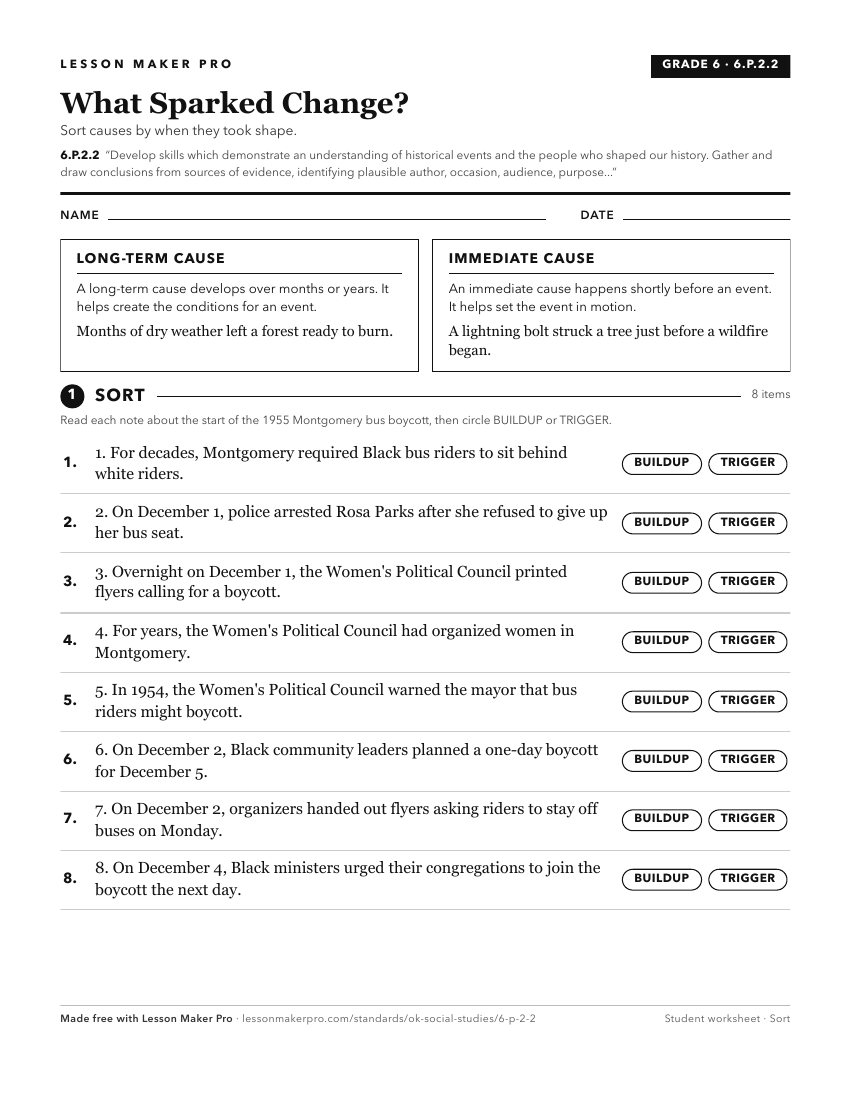
A ready-to-print activity worksheet aligned to 6.P.2.2, with an answer key for the teacher on its own page. No account needed.
PDF, US Letter, prints cleanly in black and white.
Download the worksheetKeep exploring
Related Standards
Turn this cluster into a lesson
Grade, subject, topic, and the complete cluster are prefilled. Create one free, no account needed.
Also for this cluster:Make a WorksheetMake a QuizMake a Sub Lesson