Oklahoma Social Studies 2.P.2
Standard Cluster
Use interdisciplinary tools to acquire, apply, and evaluate content understanding of the four strands of social studies. Demonstrate an understanding of the principles of government, the benefits of democratic systems, and their responsibilities as citizens. Describe civic virtues and democratic principles such as equality, fairness, and respect for legitimate authority. Describe the basic structure of government at the local, state, and Tribal levels, including the importance of citizen participation Explain the purposes of laws and government in the community and state, examining the role of elected officials in making laws. Develop skills which demonstrate an understanding of historical events and the people who shaped our history. Explain the difference between a primary and secondary source of information; gather basic information (i.e., author, date, facts). Define point of view and give examples relevant to the student’s experiences. Generate possible reasons for an event and draw conclusions from simple timelines by identifying immediate cause and effect relationships. Demonstrate a mastery of geographic concepts and the use of geographic tools to understand the impact of geography on the past and present. Ask and answer geographic questions, using geographic information about the student’s community and state. Describe the community and state’s human and physical environment by creating and using maps, graphs, and other geographic models, including aerial photography. Identify and describe how humans modify and adapt to their physical environment, using its natural and human resources. Identify the principles of economic systems and develop an understanding of the benefits of a market system in local, national, and global settings. Gather basic economic data from various types of graphs and charts. Describe freedom of choice when determining needs and wants in a free market, including costs and benefits resulting from economic decisions. Describe examples of the goods and services that local and state governments provide, explaining why people trade.
Oklahoma Academic Standards for Social Studies (2026)
Cluster contents
Standards in This Cluster
2.P.2 is a cluster heading. These are the individual standards under it.
- 2.P.2.1
Demonstrate an understanding of the principles of government, the benefits of democratic systems, and their responsibilities as citizens.
- 2.P.2.1.A
Describe civic virtues and democratic principles such as equality, fairness, and respect for legitimate authority.
- 2.P.2.1.B
Describe the basic structure of government at the local, state, and Tribal levels, including the importance of citizen participation
- 2.P.2.1.C
Explain the purposes of laws and government in the community and state, examining the role of elected officials in making laws.
- 2.P.2.2
Develop skills which demonstrate an understanding of historical events and the people who shaped our history.
- 2.P.2.2.A
Explain the difference between a primary and secondary source of information; gather basic information (i.e., author, date, facts).
- 2.P.2.2.B
Define point of view and give examples relevant to the student’s experiences.
- 2.P.2.2.C
Generate possible reasons for an event and draw conclusions from simple timelines by identifying immediate cause and effect relationships.
- 2.P.2.3
Demonstrate a mastery of geographic concepts and the use of geographic tools to understand the impact of geography on the past and present.
- 2.P.2.3.A
Ask and answer geographic questions, using geographic information about the student’s community and state.
- 2.P.2.3.B
Describe the community and state’s human and physical environment by creating and using maps, graphs, and other geographic models, including aerial photography.
- 2.P.2.3.C
Identify and describe how humans modify and adapt to their physical environment, using its natural and human resources.
- 2.P.2.4
Identify the principles of economic systems and develop an understanding of the benefits of a market system in local, national, and global settings.
- 2.P.2.4.A
Gather basic economic data from various types of graphs and charts.
- 2.P.2.4.B
Describe freedom of choice when determining needs and wants in a free market, including costs and benefits resulting from economic decisions.
- 2.P.2.4.C
Describe examples of the goods and services that local and state governments provide, explaining why people trade.
Teacher's field guide
What This Cluster Means
What Students Need to Do
- Students use photos, timelines, maps, and simple charts to answer questions about their community and state. They explain fair rules, citizen participation, and what local, state, and Tribal governments do. They describe how people use land and resources, and weigh needs, wants, and costs when buying or trading.
What Mastery Looks Like
- A student can identify a firsthand source, give its author and date, and compare its viewpoint with a later account. They can link an event to an immediate result and use a map or chart to explain a community decision. They can name a government service, explain who makes a local rule, and give a reason for a spending choice.
Common Misconceptions
- Students may think every old account is firsthand or that an event shown first on a timeline caused everything after it. They may treat Tribal governments as part of city government, confuse wants with needs, or think maps show only natural features.
How to Assess It
- Draw homes on one side of a river and a school on the other, then add a bridge. Ask students why people built it and what changed.
Lesson moves
Ways to Teach It
Give pairs an aerial photo of a river and road; they draw a bridge and explain how it changes travel.
Post 'No bikes in the park'; ask who should decide, whether it is fair, and how residents could share their views.
Show a dated school-opening photo and a paragraph written later; pairs sort the sources and explain one difference in viewpoint.
Hand out a grocery flyer; students plan a $5 lunch, choose between water and soda, and explain their trade-off.
Free download
Printable 2.P.2 Worksheet
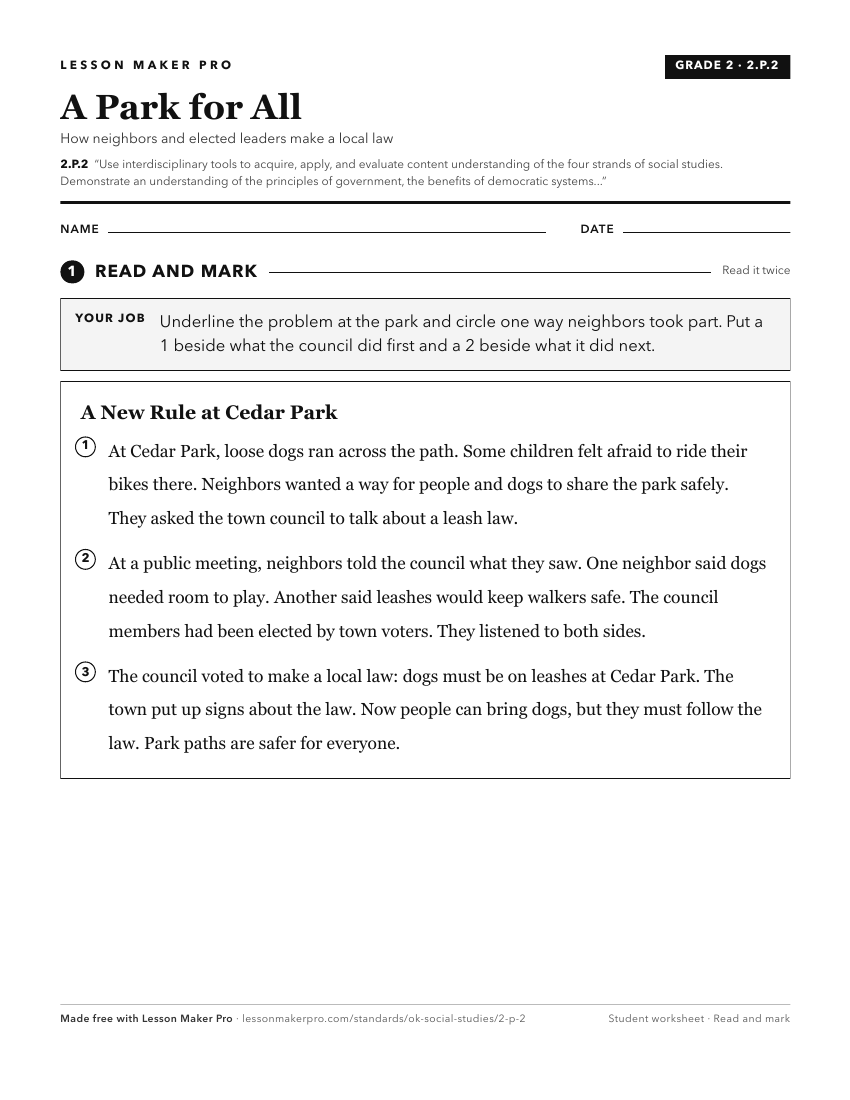
A ready-to-print activity worksheet aligned to 2.P.2, with an answer key for the teacher on its own page. No account needed.
PDF, US Letter, prints cleanly in black and white.
Download the worksheetKeep exploring
Related Standards
Turn this cluster into a lesson
Grade, subject, topic, and the complete cluster are prefilled. Create one free, no account needed.
Also for this cluster:Make a WorksheetMake a QuizMake a Sub Lesson