NGSS MS-LS3-1
The Standard
Develop and use a model to describe why structural changes to genes (mutations) located on chromosomes may affect proteins and may result in harmful, beneficial, or neutral effects to the structure and function of the organism.
Next Generation Science Standards
Teacher's field guide
What This Standard Means
What Students Need to Do
- Students create and use a simple model showing how a changed gene on a chromosome can lead to a different protein. They connect that protein difference to a harmful, beneficial, or neutral effect on an organism.
What Mastery Looks Like
- Given a mutation scenario, a student traces a clear chain from a changed gene on a chromosome to a protein and an organism effect. The student can also explain that some gene changes have no protein effect or no noticeable trait effect.
Common Misconceptions
- Students often say every mutation is harmful or that an organism changes its genes because it needs a trait. They may treat genes, chromosomes, proteins, and traits as the same thing. Some assume any gene change must produce a different protein or visible feature.
How to Assess It
- Exit ticket: Draw a chromosome with one marked gene and show how a change could affect a protein and an organism. Label the effect harmful, beneficial, or neutral, and explain your choice.
Lesson moves
Ways to Teach It
Use colored paper strips for chromosomes and genes, alter one segment, then select a matching protein-shape card and predict the organism effect.
Discuss: Why might the same mutation be helpful in one environment but harmful or neutral in another?
Run a card sort matching gene-change models, protein outcomes, and organism effects, then have pairs defend one disputed match.
Read a short case about antibiotic-resistant bacteria, then map the mutation, protein change, and survival effect with three labeled boxes.
Free download
Printable MS-LS3-1 Worksheet
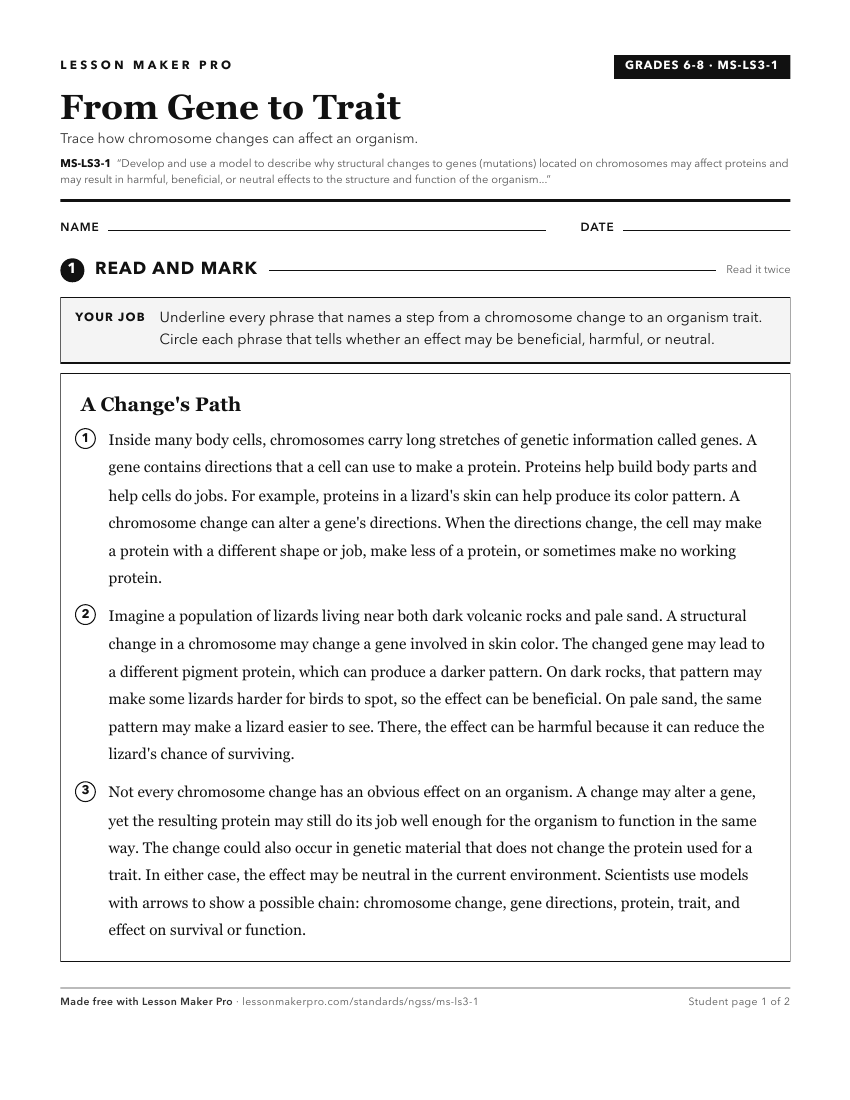
A ready-to-print activity worksheet aligned to MS-LS3-1, with an answer key for the teacher on its own page. No account needed.
PDF, US Letter, prints cleanly in black and white.
Download the worksheetBefore This Standard
If students are struggling here, check these first.
What This Unlocks
Mastery here sets students up for these next.
- HS-LS3-2
Understanding mutations as chromosome gene changes helps students explain replication errors and environmental mutagens as sources of heritable variation.
- HS-LS3-3
Understanding mutations as sources of harmful, beneficial, or neutral trait changes supports explaining population trait variation and distributions.
- HS-LS3-1
Understanding genes on chromosomes and how DNA changes affect proteins supports questions about DNA coding inherited traits.
Keep exploring
Related Standards
- MS-LS1-7
Develop a model to describe how food is rearranged through chemical reactions forming new molecules that support growth and/or release energy as this matter mov...
- MS-LS3-2
Develop and use a model to describe why asexual reproduction results in offspring with identical genetic information and sexual reproduction results in offsprin...
- MS-LS1-2
Develop and use a model to describe the function of a cell as a whole and ways parts of cells contribute to the function.
- HS-LS1-1
Construct an explanation based on evidence for how the structure of DNA determines the structure of proteins which carry out the essential functions of life thr...
Turn this exact standard into a lesson
Grade, subject, topic, and the complete standard are prefilled. Create one free, no account needed.
Also for this standard:Make a WorksheetMake a QuizMake a Sub Lesson