NGSS HS-LS3-2
The Standard
Make and defend a claim based on evidence that inheritable genetic variations may result from: (1) new genetic combinations through meiosis, (2) viable errors occurring during replication, and/or (3) mutations caused by environmental factors.
Next Generation Science Standards
Teacher's field guide
What This Standard Means
What Students Need to Do
- Students use data to determine whether inherited variation came from chromosome reshuffling, a DNA copying error, or environmental exposure. They make a claim, cite specific evidence, and explain how that evidence supports the claim.
What Mastery Looks Like
- Students can examine offspring traits, genotypes, or mutation rates and select the explanation best supported by the data. They cite specific evidence and distinguish inherited changes from changes limited to body cells.
Common Misconceptions
- Students may call every new gene combination a mutation, even when it comes from normal chromosome reshuffling. They may assume all mutations are harmful or inherited. Replication errors and environmentally caused mutations are inherited only when they affect reproductive cells and produce viable offspring.
How to Assess It
- Give an exit ticket showing 2 mutations per 10,000 offspring from unexposed germ cells and 18 from UV-exposed germ cells. Ask students to name the best explanation and support it with both values.
Lesson moves
Ways to Teach It
Use paired colored chromosome strips to swap matching segments, build four gametes, and compare the genetic combinations produced.
Give students a small offspring data table and ask, Which source of variation is best supported, and which evidence rules out alternatives?
Run an evidence-card sort where teams match cases to recombination, replication error, environmental mutation, or noninherited change.
Compare offspring mutation rates from exposed and unexposed fruit flies, then write a safety recommendation supported by the data.
Free download
Printable HS-LS3-2 Worksheet
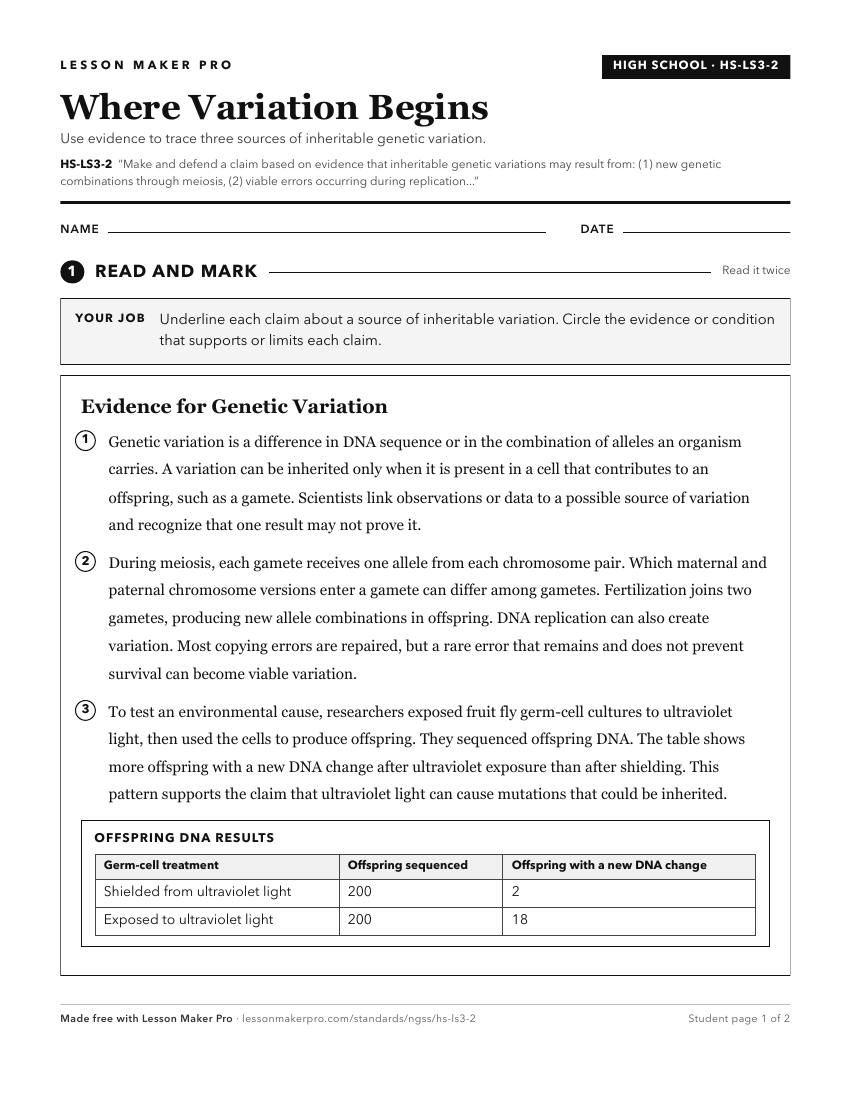
A ready-to-print activity worksheet aligned to HS-LS3-2, with an answer key for the teacher on its own page. No account needed.
PDF, US Letter, prints cleanly in black and white.
Download the worksheetBefore This Standard
If students are struggling here, check these first.
- MS-LS3-2
Understanding sexual reproduction as creating genetic variation prepares students to explain meiosis, replication errors, and mutations as sources of heritable variation.
- MS-LS3-1
Understanding mutations as chromosome gene changes helps students explain replication errors and environmental mutagens as sources of heritable variation.
Keep exploring
Related Standards
- MS-LS1-5
Construct a scientific explanation based on evidence for how environmental and genetic factors influence the growth of organisms.
- HS-LS4-2
Construct an explanation based on evidence that the process of evolution primarily results from four factors: (1) the potential for a species to increase in num...
- 3-LS4-2
Use evidence to construct an explanation for how the variations in characteristics among individuals of the same species may provide advantages in surviving, fi...
- MS-LS4-4
Construct an explanation based on evidence that describes how genetic variations of traits in a population increase some individuals' probability of surviving a...
Turn this exact standard into a lesson
Grade, subject, topic, and the complete standard are prefilled. Create one free, no account needed.
Also for this standard:Make a WorksheetMake a QuizMake a Sub Lesson