NGSS HS-LS4-2
The Standard
Construct an explanation based on evidence that the process of evolution primarily results from four factors: (1) the potential for a species to increase in number, (2) the heritable genetic variation of individuals in a species due to mutation and sexual reproduction, (3) competition for limited resources, and (4) the proliferation of those organisms that are better able to survive and reproduce in the environment.
Next Generation Science Standards
Teacher's field guide
What This Standard Means
What Students Need to Do
- Students build an explanation for how natural selection changes a population over generations. They connect population growth, inherited variation, limited resources, and unequal survival and reproduction to evidence.
What Mastery Looks Like
- Students can connect overproduction, inherited variation, resource limits, and unequal reproductive success in one clear explanation. They use numbers, graphs, or observations to show why a trait becomes more common across generations.
Common Misconceptions
- Students may say individuals evolve because they need to survive, rather than populations changing across generations. They may treat mutations as purposeful or overlook inheritance, limited resources, and reproductive success.
How to Assess It
- Exit ticket: In a beetle population, color is inherited, 100 beetles hatch, food supports 40, and birds eat more green beetles. Explain how all four factors could increase the proportion of brown beetles over generations.
Lesson moves
Ways to Teach It
Run a bean beetle simulation with varied colors, limited food tokens, predator removal, and reproduction based on survivors.
Given moth color and survival data, write a claim explaining how variation, overproduction, competition, and reproduction change the population.
Play a card sort matching evidence to overproduction, inherited variation, resource competition, or unequal survival and reproduction.
Analyze antibiotic resistance graphs and explain why resistant bacteria become more common when antibiotics change the environment.
Free download
Printable HS-LS4-2 Worksheet
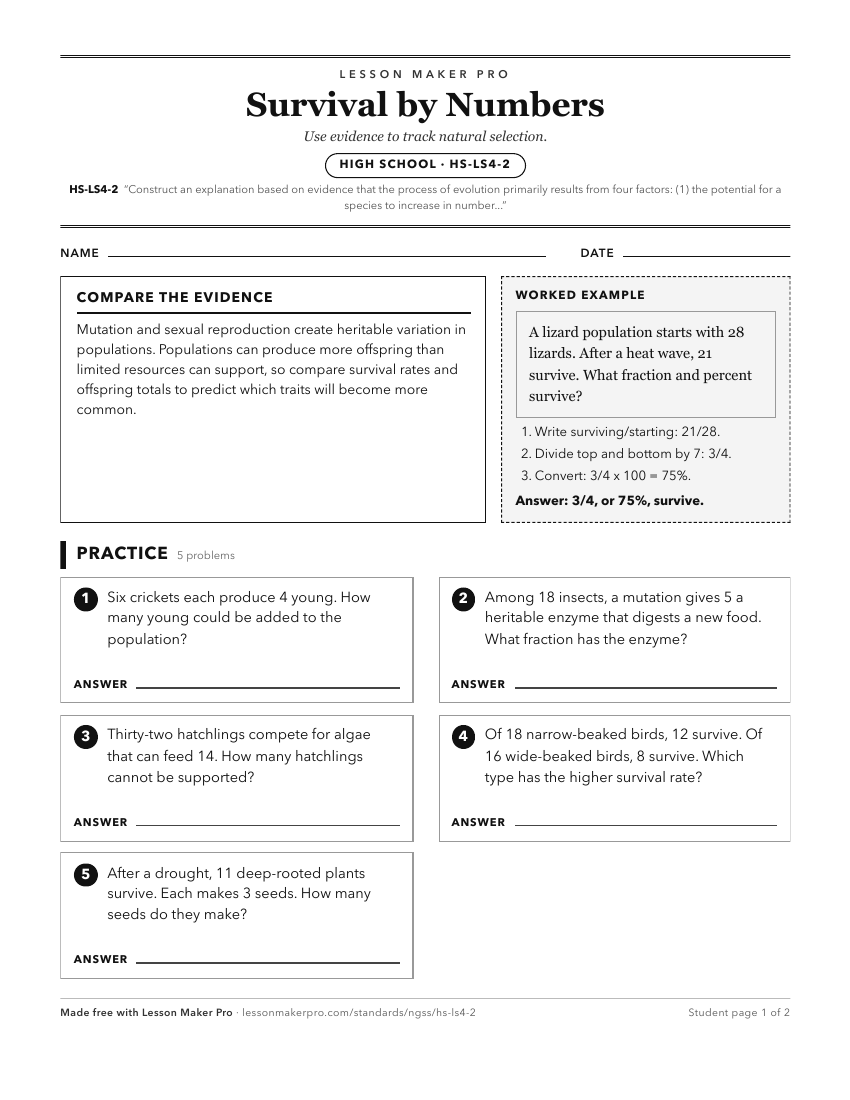
A ready-to-print activity worksheet aligned to HS-LS4-2, with an answer key for the teacher on its own page. No account needed.
PDF, US Letter, prints cleanly in black and white.
Download the worksheetBefore This Standard
If students are struggling here, check these first.
- MS-LS4-4
Understanding how trait variation affects survival and reproduction supports explaining evolution through heritable variation, competition, and differential reproductive success.
- MS-LS4-5
Understanding inherited trait variation and selection in human-directed breeding supports explaining how variation and reproductive success drive evolution.
- MS-LS4-6
Tracking how traits change in populations supports explaining how variation, competition, and differential reproduction drive evolution.
Keep exploring
Related Standards
- MS-LS1-5
Construct a scientific explanation based on evidence for how environmental and genetic factors influence the growth of organisms.
- HS-LS4-4
Construct an explanation based on evidence for how natural selection leads to adaptation of populations.
- 3-LS4-2
Use evidence to construct an explanation for how the variations in characteristics among individuals of the same species may provide advantages in surviving, fi...
Turn this exact standard into a lesson
Grade, subject, topic, and the complete standard are prefilled. Create one free, no account needed.
Also for this standard:Make a WorksheetMake a QuizMake a Sub Lesson