Mississippi Science HAP.3
Standard Cluster
Students will investigate the structures and functions of the integumentary system, including the cause and effect of diseases and disorders. Identify structures and explain the functions of the integumentary system, including layers of skin, accessory structures, and types of membranes. Investigate specific mechanisms (e.g., feedback and temperature regulation) through which the skin maintains homeostasis. Research and analyze the causes and effects of various pathological conditions (e.g., burns, skin cancer, bacterial/viral infections, and chemical dermatitis). Enrichment: Use an engineering design process to design and model/simulate effective treatments for skin disorders (e.g., tissue grafts). *
2026 Mississippi College- and Career-Readiness Standards for Science · Integumentary System
Cluster contents
Standards in This Cluster
HAP.3 is a cluster heading. These are the individual standards under it.
- HAP.3.1
Identify structures and explain the functions of the integumentary system, including layers of skin, accessory structures, and types of membranes.
- HAP.3.2
Investigate specific mechanisms (e.g., feedback and temperature regulation) through which the skin maintains homeostasis.
- HAP.3.3
Research and analyze the causes and effects of various pathological conditions (e.g., burns, skin cancer, bacterial/viral infections, and chemical dermatitis).
- HAP.3.4
Enrichment: Use an engineering design process to design and model/simulate effective treatments for skin disorders (e.g., tissue grafts). *
Teacher's field guide
What This Cluster Means
What Students Need to Do
- Students identify skin layers, hair, glands, and the main types of body membranes. They explain how sweating and changes in blood flow control temperature. They trace the causes and effects of burns, infections, skin cancer, and dermatitis.
What Mastery Looks Like
- Students label a skin diagram and match membrane types to body locations. They explain how sweat evaporation and wider skin blood vessels cool the body. Given a burn or UV-related skin cancer, they name a cause and a specific effect.
Common Misconceptions
- Students may call the hypodermis a skin layer, though it sits beneath the skin. They may think sweat cools the body before it evaporates. They may think burns only cause pain, missing fluid loss and infection risk.
How to Assess It
- Give students a skin cross-section. Ask them to label the epidermis, dermis, and a sweat gland, then explain how sweating cools the body and why a blistering burn raises infection risk.
Lesson moves
Ways to Teach It
Build a clay skin cross-section with an epidermis, dermis, hair follicle, and sweat gland; place the hypodermis underneath.
Write a claim explaining why a deep burn can cause fluid loss and infection, using the skin barrier as evidence.
Match cutaneous, mucous, serous, and synovial membrane cards to body-location cards, then explain one match to a partner.
Compare photos of two sunscreen labels for SPF and broad-spectrum coverage, then link UV exposure to skin cancer risk.
Free download
Printable HAP.3 Worksheet
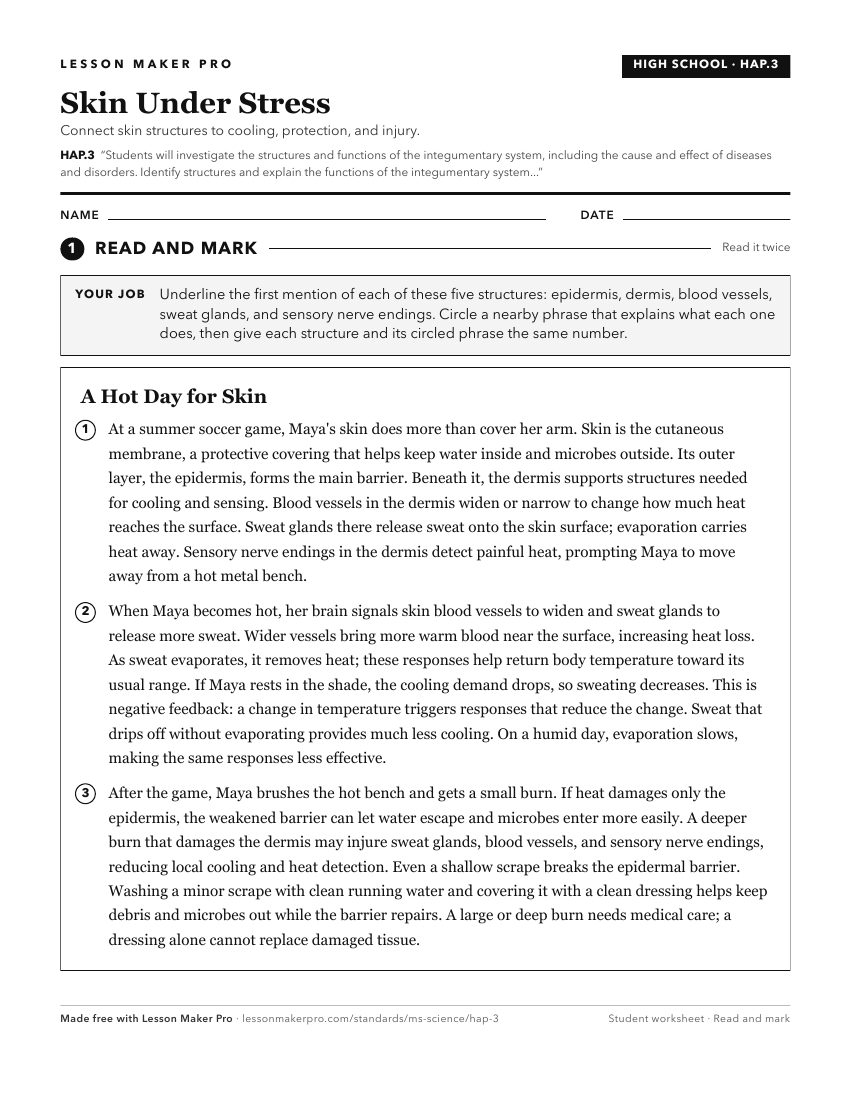
A ready-to-print activity worksheet aligned to HAP.3, with an answer key for the teacher on its own page. No account needed.
PDF, US Letter, prints cleanly in black and white.
Download the worksheetKeep exploring
Related Standards
- HAP.5
Students will investigate the structures and functions of the muscular system, including the cause and effect of diseases and disorders.
- HAP.4
Students will investigate the structures and functions of the skeletal system including the cause and effect of diseases and disorders.
- HAP.13
Students will investigate the structures and functions of the digestive system, including the cause and effect of diseases and disorders.
- HAP.14
Students will investigate the structures and functions of the urinary system, including the cause and effect of diseases and disorders.
Turn this cluster into a lesson
Grade, subject, topic, and the complete cluster are prefilled. Create one free, no account needed.
Also for this cluster:Make a WorksheetMake a QuizMake a Sub Lesson