Florida SS.8.G.5
Florida Standard (Benchmark Cluster)
Understand how human actions can impact the environment.
Florida Next Generation Sunshine State Standards for Social Studies
Cluster contents
Benchmarks in This Standard
SS.8.G.5 is a Florida social studies standard. These are the benchmarks under it.
Teacher's field guide
What This Cluster Means
What Students Need to Do
- Students identify a human action, then explain a chain of environmental effects using maps, photos, or data. They compare benefits, costs, and possible responses.
What Mastery Looks Like
- Given a case study, students explain direct and indirect effects, cite evidence, and distinguish short-term effects from long-term effects. They propose a response and explain its tradeoffs.
Common Misconceptions
- Students may treat all environmental change as natural or assume every human action causes only harm. They may name pollution without tracing its source, who is affected, or how impacts build over time.
How to Assess It
- Exit ticket: A wetland is drained for 200 homes, and local flood levels rise after storms. Explain one cause-and-effect chain and one possible response.
Lesson moves
Ways to Teach It
Build two soil trays, one with plant cover and one bare, spray equal water, and compare runoff, erosion, and sediment.
Write a claim answering, “Should a coastal town replace mangroves with hotels?” Support it with two effects and one tradeoff.
Play Impact Chain cards by matching actions, immediate effects, later effects, and solutions, then defend each completed chain.
Use a Florida land-use map and flood map to identify one development pattern that could increase runoff in a nearby community.
Free download
Printable SS.8.G.5 Worksheet
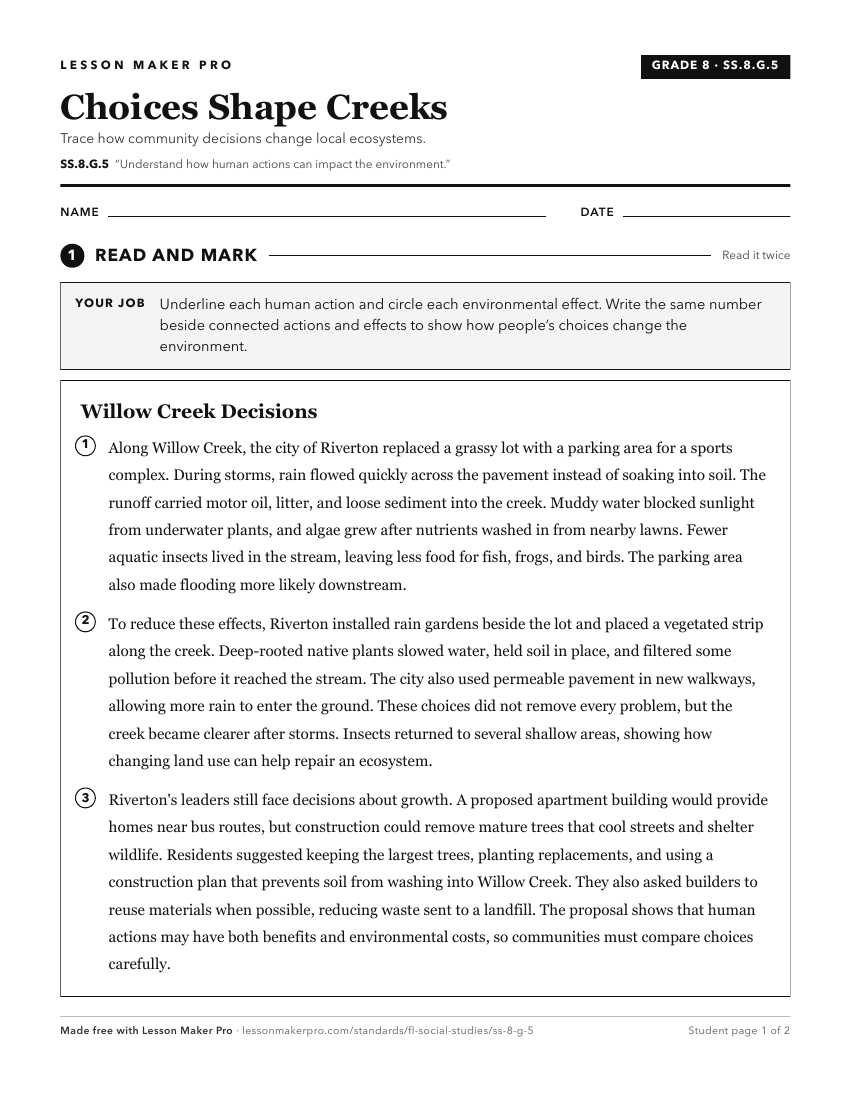
A ready-to-print activity worksheet aligned to SS.8.G.5, with an answer key for the teacher on its own page. No account needed.
PDF, US Letter, prints cleanly in black and white.
Download the worksheetKeep exploring
Related Standards
- SS.7.G.3
Understand the relationships between the Earth's ecosystems and the populations that dwell within them.
- SS.6.G.5
The 6th Grade version of this standard.
- SS.7.G.5
The 7th Grade version of this standard.
- SS.6.G.3
Understand the relationships between the Earth's ecosystems and the populations that dwell within them.
Turn this cluster into a lesson
Grade, subject, topic, and the complete cluster are prefilled. Create one free, no account needed.
Also for this cluster:Make a WorksheetMake a QuizMake a Sub Lesson