Florida SS.8.G.5.1
The Standard
- SS.8.G.5
- Understand how human actions can impact the environment.
Describe human dependence on the physical environment and natural resources to satisfy basic needs in local environments in the United States.
Florida Next Generation Sunshine State Standards for Social Studies
Teacher's field guide
What This Standard Means
What Students Need to Do
- Students explain how people in different U.S. communities use land, water, plants, animals, minerals, and energy resources to meet basic needs. They connect specific resources to food, water, shelter, clothing, and energy.
What Mastery Looks Like
- Students can use a map, image, or short case study to identify available resources and explain how people depend on them. They can compare how resource dependence differs between two U.S. communities.
Common Misconceptions
- Students may confuse basic needs with wants or assume every community has the same resources nearby. They may also overlook resources used indirectly, such as water for farming or fuel for transporting food.
How to Assess It
- Give students a map showing a coastal town, farmland, forests, and a river. Ask them to name three basic needs and explain which local resource could meet each need.
Lesson moves
Ways to Teach It
Give pairs a U.S. resource map and community cards, then have them match each community's basic needs to nearby natural resources.
Write: How would a weeklong water shortage change daily life in your town? Name three needs and the resources each requires.
Play Resource Relay, where teams sort picture cards into food, water, shelter, clothing, and energy, then name the resource used.
Use a local water utility website to trace where the community's drinking water comes from and how residents depend on that source.
Free download
Printable SS.8.G.5.1 Worksheet
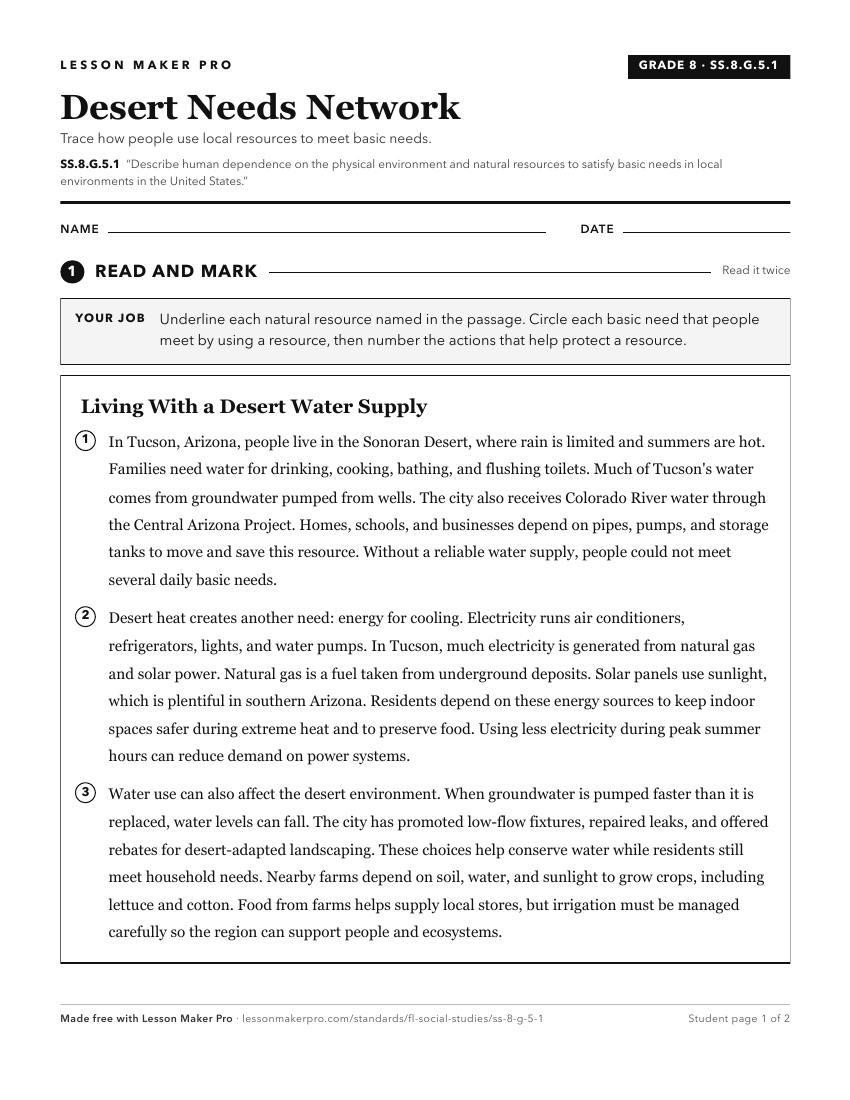
A ready-to-print activity worksheet aligned to SS.8.G.5.1, with an answer key for the teacher on its own page. No account needed.
PDF, US Letter, prints cleanly in black and white.
Download the worksheetKeep exploring
Related Standards
- SS.8.G.5
Understand how human actions can impact the environment.
- SS.6.G.5
Understand how human actions can impact the environment.
- SS.7.G.5
Understand how human actions can impact the environment.
- SS.8.G.5.2
Describe the impact of human modifications on the physical environment and ecosystems of the United States throughout history.
Turn this exact standard into a lesson
Grade, subject, topic, and the complete standard are prefilled. Create one free, no account needed.
Also for this standard:Make a WorksheetMake a QuizMake a Sub Lesson