Florida SS.8.G.5.2
The Standard
- SS.8.G.5
- Understand how human actions can impact the environment.
Describe the impact of human modifications on the physical environment and ecosystems of the United States throughout history.
Florida Next Generation Sunshine State Standards for Social Studies
Teacher's field guide
What This Standard Means
What Students Need to Do
- Students connect actions such as dam building, logging, mining, irrigation, and urban growth to changes in land, water, plants, and animals. They explain short-term and long-term effects using historical evidence.
What Mastery Looks Like
- Students can name a historical example and trace a clear chain from the action to a physical change and an ecosystem effect. They can also identify benefits, costs, and groups affected.
Common Misconceptions
- Students may assume every land or water change caused only harm, or that economic benefits erased environmental costs. They often name pollution or habitat loss without explaining the action that caused it or how effects developed over time.
How to Assess It
- Give students one example, such as draining the Everglades or building Hoover Dam. Ask them to identify one physical change, one ecosystem effect, and one supporting fact.
Lesson moves
Ways to Teach It
Build a stream-table river, add a clay dam, then record changes in water flow, sediment, and nearby habitat.
Write a claim answering: Did Hoover Dam’s benefits outweigh its environmental costs? Support it with two source details.
Sort cards for railroads, mining, irrigation, logging, and highways into modification, immediate effect, and long-term ecosystem effect chains.
Compare historic Everglades drainage maps with current restoration maps, then identify one community benefit and one ecosystem cost.
Free download
Printable SS.8.G.5.2 Worksheet
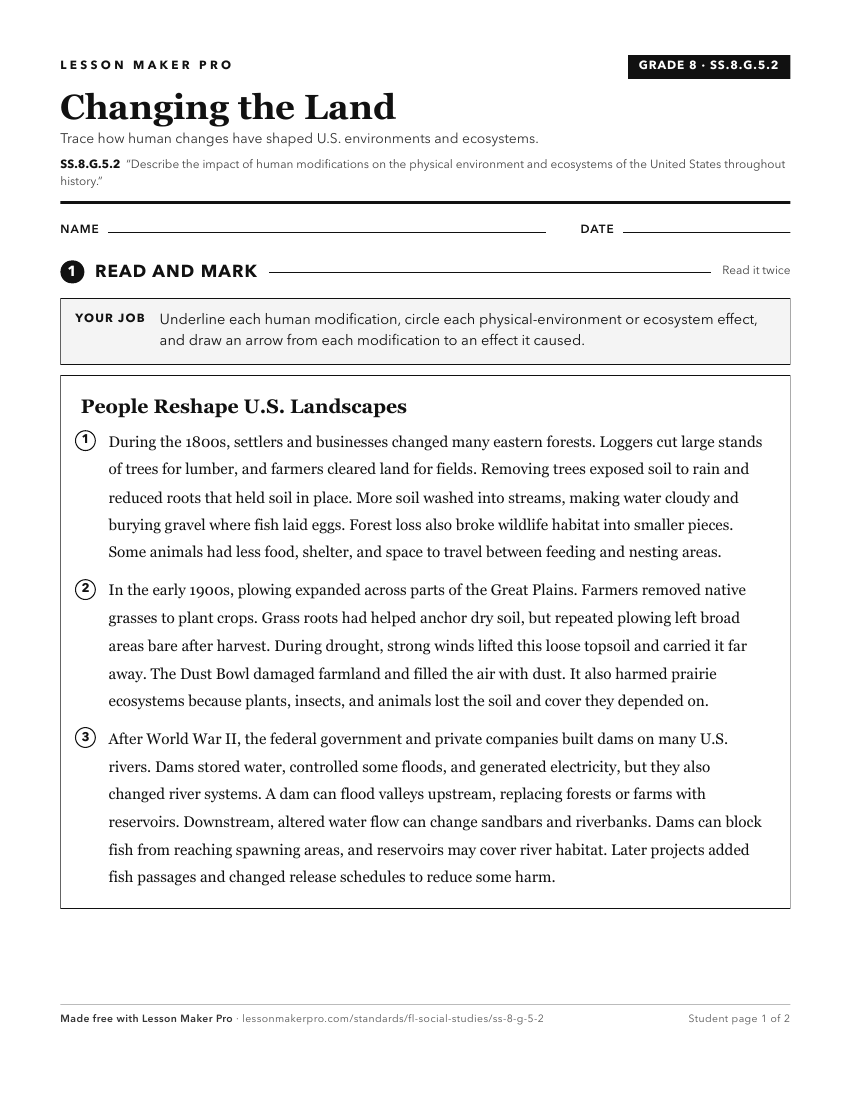
A ready-to-print activity worksheet aligned to SS.8.G.5.2, with an answer key for the teacher on its own page. No account needed.
PDF, US Letter, prints cleanly in black and white.
Download the worksheetKeep exploring
Related Standards
- SS.8.G.5
Understand how human actions can impact the environment.
- SS.6.G.5
Understand how human actions can impact the environment.
- SS.5.G.3.1
Describe the impact that past natural events have had on human and physical environments in the United States through 1850.
- SS.7.G.5
Understand how human actions can impact the environment.
Turn this exact standard into a lesson
Grade, subject, topic, and the complete standard are prefilled. Create one free, no account needed.
Also for this standard:Make a WorksheetMake a QuizMake a Sub Lesson