Oklahoma Social Studies USH.C.2.3
Standard Cluster
- USH.C.2
- Analyze the social, economic, and political changes that occurred during the American Industrial Revolution, the Gilded Age, and reform movements.
Evaluate the rise and reforms of Populism and the Progressive Movement. Describe how democratic processes (e.g., direct primary, initiative petition, referendum, recall) intended to limit political corruption by making politicians and lawmaking more immediately responsive to the people. Explain the impact of William Jennings Bryan and his Cross of Gold message on the political landscape. Trace the series of events leading to and the effects of the 16th and 17th Amendments to the Constitution of the United States of America. Describe how the rise of trusts and monopolies impacted consumers and workers, prompting government’s response with the Sherman and Clayton Antitrust Acts.
Oklahoma Academic Standards for Social Studies (2026) · USH.C.2
Cluster contents
Standards in This Cluster
USH.C.2.3 is a cluster heading. These are the individual standards under it.
- USH.C.2.3.A
Describe how democratic processes (e.g., direct primary, initiative petition, referendum, recall) intended to limit political corruption by making politicians a...
- USH.C.2.3.B
Explain the impact of William Jennings Bryan and his Cross of Gold message on the political landscape.
- USH.C.2.3.C
Trace the series of events leading to and the effects of the 16th and 17th Amendments to the Constitution of the United States of America.
- USH.C.2.3.D
Describe how the rise of trusts and monopolies impacted consumers and workers, prompting government’s response with the Sherman and Clayton Antitrust Acts.
Teacher's field guide
What This Cluster Means
What Students Need to Do
- Students compare Populist demands with Progressive reforms. They explain why Bryan’s free-silver message drew farmers and Populists toward the Democrats. They trace how concerns about corruption, taxes, and monopolies led to changes in voting rules and federal law.
What Mastery Looks Like
- A student can tell a direct primary, initiative, referendum, and recall apart using examples. They can explain how tax disputes led to a federal income tax and how statehouse corruption led to direct election of senators. They can describe how trusts hurt consumers and workers, and how the Sherman and Clayton Acts responded.
Common Misconceptions
- Students may think Bryan wanted to replace gold with paper money. He argued for adding silver to the money supply. They may confuse a petition to propose a law with a vote on that law, or swap the amendments on income tax and Senate elections.
How to Assess It
- Exit ticket: A railroad trust fixes fares and backs state legislators. Name one antitrust law and one voting reform that could address these problems, and explain how each would help.
Lesson moves
Ways to Teach It
Use paper ballots to hold a primary, circulate an initiative petition, vote on its proposal, and petition to recall an official.
Give students a short excerpt from Bryan’s Cross of Gold speech; ask why indebted farmers supported silver and creditors resisted it.
Match cards: Sherman Act to trusts, Clayton Act to specific unfair practices, income tax to tax disputes, and direct Senate elections to statehouse corruption.
Print a past state ballot measure from an election office website; have students identify who proposed it, who voted, and what changed.
Free download
Printable USH.C.2.3 Worksheet
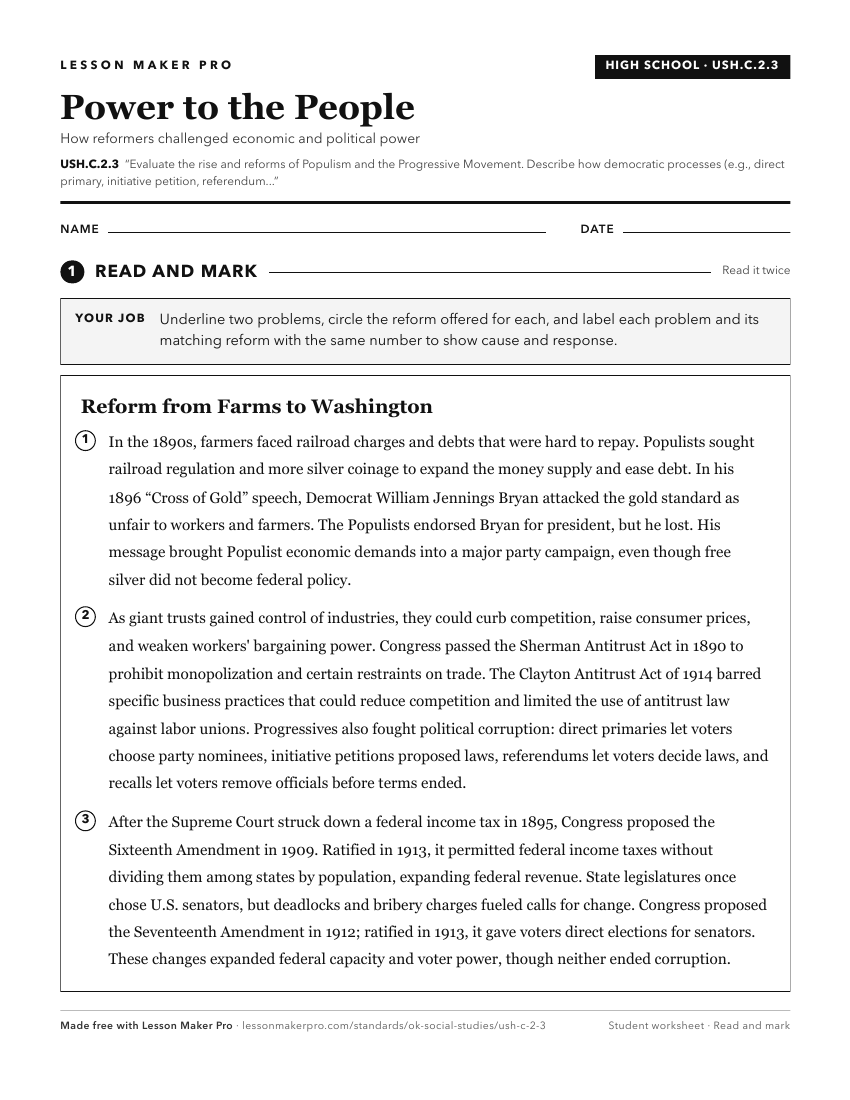
A ready-to-print activity worksheet aligned to USH.C.2.3, with an answer key for the teacher on its own page. No account needed.
PDF, US Letter, prints cleanly in black and white.
Download the worksheetKeep exploring
Related Standards
- OKH.C.4.4
Examine the influence of the national Progressive Movement and local social reformers, such as Kate Barnard, on the state constitutional convention (e.g., accou...
- USH.C.2
Analyze the social, economic, and political changes that occurred during the American Industrial Revolution, the Gilded Age, and reform movements.
- USH.C.2.4
Analyze and compare the personalities, actions and policies of presidents during the Progressive Era.
- USH.C.2.2
Evaluate the efforts of major reform movements in addressing social issues.
Turn this cluster into a lesson
Grade, subject, topic, and the complete cluster are prefilled. Create one free, no account needed.
Also for this cluster:Make a WorksheetMake a QuizMake a Sub Lesson