Oklahoma Social Studies USH.C.2.3.D
The Standard
- USH.C.2
- Analyze the social, economic, and political changes that occurred during the American Industrial Revolution, the Gilded Age, and reform movements.
- USH.C.2.3
- Evaluate the rise and reforms of Populism and the Progressive Movement.
Describe how the rise of trusts and monopolies impacted consumers and workers, prompting government’s response with the Sherman and Clayton Antitrust Acts.
Oklahoma Academic Standards for Social Studies (2026) · USH.C.2.3
Teacher's field guide
What This Standard Means
What Students Need to Do
- Students trace what happens when one company controls most oil refining or rail service. They explain how that can affect prices, choices, and jobs. They connect those effects to the two federal laws passed to limit unfair competition.
What Mastery Looks Like
- A student can explain why a trust might charge more and leave workers with fewer employers to choose from. They can distinguish the Sherman Act's ban on monopolization and trade restraints from the Clayton Act's rules against specific practices, including stock purchases that reduce competition.
Common Misconceptions
- Students may think every large company was illegal under the Sherman Act. They may also think the laws immediately broke up every trust or guaranteed workers higher wages.
How to Assess It
- Exit ticket: A firm buys stock in its rivals, raises prices, and cuts wages. Name one effect on customers and one on workers, then explain what each law could challenge.
Lesson moves
Ways to Teach It
Give groups three seller cards, then replace them with one trust card; have students set oil prices and record buyers' options.
Ask: If Standard Oil controlled most local jobs, how could that change wages, and why might Congress step in?
Hand out four scenario cards; students sort monopoly agreements under Sherman and stock purchases that reduce competition under Clayton, then defend one choice.
Compare two printed phone service ads, then ask how a merger might change customers' choices and employees' job options.
Free download
Printable USH.C.2.3.D Worksheet
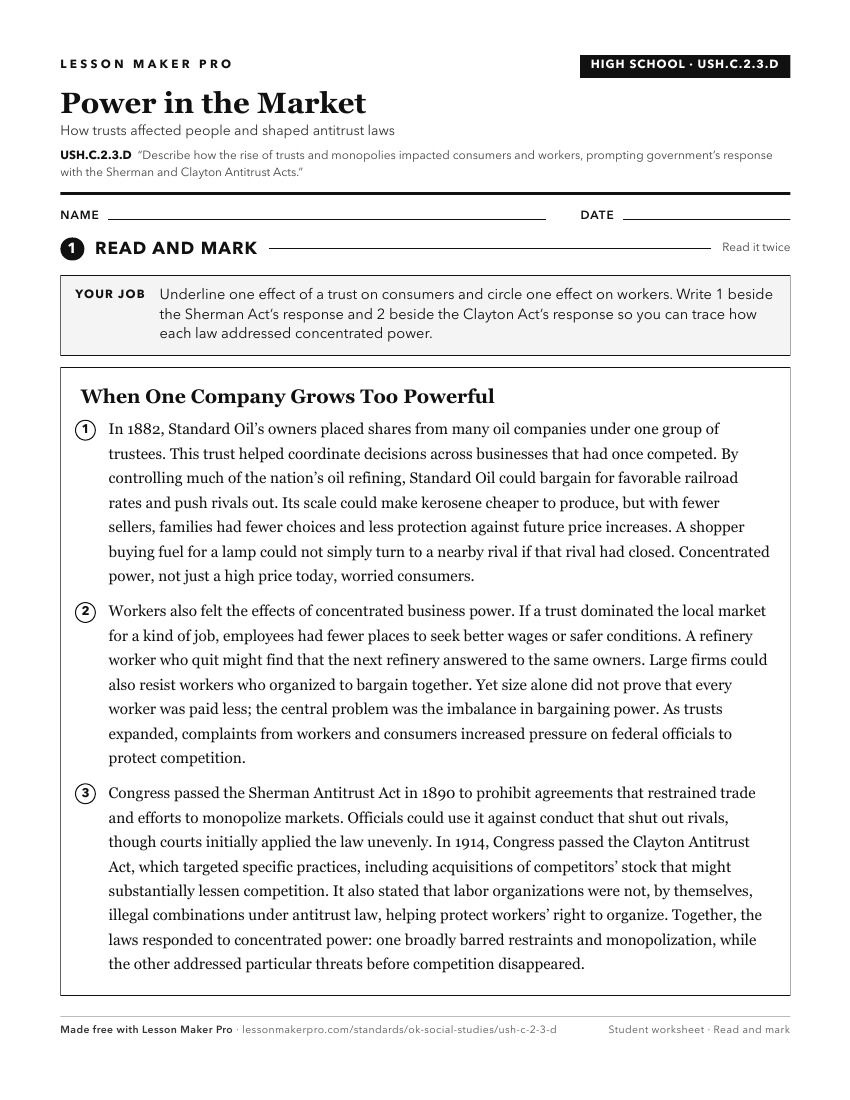
A ready-to-print activity worksheet aligned to USH.C.2.3.D, with an answer key for the teacher on its own page. No account needed.
PDF, US Letter, prints cleanly in black and white.
Download the worksheetKeep exploring
Related Standards
- USH.C.2.4.B
Examine President William Howard Taft’s trust-busting agenda, the Pure Food and Drug Act, and formation of the Interstate Commerce Commission.
- USH.C.2.4.A
Describe the efforts of President Theodore Roosevelt’s administration, including the promises of the Square Deal, Meat Inspection Act, trust-busting laws, and s...
- USH.C.2.1.C
Analyze the impact of capitalism and laissez-faire policy on business practices, such as monopolies, the characterization of “robber barons” and the role of ind...
- TOT.C.1.3.A
Analyze the proposition that industrialization and free trade had alienated workers from the fruits of their labors.
Turn this exact standard into a lesson
Grade, subject, topic, and the complete standard are prefilled. Create one free, no account needed.
Also for this standard:Make a WorksheetMake a QuizMake a Sub Lesson