Oklahoma Social Studies 6.C.4
Standard Cluster
Analyze the interactions of humans and their environment in the Western Hemisphere. Explain how humans adapt to the environment (e.g., types and location of housing, clothing and food choices, methods of transportation, and options for economic activities) using historic and contemporary examples. Analyze the impact of natural disasters on human populations, including displacement, scarcity of consumer goods, economic activities, and loss of life. Describe how humans modify the natural environment to support human development, such as subsistence and commercial agriculture, extraction of fossil fuels and minerals, development of industry, and urbanization. Identify environmental challenges (e.g., air pollution, acid rain, deforestation) and explain how they can impact a region (e.g., oil spills, Amazonia’s ranching and logging operations, Mexico City’s urban sprawl). Evaluate the need to preserve resources, climate, and wildlife by creating public awareness, including the efforts of eco-tourism. Describe the role of citizens as responsible stewards of natural resources and the environment (e.g., recycling campaigns, water conservation, national parks, protection of wildlife preserves).
Oklahoma Academic Standards for Social Studies (2026)
Cluster contents
Standards in This Cluster
6.C.4 is a cluster heading. These are the individual standards under it.
- 6.C.4.1
Explain how humans adapt to the environment (e.g., types and location of housing, clothing and food choices, methods of transportation, and options for economic...
- 6.C.4.2
Analyze the impact of natural disasters on human populations, including displacement, scarcity of consumer goods, economic activities, and loss of life.
- 6.C.4.3
Describe how humans modify the natural environment to support human development, such as subsistence and commercial agriculture, extraction of fossil fuels and ...
- 6.C.4.4
Identify environmental challenges (e.g., air pollution, acid rain, deforestation) and explain how they can impact a region (e.g., oil spills, Amazonia’s ranchin...
- 6.C.4.5
Evaluate the need to preserve resources, climate, and wildlife by creating public awareness, including the efforts of eco-tourism.
- 6.C.4.6
Describe the role of citizens as responsible stewards of natural resources and the environment (e.g., recycling campaigns, water conservation, national parks, p...
Teacher's field guide
What This Cluster Means
What Students Need to Do
- Students explain how people in the Americas adapt their homes, food, travel, and work to local conditions, using past and present examples. They trace how disasters can force people to move, limit supplies, end jobs, and cause deaths. They explain how farming, mining, and cities change land and resources.
What Mastery Looks Like
- A student can explain why people built terraces on steep Andean slopes and why farmers still use them. They can trace how a Caribbean hurricane affects families, stores, and jobs. They can weigh the income from logging against habitat loss and suggest a way to protect the forest.
Common Misconceptions
- Students may mix up adapting to a place with changing it, such as cutting forest for cattle. They may think a flood only damages buildings and miss displacement, shortages, and lost work. They may call logging simply good or bad without weighing jobs against habitat loss.
How to Assess It
- Exit ticket: A town in the Andes grows crops on hillside terraces, then a flood washes out its only road. Explain why the terraces help, two effects of the flood, and one way residents could protect a natural resource.
Lesson moves
Ways to Teach It
Give groups an Andes map, sticky notes, and crop cards; have them place terrace farms and roads, then mark flood risks.
Show images of historic and current Andean terrace farms; ask, "What land problem does each solve?"
Hand out cards labeled hurricane, closed road, empty store, and lost wages; teams arrange a cause-and-effect chain and explain each link.
Use a national park visitor webpage to draft a sign explaining how staying on trails protects wildlife while tourists visit.
Free download
Printable 6.C.4 Worksheet
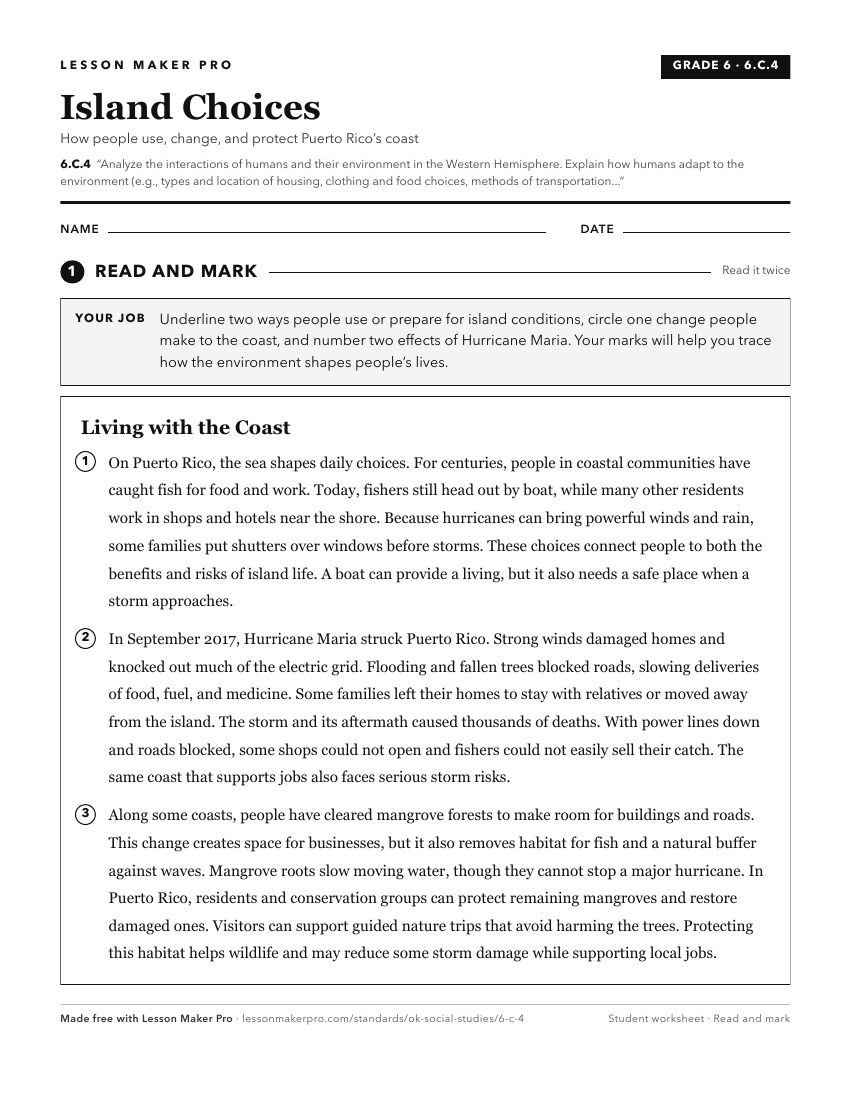
A ready-to-print activity worksheet aligned to 6.C.4, with an answer key for the teacher on its own page. No account needed.
PDF, US Letter, prints cleanly in black and white.
Download the worksheetKeep exploring
Related Standards
- 7.C.4
Analyze the interactions of humans and their environment.
- 6.C.2
Analyze the physical systems of the major regions of the Western Hemisphere.
- 6.C.3
Identify the characteristics, distribution, and demographic patterns of human populations and systems of the Western Hemisphere.
- 6.C.1.2
Integrate visual information to organize understandings about the people and environments of the Western Hemisphere.
Turn this cluster into a lesson
Grade, subject, topic, and the complete cluster are prefilled. Create one free, no account needed.
Also for this cluster:Make a WorksheetMake a QuizMake a Sub Lesson