NGSS MS-ETS1-1
The Standard
Define the criteria and constraints of a design problem with sufficient precision to ensure a successful solution, taking into account relevant scientific principles and potential impacts on people and the natural environment that may limit possible solutions.
Next Generation Science Standards
Teacher's field guide
What This Standard Means
What Students Need to Do
- Students turn a broad need into a clear design problem. They name measurable signs of success, limits on the solution, relevant science, and possible effects on people and nature.
What Mastery Looks Like
- Students can write a clear design problem with measurable goals and specific limits. They can explain how science, user needs, cost, materials, safety, and environmental effects shape possible solutions.
Common Misconceptions
- Students often mix up criteria, which describe success, with constraints, which set limits. They may use vague goals such as “strong” or “cheap” without measurements. They may also ignore effects on users, wildlife, waste, or resources.
How to Assess It
- Give this exit ticket: “Our school needs an outdoor lunch table. Write two measurable criteria and three constraints, including one environmental concern.”
Lesson moves
Ways to Teach It
Give teams straws, tape, and index cards, then have them set two measurable criteria and three constraints before building a phone stand.
Ask students to write: “Should our school replace paper towels with hand dryers?” and support their answer with limits and impacts.
Run a card sort where teams classify requirement cards as criteria, constraints, scientific principles, or impacts, then defend disputed choices.
Have students inspect a school water fountain and draft requirements for a replacement that considers access, water use, safety, cost, and waste.
Free download
Printable MS-ETS1-1 Worksheet
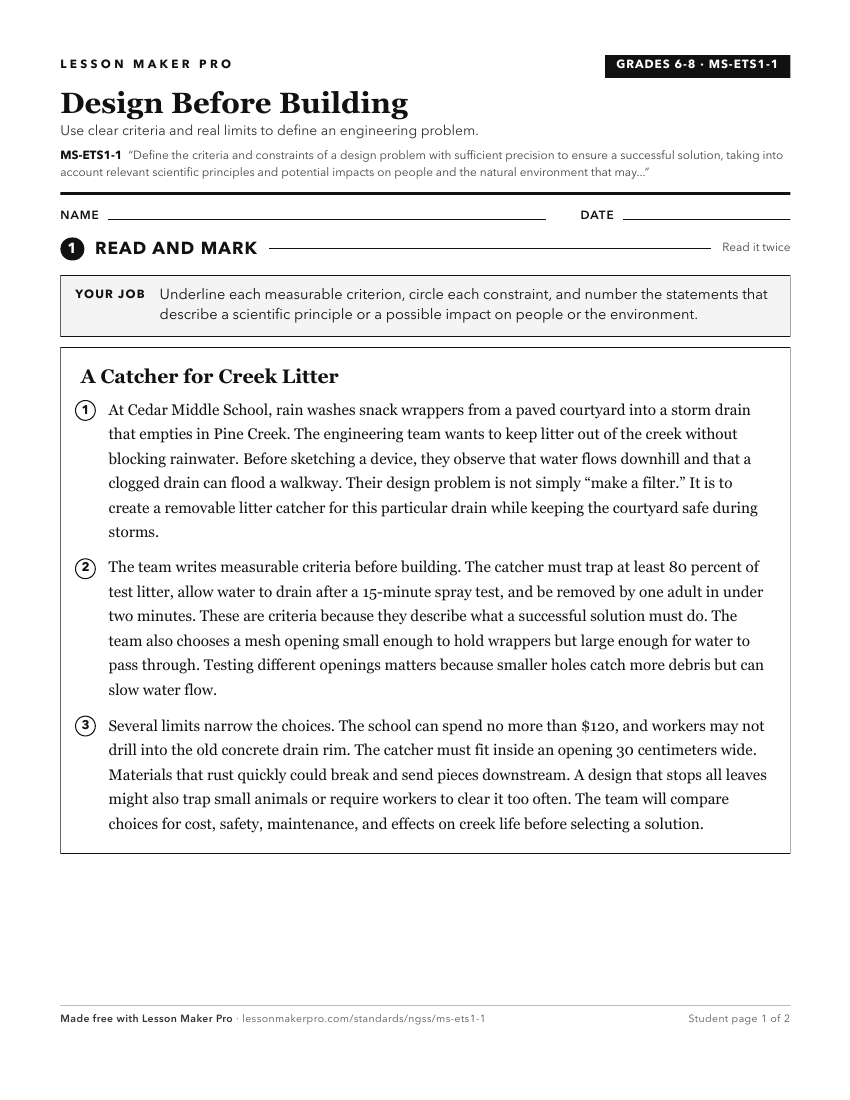
A ready-to-print activity worksheet aligned to MS-ETS1-1, with an answer key for the teacher on its own page. No account needed.
PDF, US Letter, prints cleanly in black and white.
Download the worksheetKeep exploring
Related Standards
- MS-ETS1-2
Evaluate competing design solutions using a systematic process to determine how well they meet the criteria and constraints of the problem.
- 3-5-ETS1-1
Define a simple design problem reflecting a need or a want that includes specified criteria for success and constraints on materials, time, or cost.
- HS-ETS1-1
Analyze a major global challenge to specify qualitative and quantitative criteria and constraints for solutions that account for societal needs and wants.
- HS-ETS1-3
Evaluate a solution to a complex real-world problem based on prioritized criteria and trade-offs that account for a range of constraints, including cost, safety...
Turn this exact standard into a lesson
Grade, subject, topic, and the complete standard are prefilled. Create one free, no account needed.
Also for this standard:Make a WorksheetMake a QuizMake a Sub Lesson