NGSS 3-5-ETS1-1
The Standard
Define a simple design problem reflecting a need or a want that includes specified criteria for success and constraints on materials, time, or cost.
Next Generation Science Standards
Teacher's field guide
What This Standard Means
What Students Need to Do
- Students turn a need or want into a clear problem to solve. They list measurable signs of success and identify limits involving supplies, time, or money.
What Mastery Looks Like
- Given a scenario, students can separate the goal, measurable success measures, and limits. Their problem statement gives enough detail for someone to begin planning possible solutions.
Common Misconceptions
- Students may choose a solution before clearly naming the problem. They often confuse success measures with limits. They may use vague measures such as “works well” instead of measurable results.
How to Assess It
- Exit ticket: A bridge must span 20 centimeters and hold a toy car using three paper sheets, 30 centimeters of tape, and 15 minutes. Students label the need, two success measures, and three limits, then write one clear problem statement.
Lesson moves
Ways to Teach It
Give teams 10 index cards, 30 centimeters of tape, and a toy figure, then have them write tower criteria and constraints before building.
Ask, “How is ‘make a good lunchbox’ different from ‘keep food cool for three hours and cost under $10’?”
Teams sort bridge challenge cards into need, success measure, material limit, time limit, and cost limit, then defend one choice.
Show a school backpack, then have students define a redesign problem using student needs, measurable success measures, and a price limit.
Free download
Printable 3-5-ETS1-1 Worksheet
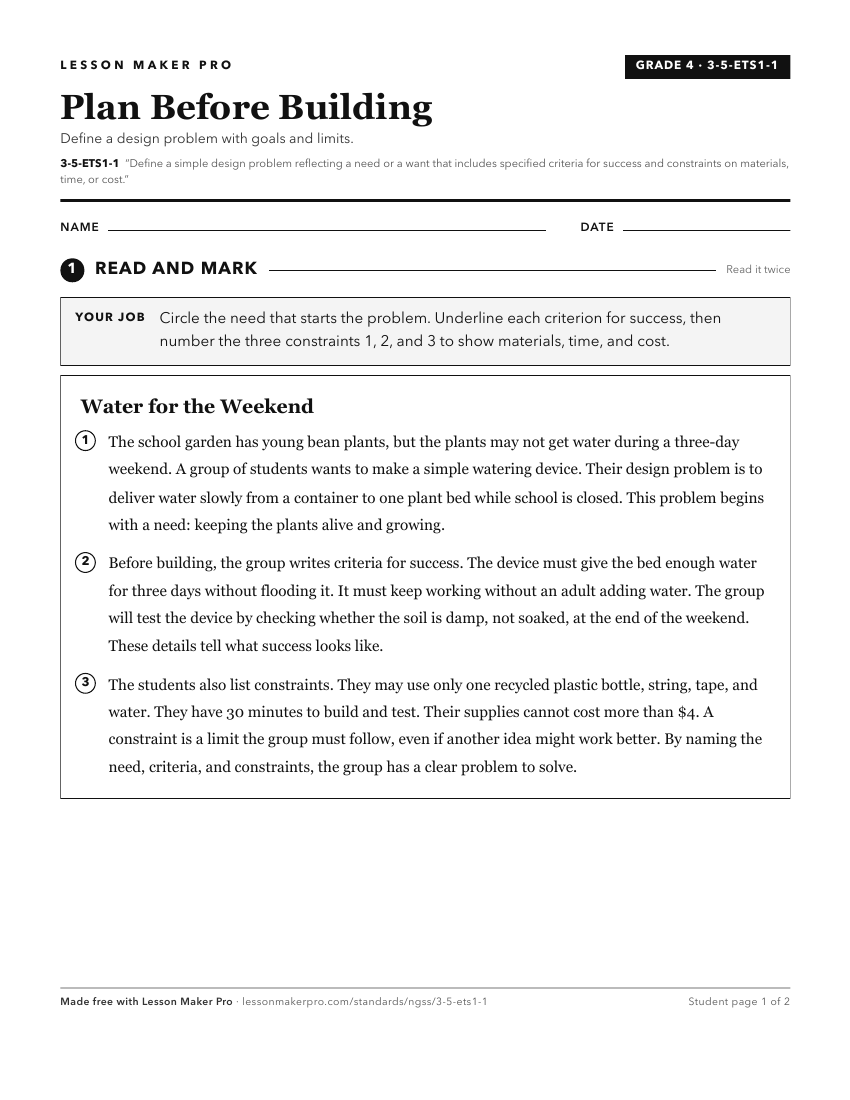
A ready-to-print activity worksheet aligned to 3-5-ETS1-1, with an answer key for the teacher on its own page. No account needed.
PDF, US Letter, prints cleanly in black and white.
Download the worksheetKeep exploring
Related Standards
- HS-ETS1-2
Design a solution to a complex real-world problem by breaking it down into smaller, more manageable problems that can be solved through engineering.
- MS-ETS1-1
Define the criteria and constraints of a design problem with sufficient precision to ensure a successful solution, taking into account relevant scientific princ...
- 3-PS2-4
Define a simple design problem that can be solved by applying scientific ideas about magnets.
- MS-ETS1-2
Evaluate competing design solutions using a systematic process to determine how well they meet the criteria and constraints of the problem.
Turn this exact standard into a lesson
Grade, subject, topic, and the complete standard are prefilled. Create one free, no account needed.
Also for this standard:Make a WorksheetMake a QuizMake a Sub Lesson