NGSS 3-PS2-4
The Standard
Define a simple design problem that can be solved by applying scientific ideas about magnets.
Next Generation Science Standards
Teacher's field guide
What This Standard Means
What Students Need to Do
- Students describe a problem that magnets could solve. They state the goal, design limits, and a clear test for success, then explain whether attraction or repulsion is needed.
What Mastery Looks Like
- Given a situation, a student writes a focused problem statement and names measurable success criteria. The student places magnets sensibly and predicts how their push or pull will help.
Common Misconceptions
- Students may think magnets attract every metal object, or that every pair of magnet ends attracts. They may add a magnet without saying where it goes, which poles face, or how the design will be tested.
How to Assess It
- Exit ticket: “A classroom cabinet door swings open. Write the design goal, one limit, one success test, and draw where magnets should go.” Add one sentence explaining how magnetic attraction solves the problem.
Lesson moves
Ways to Teach It
Build a cardboard door latch with two magnets and tape, then test whether it stays closed and opens with a gentle pull.
Write a problem statement for keeping two toy cars apart, including the goal, one limit, and how success will be measured.
Play Magnet Match by pairing challenge cards with attraction or repulsion, then sketch the magnet placement for each solution.
Examine a magnetic cabinet catch, identify where attraction acts, and suggest one change that would make the closure stronger or weaker.
Free download
Printable 3-PS2-4 Worksheet
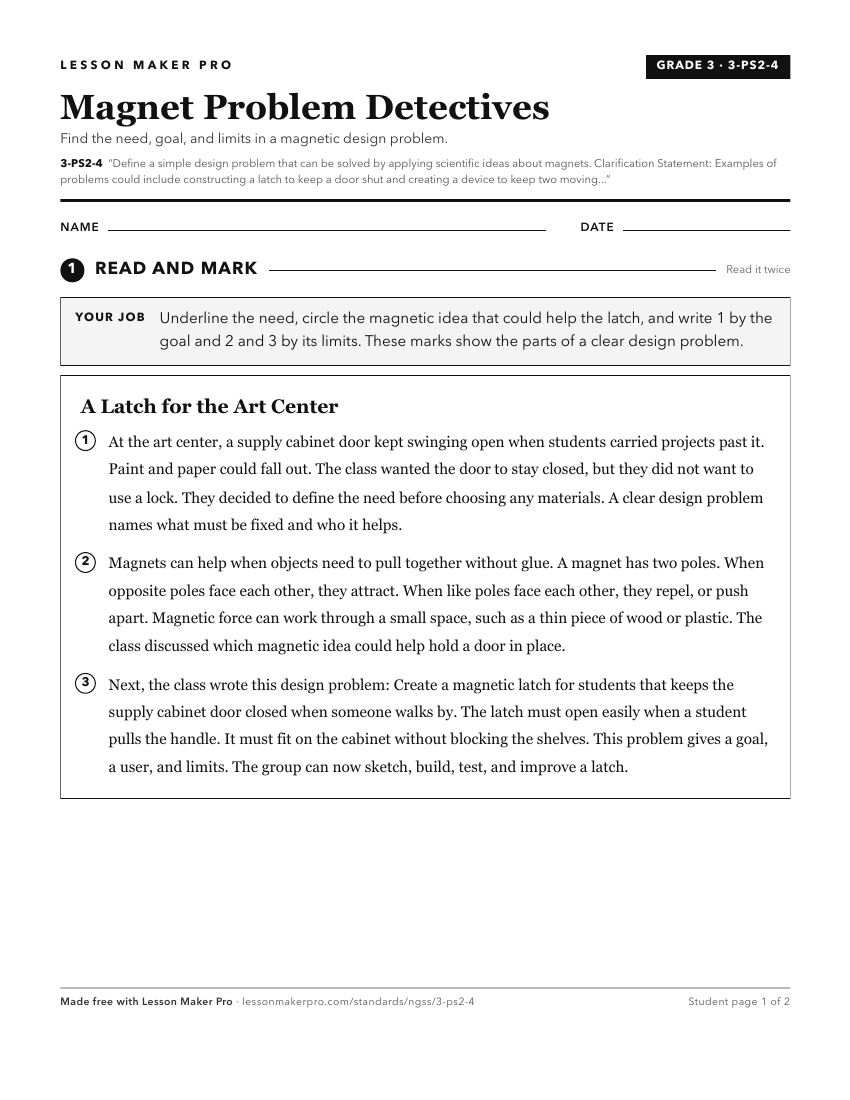
A ready-to-print activity worksheet aligned to 3-PS2-4, with an answer key for the teacher on its own page. No account needed.
PDF, US Letter, prints cleanly in black and white.
Download the worksheetLearning progression
Where This Standard Sits
See the whole path on the Physical Science progression map.
What This Unlocks
Mastery here sets students up for these next.
- MS-PS2-5
Using magnets to solve problems introduces noncontact forces, which supports investigating invisible fields that cause forces between objects.
- MS-PS2-3
Elementary magnet applications prepare students to consider what changes magnetic effects, later extended to data about force strength and electric forces.
Keep exploring
Related Standards
- 3-PS2-3
Ask questions to determine cause and effect relationships of electric or magnetic interactions between two objects not in contact with each other.
- 3-5-ETS1-1
Define a simple design problem reflecting a need or a want that includes specified criteria for success and constraints on materials, time, or cost.
- HS-PS3-5
Develop and use a model of two objects interacting through electric or magnetic fields to illustrate the forces between objects and the changes in energy of the...
Turn this exact standard into a lesson
Grade, subject, topic, and the complete standard are prefilled. Create one free, no account needed.
Also for this standard:Make a WorksheetMake a QuizMake a Sub Lesson