NGSS 5-ESS3-1
The Standard
Obtain and combine information about ways individual communities use science ideas to protect the Earth's resources and environment.
Next Generation Science Standards
Teacher's field guide
What This Standard Means
What Students Need to Do
- Students gather information from several sources about how a community protects water, soil, air, plants, animals, or energy resources. They combine evidence to explain what the community does and why it works.
What Mastery Looks Like
- Students identify a community action, the resource it protects, and the science idea behind it. They combine details from two or more reliable sources into a clear explanation.
Common Misconceptions
- Students may focus only on personal choices, such as turning off lights, instead of community programs. They may copy one source without combining evidence or explaining the science behind an action.
How to Assess It
- Give students two short sources about a city water conservation program. Ask them to name the resource protected, explain the science idea used, and cite both sources.
Lesson moves
Ways to Teach It
Build a gravel, sand, and cloth water filter, then connect each layer to information from a short article about municipal water treatment.
Compare two community programs, then write which one better protects a resource and support the claim with evidence from both sources.
Sort cards showing community actions, protected resources, and science ideas, then race to build accurate sets and explain each match.
Use a local government website to investigate recycling, water conservation, or habitat restoration, then create a one-page community action brief.
Free download
Printable 5-ESS3-1 Worksheet
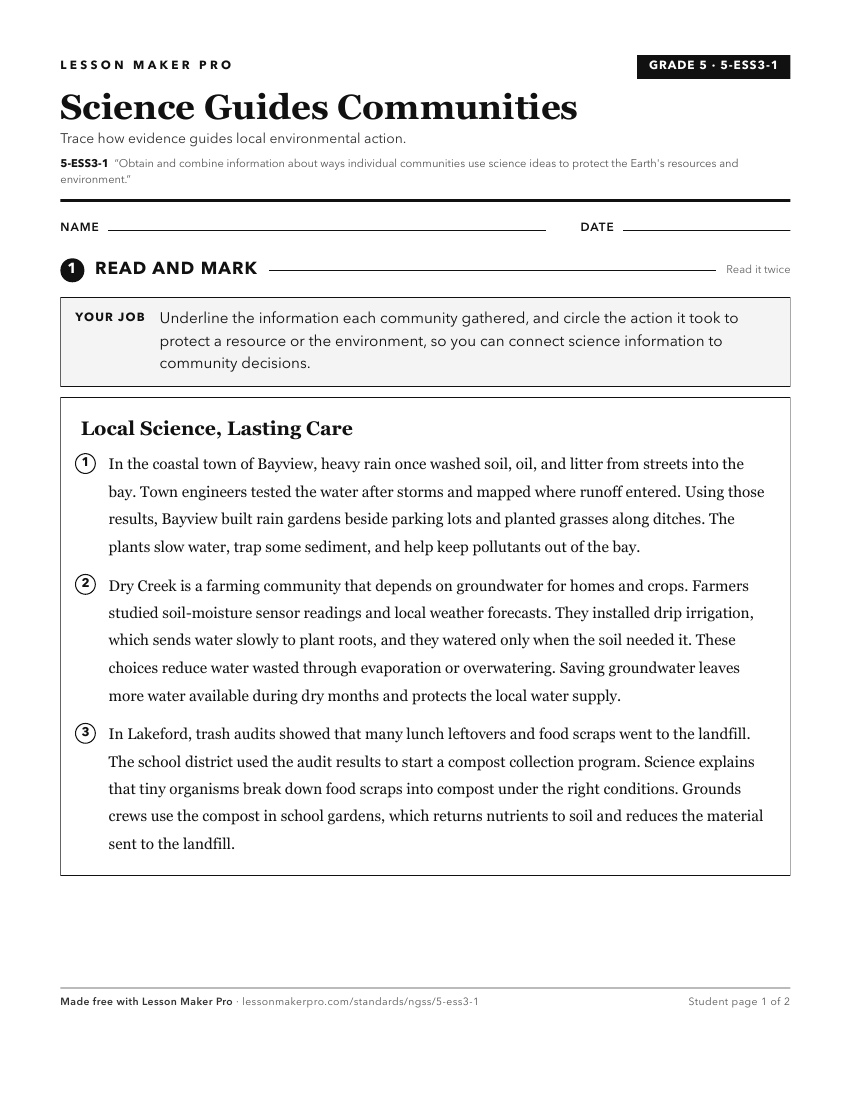
A ready-to-print activity worksheet aligned to 5-ESS3-1, with an answer key for the teacher on its own page. No account needed.
PDF, US Letter, prints cleanly in black and white.
Download the worksheetKeep exploring
Related Standards
- MS-ESS3-3
Apply scientific principles to design a method for monitoring and minimizing a human impact on the environment.
- 4-ESS3-1
Obtain and combine information to describe that energy and fuels are derived from natural resources and their uses affect the environment.
- MS-PS1-3
Gather and make sense of information to describe that synthetic materials come from natural resources and impact society.
- 3-ESS2-2
Obtain and combine information to describe climates in different regions of the world.
Turn this exact standard into a lesson
Grade, subject, topic, and the complete standard are prefilled. Create one free, no account needed.
Also for this standard:Make a WorksheetMake a QuizMake a Sub Lesson