NGSS 4-ESS3-1
The Standard
Obtain and combine information to describe that energy and fuels are derived from natural resources and their uses affect the environment.
Next Generation Science Standards
Teacher's field guide
What This Standard Means
What Students Need to Do
- Students gather facts from texts, diagrams, or videos about where energy and fuels come from. They combine those facts to explain how using each resource can change the environment.
What Mastery Looks Like
- Students correctly connect sunlight, wind, moving water, fossil fuels, and uranium to forms of usable energy. They combine facts from sources to explain environmental effects, such as air pollution or habitat loss.
Common Misconceptions
- Students may call electricity a natural resource instead of something produced from resources. They may think renewable resources cause no environmental harm, or that fossil fuels can be replaced quickly.
How to Assess It
- Give an exit ticket with sunlight and coal. Students label each renewable or nonrenewable, name one use, and describe one environmental effect.
Lesson moves
Ways to Teach It
Give groups picture cards to arrange into chains showing a natural resource, its energy use, and one environmental effect.
Ask students to write: Which energy source should our town use, and what evidence supports your choice?
Play a matching game with cards for resources, energy uses, renewable status, and environmental effects.
Conduct a classroom energy audit by listing devices, tracing their likely energy sources, and suggesting one way to reduce environmental harm.
Free download
Printable 4-ESS3-1 Worksheet
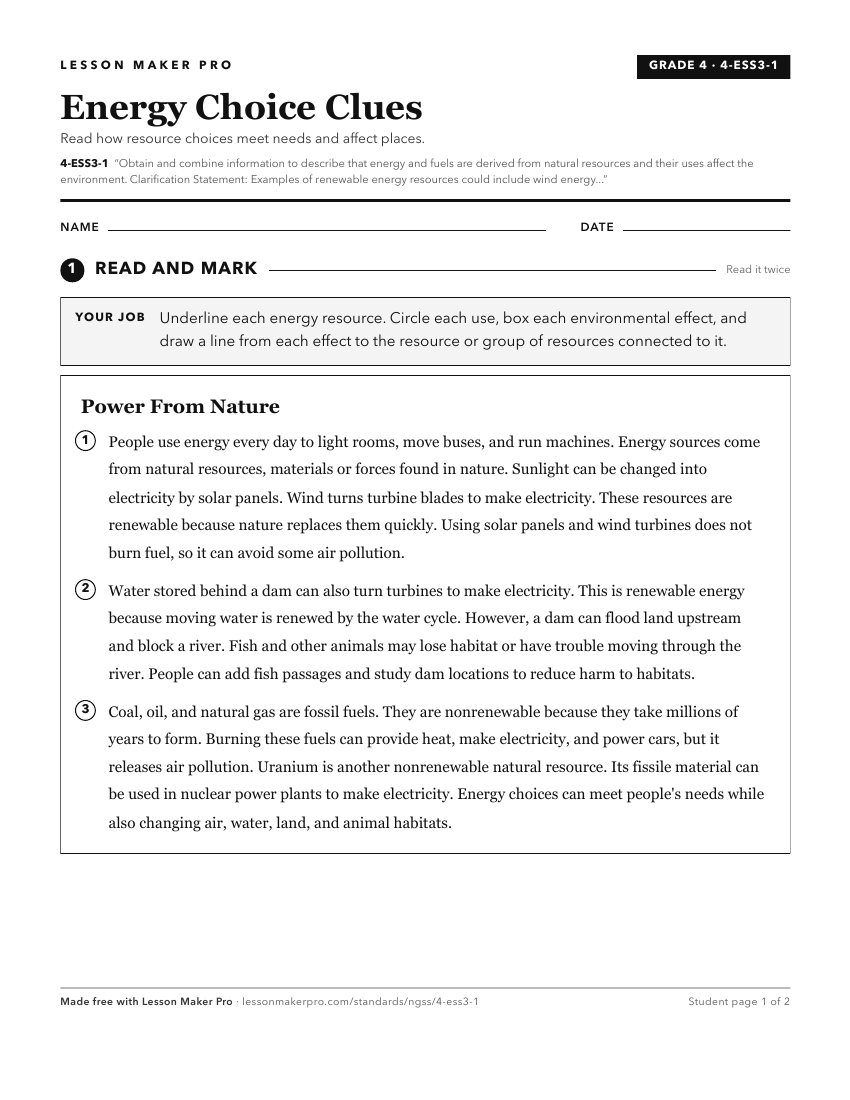
A ready-to-print activity worksheet aligned to 4-ESS3-1, with an answer key for the teacher on its own page. No account needed.
PDF, US Letter, prints cleanly in black and white.
Download the worksheetKeep exploring
Related Standards
- MS-ESS2-1
Develop a model to describe the cycling of Earth's materials and the flow of energy that drives this process.
- MS-PS1-3
Gather and make sense of information to describe that synthetic materials come from natural resources and impact society.
- 5-ESS3-1
Obtain and combine information about ways individual communities use science ideas to protect the Earth's resources and environment.
- 3-ESS2-2
Obtain and combine information to describe climates in different regions of the world.
Turn this exact standard into a lesson
Grade, subject, topic, and the complete standard are prefilled. Create one free, no account needed.
Also for this standard:Make a WorksheetMake a QuizMake a Sub Lesson