NGSS MS-ESS3-3
The Standard
Apply scientific principles to design a method for monitoring and minimizing a human impact on the environment.
Next Generation Science Standards
Teacher's field guide
What This Standard Means
What Students Need to Do
- Students investigate a human activity that affects air, water, land, or living things. They design a way to track the impact and reduce it, then use evidence and constraints to judge the design.
What Mastery Looks Like
- Students can define a specific environmental problem, select useful measurements, and propose a workable way to reduce the impact. They compare results with baseline data, consider limits such as cost or space, and revise the design.
Common Misconceptions
- Students may confuse monitoring an impact with reducing it. They may choose a solution because it sounds environmentally friendly without using data, considering tradeoffs, or explaining how results will be measured.
How to Assess It
- Exit ticket: A stream near a school has rising nitrate levels. Describe one way to monitor the problem, one reduction method, and one measurement that would show whether the method worked.
Lesson moves
Ways to Teach It
Build two soil trays, add different runoff barriers, pour equal water amounts, and compare water clarity and soil loss.
Write a claim choosing the best way to reduce school water use, then support it with data, cost, and feasibility.
Play a constraint-card challenge where teams revise a pollution solution after drawing limits such as cost, space, or maintenance.
Audit one day of cafeteria waste, graph the results, and propose a measurable reduction plan the school could test.
Free download
Printable MS-ESS3-3 Worksheet
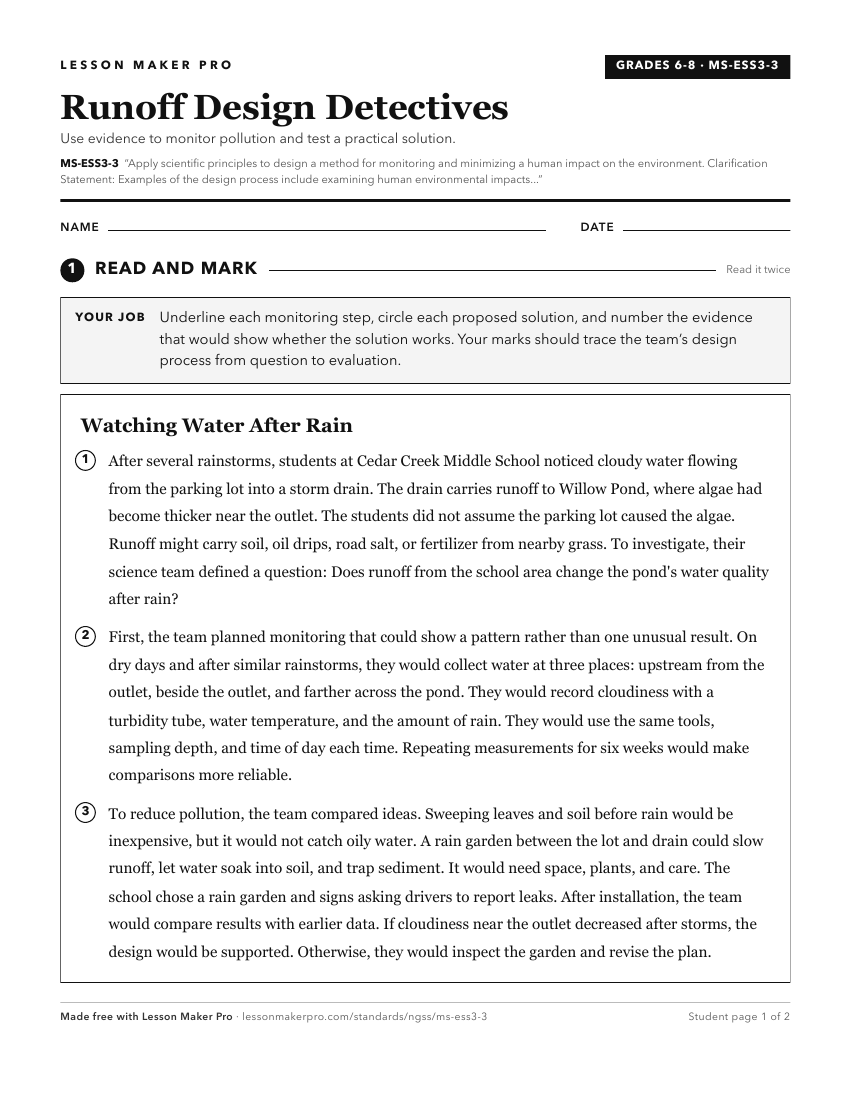
A ready-to-print activity worksheet aligned to MS-ESS3-3, with an answer key for the teacher on its own page. No account needed.
PDF, US Letter, prints cleanly in black and white.
Download the worksheetLearning progression
Where This Standard Sits
See the whole path on the Earth & Space Science progression map.
What This Unlocks
Mastery here sets students up for these next.
- HS-ESS3-4
Students move from designing ways to monitor and reduce impacts to judging and improving technologies that reduce human effects on systems.
- HS-ESS3-3
Students carry forward how human actions can be monitored and reduced when modeling resource management, population sustainability, and biodiversity tradeoffs.
Keep exploring
Related Standards
- K-ESS3-3
Communicate solutions that will reduce the impact of humans on the land, water, air, and/or other living things in the local environment.
- HS-LS2-7
Design, evaluate, and refine a solution for reducing the impacts of human activities on the environment and biodiversity.
- 4-ESS3-2
Generate and compare multiple solutions to reduce the impacts of natural Earth processes on humans.
Turn this exact standard into a lesson
Grade, subject, topic, and the complete standard are prefilled. Create one free, no account needed.
Also for this standard:Make a WorksheetMake a QuizMake a Sub Lesson