NGSS HS-LS2-7
The Standard
Design, evaluate, and refine a solution for reducing the impacts of human activities on the environment and biodiversity.
Next Generation Science Standards
Teacher's field guide
What This Standard Means
What Students Need to Do
- Students identify a human-caused environmental problem and trace its effects on an ecosystem and its species. They develop, compare, test, and revise solutions using evidence, criteria, and constraints.
What Mastery Looks Like
- Students propose a feasible solution and support it with ecological evidence. They compare benefits, limits, costs, and unintended effects, then make a specific revision based on test results or feedback.
Common Misconceptions
- Students may assume any environmentally friendly idea will work without evidence. They may overlook costs, unintended effects, stakeholder needs, or the difference between protecting one species and supporting biodiversity.
How to Assess It
- Give students this exit prompt: “A new road divides a forest habitat. Propose one solution, name two success measures, and describe one likely tradeoff.”
Lesson moves
Ways to Teach It
Build and test mini wetland filters using gravel, sand, and plants, then revise the design after measuring water clarity.
Write a recommendation about removing a dam, using evidence about fish movement, energy needs, flooding, and nearby communities.
Run a budget challenge where teams choose habitat protections, score biodiversity gains, and revise plans when new constraint cards appear.
Map a local fragmented habitat and draft a wildlife crossing proposal for a city planning board.
Free download
Printable HS-LS2-7 Worksheet
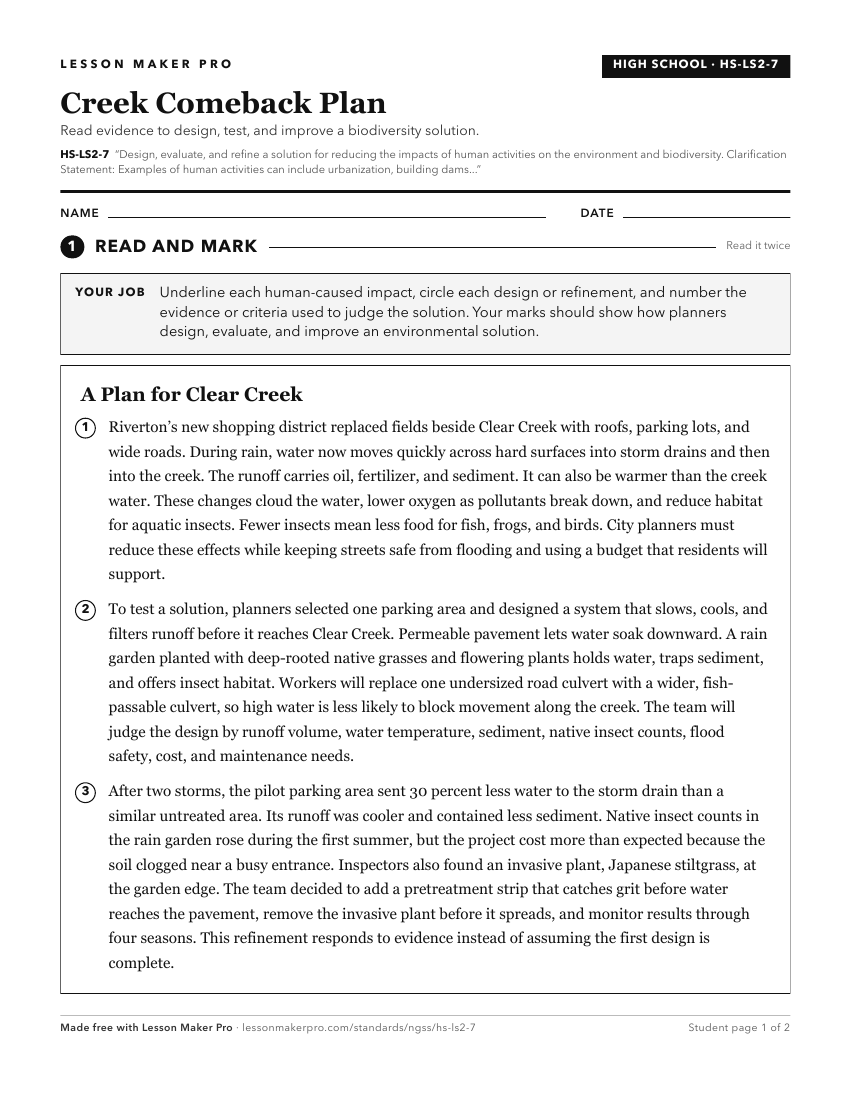
A ready-to-print activity worksheet aligned to HS-LS2-7, with an answer key for the teacher on its own page. No account needed.
PDF, US Letter, prints cleanly in black and white.
Download the worksheetBefore This Standard
If students are struggling here, check these first.
- MS-LS2-5
Evaluating biodiversity solutions in middle school supports high school design and refinement of solutions to reduce human environmental impacts.
- MS-LS2-4
Understanding how ecosystem changes affect populations supports designing and improving solutions that reduce human impacts on biodiversity.
Keep exploring
Related Standards
- K-ESS3-3
Communicate solutions that will reduce the impact of humans on the land, water, air, and/or other living things in the local environment.
- HS-LS4-6
Create or revise a simulation to test a solution to mitigate adverse impacts of human activity on biodiversity.
- MS-ESS3-3
Apply scientific principles to design a method for monitoring and minimizing a human impact on the environment.
- HS-ESS3-4
Evaluate or refine a technological solution that reduces impacts of human activities on natural systems.
Turn this exact standard into a lesson
Grade, subject, topic, and the complete standard are prefilled. Create one free, no account needed.
Also for this standard:Make a WorksheetMake a QuizMake a Sub Lesson