NGSS 4-ESS3-2
The Standard
Generate and compare multiple solutions to reduce the impacts of natural Earth processes on humans.
Next Generation Science Standards
Teacher's field guide
What This Standard Means
What Students Need to Do
- Students design more than one way to reduce harm from earthquakes, floods, tsunamis, or volcanic eruptions. They compare how well each solution could protect people and property.
What Mastery Looks Like
- Given a hazard and community setting, students can sketch and explain two workable solutions. They can compare the solutions using evidence and criteria such as safety, cost, materials, and reliability.
Common Misconceptions
- Students may think people can stop earthquakes, eruptions, floods, or tsunamis from happening. They may assume the strongest or most expensive design is always best. They may also confuse warning systems, which help people respond, with structures that reduce physical damage.
How to Assess It
- Exit ticket: A coastal town faces tsunami risk. Sketch two ways to protect people, then compare them using safety and cost.
Lesson moves
Ways to Teach It
Build craft stick structures on a tray, shake the tray, record damage, and revise one design to improve stability.
Write a recommendation for a town facing floods, comparing two solutions by safety, cost, and likely effectiveness.
Sort solution cards by hazard, then rank each group from most to least effective and defend the rankings.
Study a community hazard map and create a short proposal for where shelters, barriers, or warning systems should be placed.
Free download
Printable 4-ESS3-2 Worksheet
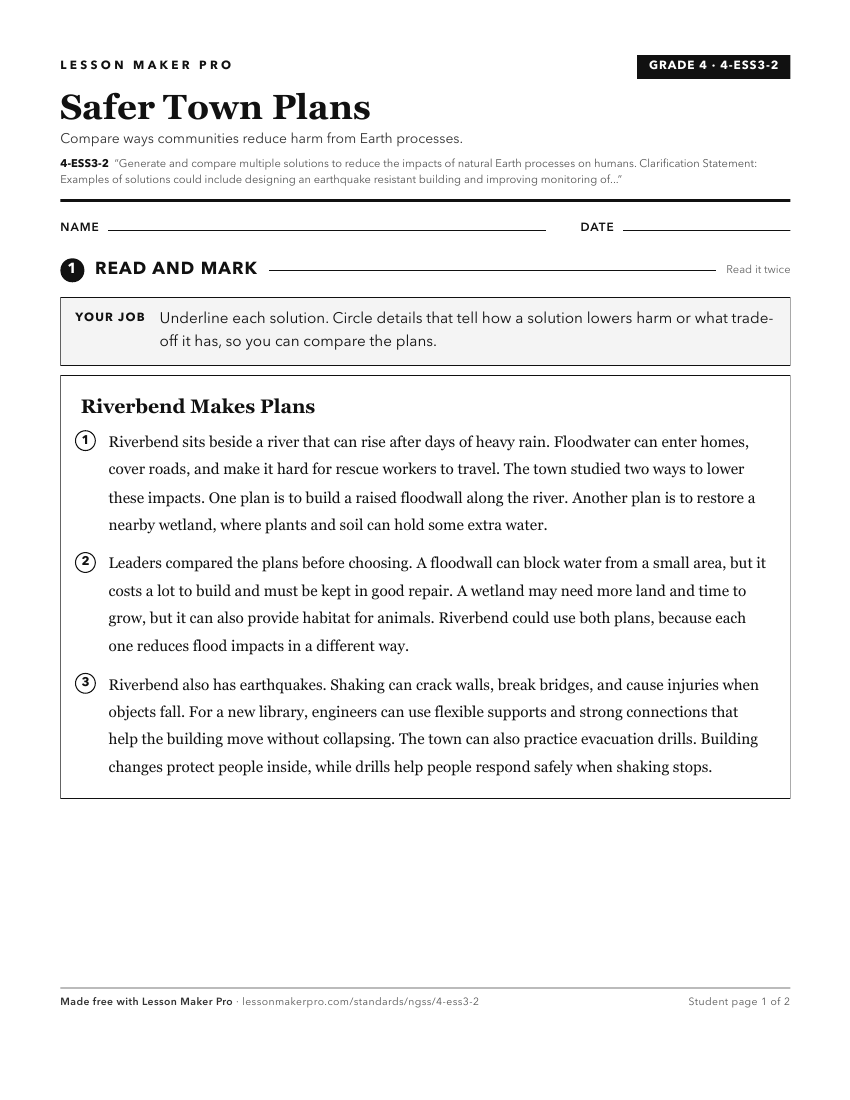
A ready-to-print activity worksheet aligned to 4-ESS3-2, with an answer key for the teacher on its own page. No account needed.
PDF, US Letter, prints cleanly in black and white.
Download the worksheetKeep exploring
Related Standards
- K-ESS3-3
Communicate solutions that will reduce the impact of humans on the land, water, air, and/or other living things in the local environment.
- MS-ESS3-3
Apply scientific principles to design a method for monitoring and minimizing a human impact on the environment.
- HS-ESS3-4
Evaluate or refine a technological solution that reduces impacts of human activities on natural systems.
- HS-LS2-7
Design, evaluate, and refine a solution for reducing the impacts of human activities on the environment and biodiversity.
Turn this exact standard into a lesson
Grade, subject, topic, and the complete standard are prefilled. Create one free, no account needed.
Also for this standard:Make a WorksheetMake a QuizMake a Sub Lesson