NGSS 4-PS3-4
The Standard
Apply scientific ideas to design, test, and refine a device that converts energy from one form to another.
Next Generation Science Standards
Teacher's field guide
What This Standard Means
What Students Need to Do
- Students design and build a simple device that changes energy into motion, light, sound, or electricity. They test its performance, record evidence, and improve the design while following material, cost, or time limits.
What Mastery Looks Like
- Students build a working device and correctly identify its energy input and output. They use test results to make a specific change, then explain whether that change improved performance within the given limits.
Common Misconceptions
- Students may say energy disappears after the device works or that a bulb, motor, or speaker creates energy. They may change a design without using test results or considering limits such as materials, time, and cost.
How to Assess It
- Exit ticket: Draw a device that uses a battery to produce motion, light, or sound. Label the energy input and output, then name one change you would test.
Lesson moves
Ways to Teach It
Build a rubber-band car from cardboard, skewers, and bottle caps, then change one feature to make it travel farther.
Write: Where does the energy start and end in a flashlight, and what evidence shows the conversion?
Match device cards to input and output energy cards, then defend each match to a partner.
Examine a hand-crank flashlight, then explain how its energy changes and why it helps during a power outage.
Free download
Printable 4-PS3-4 Worksheet
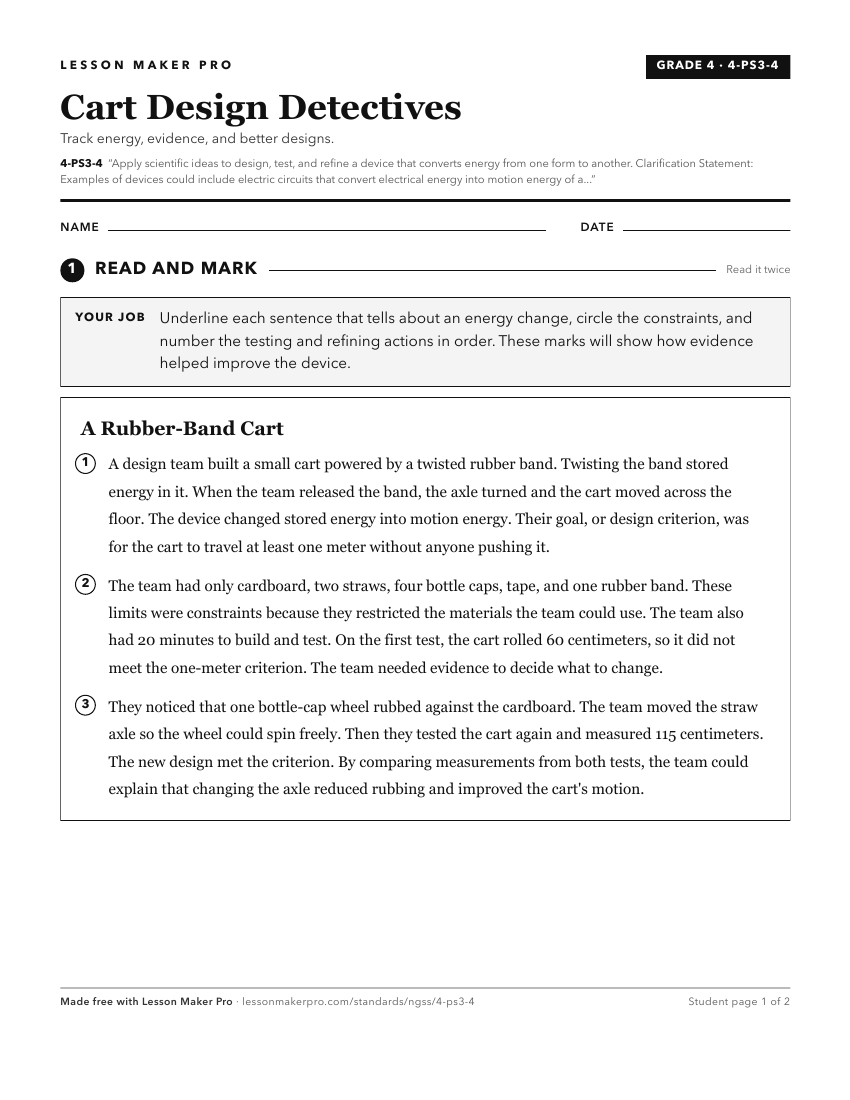
A ready-to-print activity worksheet aligned to 4-PS3-4, with an answer key for the teacher on its own page. No account needed.
PDF, US Letter, prints cleanly in black and white.
Download the worksheetLearning progression
Where This Standard Sits
See the whole path on the Physical Science progression map.
What This Unlocks
Mastery here sets students up for these next.
Keep exploring
Related Standards
- HS-PS3-3
Design, build, and refine a device that works within given constraints to convert one form of energy into another form of energy.
- MS-PS1-6
Undertake a design project to construct, test, and modify a device that either releases or absorbs thermal energy by chemical processes.
- HS-PS2-3
Apply scientific and engineering ideas to design, evaluate, and refine a device that minimizes the force on a macroscopic object during a collision.
Turn this exact standard into a lesson
Grade, subject, topic, and the complete standard are prefilled. Create one free, no account needed.
Also for this standard:Make a WorksheetMake a QuizMake a Sub Lesson