Mississippi Science L.6.4
Standard Cluster
Students will demonstrate an understanding of classification tools and models such as dichotomous keys to classify representative organisms based on the characteristics of the kingdoms: Archaebacteria, Eubacteria, Protists, Fungi, Plants, and Animals. Compare and contrast modern classification techniques (e.g., analyzing genetic material) to the historical practices used by scientists such as Aristotle and Carolus Linnaeus. Use classification methods to explore the diversity of organisms in kingdoms (animals, plants, fungi, protists, bacteria). Support claims that organisms have shared structural and behavioral characteristics. Analyze and interpret data from observations to describe how fungi obtain energy and respond to stimuli (e.g., bread mold, rotting plant material). Conduct investigations using a microscope or multimedia source to compare the characteristics of protists (euglena, paramecium, amoeba) and the methods they use to obtain energy and move through their environment (e.g., pond water). Engage in scientific arguments to support claims that bacteria (Archaebacteria and Eubacteria) and viruses can be both helpful and harmful to other organisms and the environment.
2026 Mississippi College- and Career-Readiness Standards for Science · Adaptations and Diversity
Cluster contents
Standards in This Cluster
L.6.4 is a cluster heading. These are the individual standards under it.
- L.6.4.1
Compare and contrast modern classification techniques (e.g., analyzing genetic material) to the historical practices used by scientists such as Aristotle and Ca...
- L.6.4.2
Use classification methods to explore the diversity of organisms in kingdoms (animals, plants, fungi, protists, bacteria). Support claims that organisms have sh...
- L.6.4.3
Analyze and interpret data from observations to describe how fungi obtain energy and respond to stimuli (e.g., bread mold, rotting plant material).
- L.6.4.4
Conduct investigations using a microscope or multimedia source to compare the characteristics of protists (euglena, paramecium, amoeba) and the methods they use...
- L.6.4.5
Engage in scientific arguments to support claims that bacteria (Archaebacteria and Eubacteria) and viruses can be both helpful and harmful to other organisms an...
Teacher's field guide
What This Cluster Means
What Students Need to Do
- Students use shared structures and behaviors to group organisms with a dichotomous key. They compare older ways of grouping life with DNA evidence. They explain how fungi feed and grow, how protists move and feed, and how bacteria and viruses can help or harm.
What Mastery Looks Like
- A student follows a key to classify an unfamiliar organism and cites the clues behind each choice. They explain why DNA evidence might change a grouping based on looks. They use observations to describe mold growth and protist feeding and movement, then support claims about helpful and harmful microbes.
Common Misconceptions
- Students may call every microbe a bacterium, including protists and viruses, or assume archaea and other bacteria are identical. They may think fungi make food like plants. They may assume that a moving protist must eat food, even though euglena can use light.
How to Assess It
- Give students a key with these choices: no nucleus, bacteria; nucleus and one cell, protist; nucleus and many cells, plant, animal, or fungus. Show an amoeba card labeled "one cell" and "nucleus." Ask students to name its group and cite both clues.
Lesson moves
Ways to Teach It
Give pairs organism photo cards and a printed dichotomous key; have them sort a mushroom, moss, amoeba, and bacterium, then underline each deciding trait.
Show look-alike insect photos and DNA-match cards; ask how Aristotle's habitat groups, Linnaeus's visible traits, and DNA evidence might group them differently.
Teams match amoeba, euglena, and paramecium clips to movement and food cards, then use damp and dry bread mold photos to explain growth.
Sort yogurt, food poisoning, bacteriophage, and flu fact cards into helpful and harmful cases; justify each placement with one fact.
Free download
Printable L.6.4 Worksheet
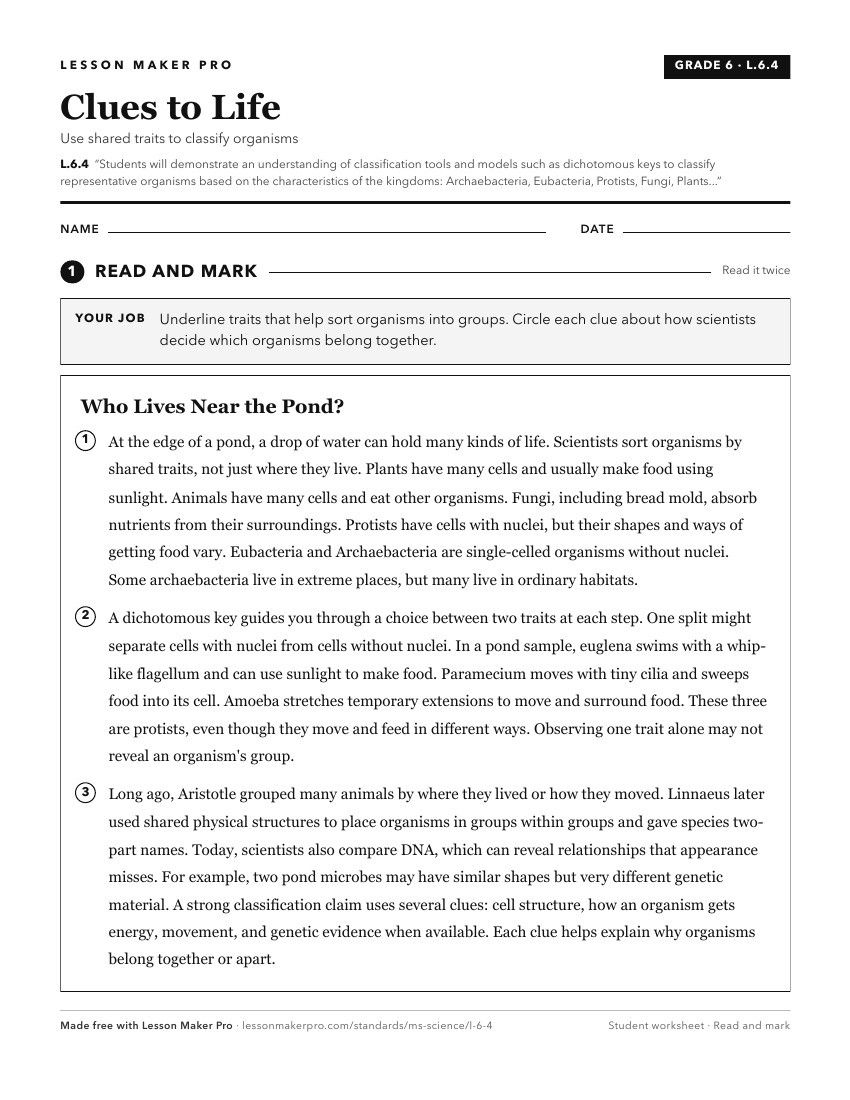
A ready-to-print activity worksheet aligned to L.6.4, with an answer key for the teacher on its own page. No account needed.
PDF, US Letter, prints cleanly in black and white.
Download the worksheetKeep exploring
Related Standards
- BIO.1A
Students will demonstrate an understanding of the characteristics of life and biological organization.
- ZOO.1.1
Develop and use dichotomous keys to distinguish animals from protists, plants, and fungi.
- L.2.1
Students will demonstrate an understanding of the classification of animals based on physical characteristics.
Turn this cluster into a lesson
Grade, subject, topic, and the complete cluster are prefilled. Create one free, no account needed.
Also for this cluster:Make a WorksheetMake a QuizMake a Sub Lesson