Mississippi Science L.6.4.1
The Standard
- L.6.4
- Students will demonstrate an understanding of classification tools and models such as dichotomous keys to classify representative organisms based on the characteristics of the kingdoms: Archaebacteria, Eubacteria, Protists, Fungi, Plants, and Animals.
Compare and contrast modern classification techniques (e.g., analyzing genetic material) to the historical practices used by scientists such as Aristotle and Carolus Linnaeus.
2026 Mississippi College- and Career-Readiness Standards for Science · Adaptations and Diversity
Teacher's field guide
What This Standard Means
What Students Need to Do
- Students compare how Aristotle, Linnaeus, and modern scientists group living things. They explain how observable traits, shared body structures, and DNA can lead to different groupings.
What Mastery Looks Like
- Given pictures and short DNA samples for a shark, dolphin, and bat, a student can group them using habitat, body traits, and DNA. They can explain why a dolphin is more closely related to a bat than to a shark.
Common Misconceptions
- Students may assume animals that live in water, such as sharks and dolphins, are close relatives. Some think Linnaeus had DNA evidence, or that scientists classify animals by appearance alone today.
How to Assess It
- Exit ticket: Name one kind of evidence Aristotle, Linnaeus, and modern scientists each used to group organisms. Explain why a shark and a dolphin sharing a habitat does not make them close relatives.
Lesson moves
Ways to Teach It
Have students sort shark, dolphin, and bat picture cards by habitat, body traits, and simulated DNA strips, then label each sort's evidence.
Ask students to write why a dolphin looks like a shark in water but shares more body traits with a bat.
Play three-clue sorting: reveal an animal's habitat, breathing method, and DNA match one at a time; students revise their grouping after each clue.
Give students shark and dolphin photos and have them write aquarium labels explaining why the animals belong to different groups.
Free download
Printable L.6.4.1 Worksheet
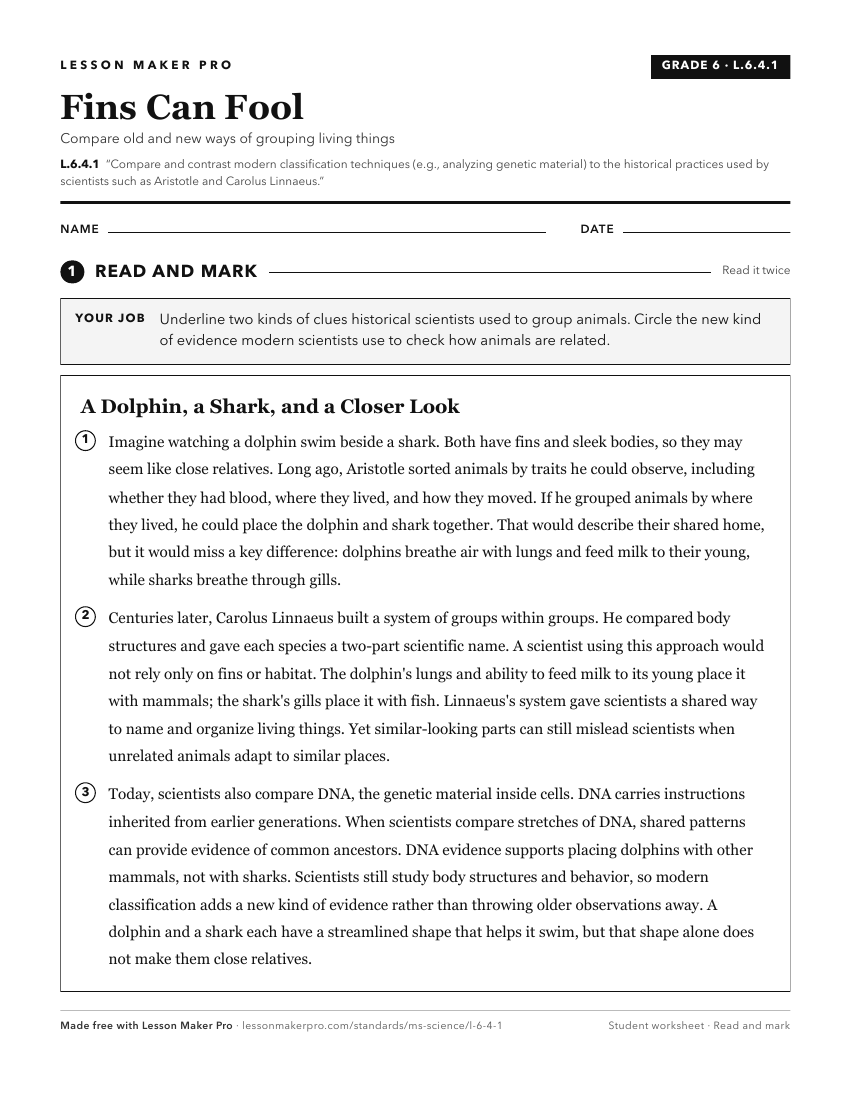
A ready-to-print activity worksheet aligned to L.6.4.1, with an answer key for the teacher on its own page. No account needed.
PDF, US Letter, prints cleanly in black and white.
Download the worksheetKeep exploring
Related Standards
- ZOO.1.3
Recognize that the classification of living organisms is based on their evolutionary history and/or similarities in fossils and living organisms.
- L.6.1.4
Compare and contrast different cells in order to classify them as a protist, fungus, plant, or animal.
- BOT.1.11
Compare and contrast functions of the various characteristics found in plant divisions and utilize dichotomous keys to identify plant species.
- L.6.4.2
Use classification methods to explore the diversity of organisms in kingdoms (animals, plants, fungi, protists, bacteria). Support claims that organisms have sh...
Turn this exact standard into a lesson
Grade, subject, topic, and the complete standard are prefilled. Create one free, no account needed.
Also for this standard:Make a WorksheetMake a QuizMake a Sub Lesson