Mississippi Science L.6.4.3
The Standard
- L.6.4
- Students will demonstrate an understanding of classification tools and models such as dichotomous keys to classify representative organisms based on the characteristics of the kingdoms: Archaebacteria, Eubacteria, Protists, Fungi, Plants, and Animals.
Analyze and interpret data from observations to describe how fungi obtain energy and respond to stimuli (e.g., bread mold, rotting plant material).
2026 Mississippi College- and Career-Readiness Standards for Science · Adaptations and Diversity
Teacher's field guide
What This Standard Means
What Students Need to Do
- Students use photos and measurements to describe where fungi grow and how that growth changes over time. They explain that fungi break down material such as bread or dead leaves, then absorb nutrients they use for energy. They look for evidence that growth changes with conditions such as moisture.
What Mastery Looks Like
- Given photos of damp and dry bread over several days, a student compares mold growth and points to specific observations. They explain that bread supplies nutrients, while moisture affects how well the mold grows.
Common Misconceptions
- Students may think fungi make food from sunlight like plants or that water is their energy source. They may also say mold moves toward moisture, rather than describing new growth in moist areas.
How to Assess It
- Show two dated photo sets of mold on damp and dry bread. Ask: Where did mold grow more, what observation supports your answer, and what did the mold use for energy?
Lesson moves
Ways to Teach It
Give groups dated photos of moldy bread to put in order, then have them plot the area covered by mold on graph paper.
Ask students to write two sentences explaining what rotting leaves provide a fungus and what a photo alone cannot prove.
Hand out growth-pattern cards and have pairs match each one to a claim about moisture or food that the observations support.
Show photos of a damp bathroom wall and a dry wall, then ask students to explain why fixing a leak could slow mold growth.
Free download
Printable L.6.4.3 Worksheet
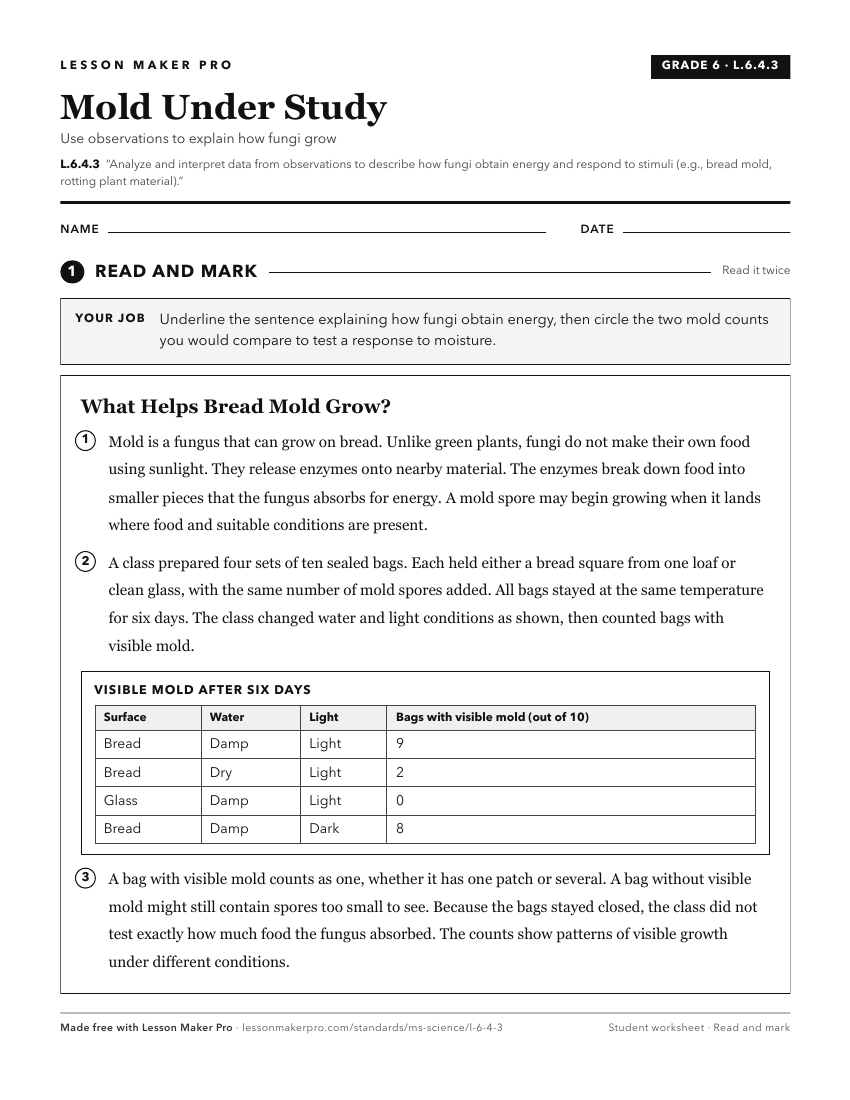
A ready-to-print activity worksheet aligned to L.6.4.3, with an answer key for the teacher on its own page. No account needed.
PDF, US Letter, prints cleanly in black and white.
Download the worksheetKeep exploring
Related Standards
- BOT.1.7
Conduct investigations, collect and analyze data, and communicate results that explain the processes of photosynthesis and cellular respiration (e.g., light int...
- BOT.1.4
Evaluate and explain how bacteria and fungi work symbiotically to enhance plant root function.
- BIO.2.5
Enrichment: Investigate variables (e.g., nutrient availability, temperature) that affect anaerobic respiration and current real-world applications of fermentati...
- L.7.3.2
Analyze and interpret data to explain how the processes of photosynthesis, and cellular respiration (aerobic and anaerobic) work together to meet the needs of p...
Turn this exact standard into a lesson
Grade, subject, topic, and the complete standard are prefilled. Create one free, no account needed.
Also for this standard:Make a WorksheetMake a QuizMake a Sub Lesson