Georgia 11.P.EICC.3
Georgia Standard (Expectation Cluster)
Comprehension Strategies Engage with a range of complex texts for a variety of tasks and purposes, accessing and using strategies for comprehension* before, during, and after reading as part of the meaning-making process.
Georgia's K-12 English Language Arts Standards · Practices (P)
Cluster contents
Expectations in This Standard
11.P.EICC.3 is a Georgia English Language Arts standard. These are the expectations under it.
- 11.P.EICC.3.a
Establish a purpose and set goals for reading, monitor comprehension, and adjust as needed. (I)
- 11.P.EICC.3.b
Scan and skim the text, making note of structures and sections that might be most useful. (I)
- 11.P.EICC.3.c
Draw from, compare, build, and integrate prior knowledge with the material in the text, addressing inconsistencies or gaps and adding to knowledge repertoires a...
- 11.P.EICC.3.d
Summarize and visualize sections of the text to maintain understanding. (I)
- 11.P.EICC.3.e
Make and track predictions about the events and information likely to come next. (I)
- 11.P.EICC.3.f
Make, track, and support inferences about different levels of meaning within the text. (I)
- 11.P.EICC.3.g
Determine the meanings of unfamiliar words and concepts by applying knowledge of context and of academic vocabulary and word parts. (I)
Teacher's field guide
What This Cluster Means
What Students Need to Do
- Students set a purpose and preview a text before reading. While reading, they question, annotate, reread, and adjust their understanding. After reading, they summarize and check their interpretation against evidence.
What Mastery Looks Like
- Students choose strategies that fit the text and purpose, such as previewing structure, asking questions, rereading, or summarizing. They can show how a strategy clarified confusion or changed an earlier interpretation.
Common Misconceptions
- Students may use the same reading method for every text and task. They may highlight large sections without recording questions, connections, or changes in understanding. Some stop after reading instead of checking whether their interpretation fits the evidence.
How to Assess It
- Give students a challenging paragraph and ask them to preview it, annotate one confusing point, reread, then explain the main idea with one cited detail.
Lesson moves
Ways to Teach It
Give pairs a printed editorial and three sticky-note colors to mark predictions, confusing passages, and revised understandings.
Ask students to write: Which reading move changed your interpretation most, and what exact sentence caused the change?
Run a strategy relay where teams match reading purposes to previewing, questioning, rereading, summarizing, or checking evidence.
Have students read a college financial-aid page to identify eligibility rules, deadlines, and two questions they still need answered.
Free download
Printable 11.P.EICC.3 Worksheet
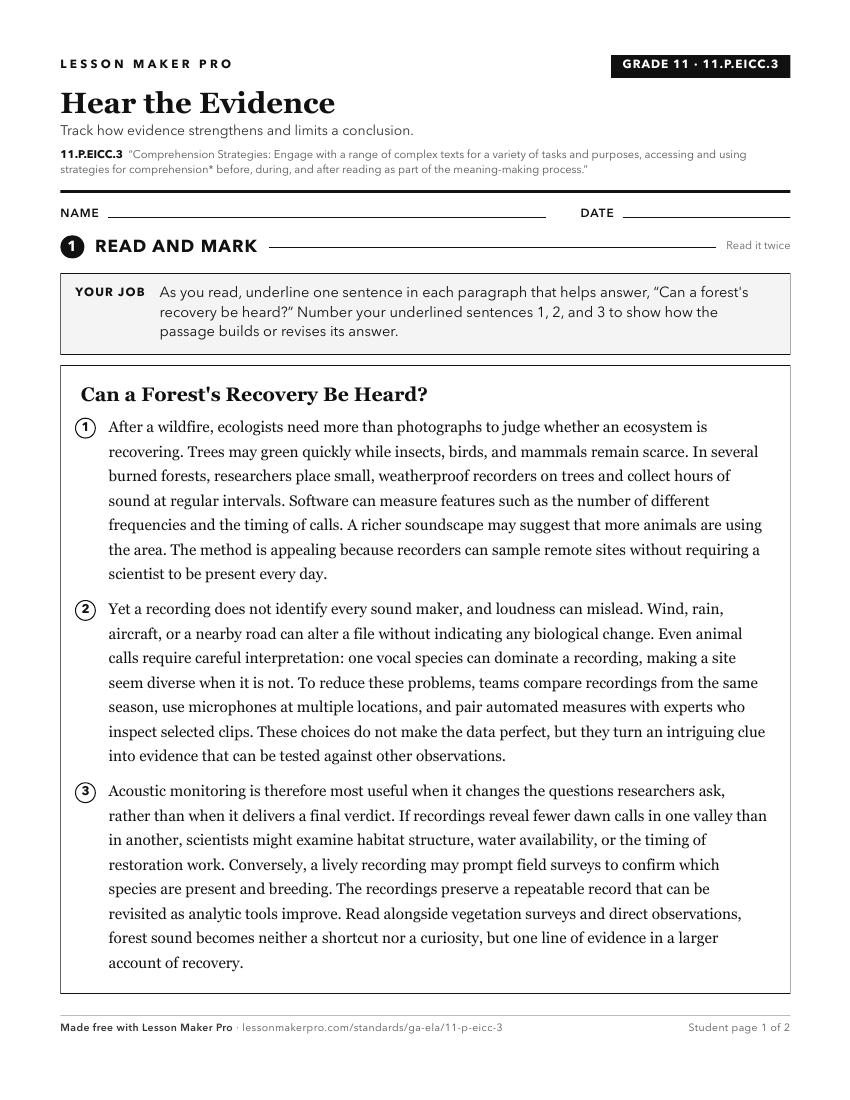
A ready-to-print activity worksheet aligned to 11.P.EICC.3, with an answer key for the teacher on its own page. No account needed.
PDF, US Letter, prints cleanly in black and white.
Download the worksheetKeep exploring
Related Standards
Turn this cluster into a lesson
Grade, subject, topic, and the complete cluster are prefilled. Create one free, no account needed.
Also for this cluster:Make a WorksheetMake a QuizMake a Sub Lesson