Alabama Social Studies SS24.6.18
Standard Cluster
Analyze how an individual’s civic participation can influence government, politics, and society. 18a Identify and describe ways citizens work together to influence the government and solve problems. 18b Differentiate between the requirements, responsibilities, and rights for citizenship in the United States. 18c Explain how an individual becomes a citizen of the United States, including birthright citizenship and naturalization, and identify moments in history in which citizenship has been extended to individuals not previously considered citizens.
2024 Alabama Course of Study: Social Studies
Cluster contents
Standards in This Cluster
SS24.6.18 is a cluster heading. These are the individual standards under it.
- SS24.6.18a
Identify and describe ways citizens work together to influence the government and solve problems.
- SS24.6.18b
Differentiate between the requirements, responsibilities, and rights for citizenship in the United States.
- SS24.6.18c
Explain how an individual becomes a citizen of the United States, including birthright citizenship and naturalization, and identify moments in history in which ...
Teacher's field guide
What This Cluster Means
What Students Need to Do
- Students explain how one person's actions can bring neighbors together and influence a government decision. They tell citizenship rights from civic responsibilities and requirements to become a citizen. They describe citizenship by birth or naturalization and name a law that expanded citizenship.
What Mastery Looks Like
- A student can explain how a resident's public comment might lead neighbors to petition a city council. They correctly sort voting, jury duty, and naturalization residency rules as a right, responsibility, and requirement. They identify birth and naturalization as paths to citizenship and explain whom the 1924 Indian Citizenship Act included.
Common Misconceptions
- Students may mistake voting for a legal duty and jury service for an optional right. They may think moving to the United States automatically grants citizenship or that all Native Americans had U.S. citizenship before 1924. They may assume a person must hold office to influence government.
How to Assess It
- Exit ticket: An unsafe crosswalk needs fixing. Describe one action a resident could take and how neighbors could help. Then label voting, jury duty, and naturalization residency rules as right, responsibility, or requirement; name both citizenship paths and whom the 1924 law included.
Lesson moves
Ways to Teach It
Give groups a street map and sticky notes; mark unsafe crossings, draft a petition, and present it to a mock council.
Ask students to write three steps showing how one resident's complaint about a broken streetlight could lead to a city decision.
Play a card sort: classify voting, jury duty, and residency rules; then match birth and naturalization to descriptions of each citizenship path.
Use a local council agenda; students find public comment time and draft a 20-second request for a safer crosswalk.
Free download
Printable SS24.6.18 Worksheet
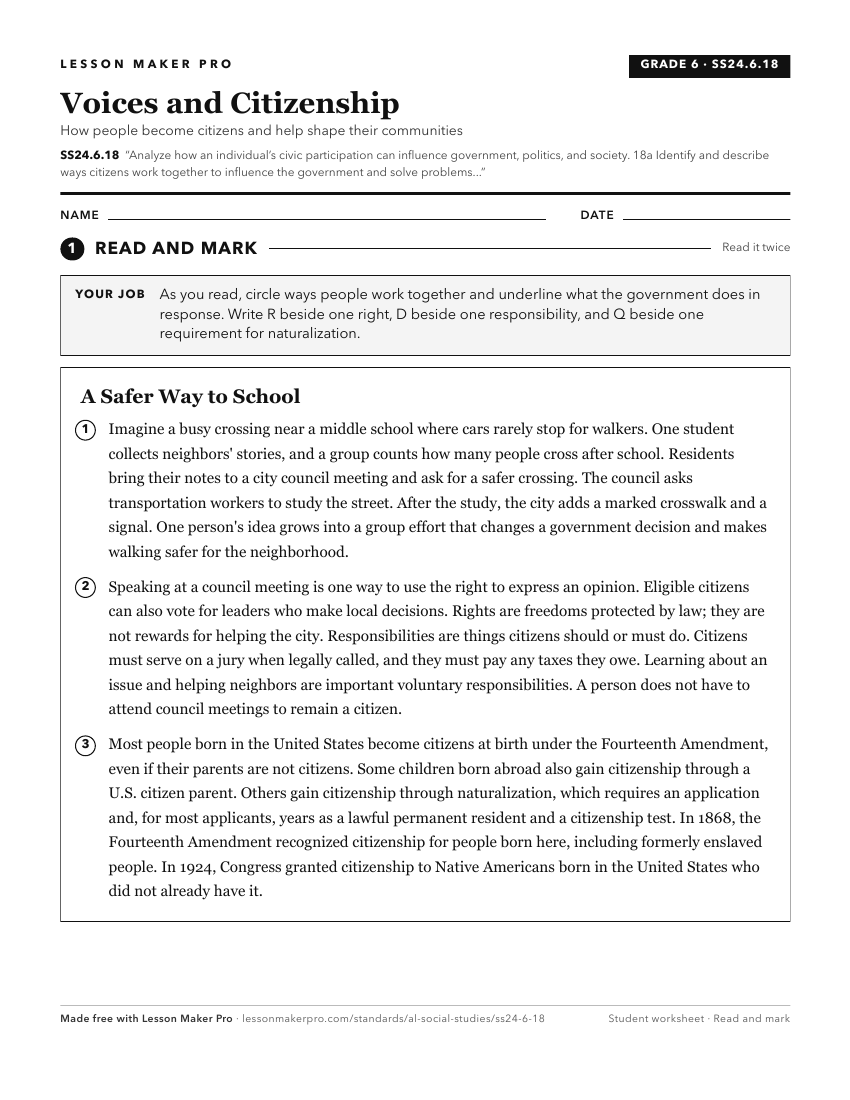
A ready-to-print activity worksheet aligned to SS24.6.18, with an answer key for the teacher on its own page. No account needed.
PDF, US Letter, prints cleanly in black and white.
Download the worksheetKeep exploring
Related Standards
- SS24.6.13c
Analyze key elements of the Constitution that deal with citizenship and civic participation, including the path to citizenship and the process for amending the ...
- SS24.USG.11
Analyze the electoral process, focusing on election laws and systems at the national, state, and local levels, and explain their constitutional underpinnings, p...
- SS24.S.7
Analyze how different types of social groups can influence individual and group behavior.*
Turn this cluster into a lesson
Grade, subject, topic, and the complete cluster are prefilled. Create one free, no account needed.
Also for this cluster:Make a WorksheetMake a QuizMake a Sub Lesson