Alabama Social Studies SS24.S.7
Standard Cluster
Analyze how different types of social groups can influence individual and group behavior.* 7a Compare and contrast types of groups and the reasons for group formation.* 7b Trace the development of various types of social groups from hunter-gatherer societies to the present day and explain how the importance of primary and secondary groups has changed over time.
2024 Alabama Course of Study: Social Studies
Cluster contents
Standards in This Cluster
SS24.S.7 is a cluster heading. These are the individual standards under it.
Teacher's field guide
What This Cluster Means
What Students Need to Do
- Students compare close-knit groups, such as families, with groups formed around a task, such as workplace teams. They explain why groups form and how group expectations shape choices. They trace how groups changed from hunter-gatherer bands to modern organizations.
What Mastery Looks Like
- A student can explain why a kin band formed around survival and close ties, while a workplace team forms around a shared job. They can describe how larger societies added more task-based groups without making family and friends unimportant.
Common Misconceptions
- Students may think primary means the first group someone joined, rather than a group built on close relationships. They may assume secondary groups never affect personal choices or that close-knit groups disappeared as societies grew.
How to Assess It
- Exit ticket: Compare a hunter-gatherer kin band with a modern workplace team. Name why each formed, one behavior each might encourage, and how the role of close ties has changed.
Lesson moves
Ways to Teach It
Give pairs cards for a kin band, farming village, factory crew, and online gaming team; have them build a timeline with string and labels.
Ask: Why might someone follow a family rule but question a workplace rule? Have students explain their answers using closeness and group purpose.
Play a card sort with group examples; students label each primary or secondary, state why it formed, and predict one behavior it encourages.
Compare a school club signup sheet with a family text thread; write why each group formed and one choice each might shape.
Free download
Printable SS24.S.7 Worksheet
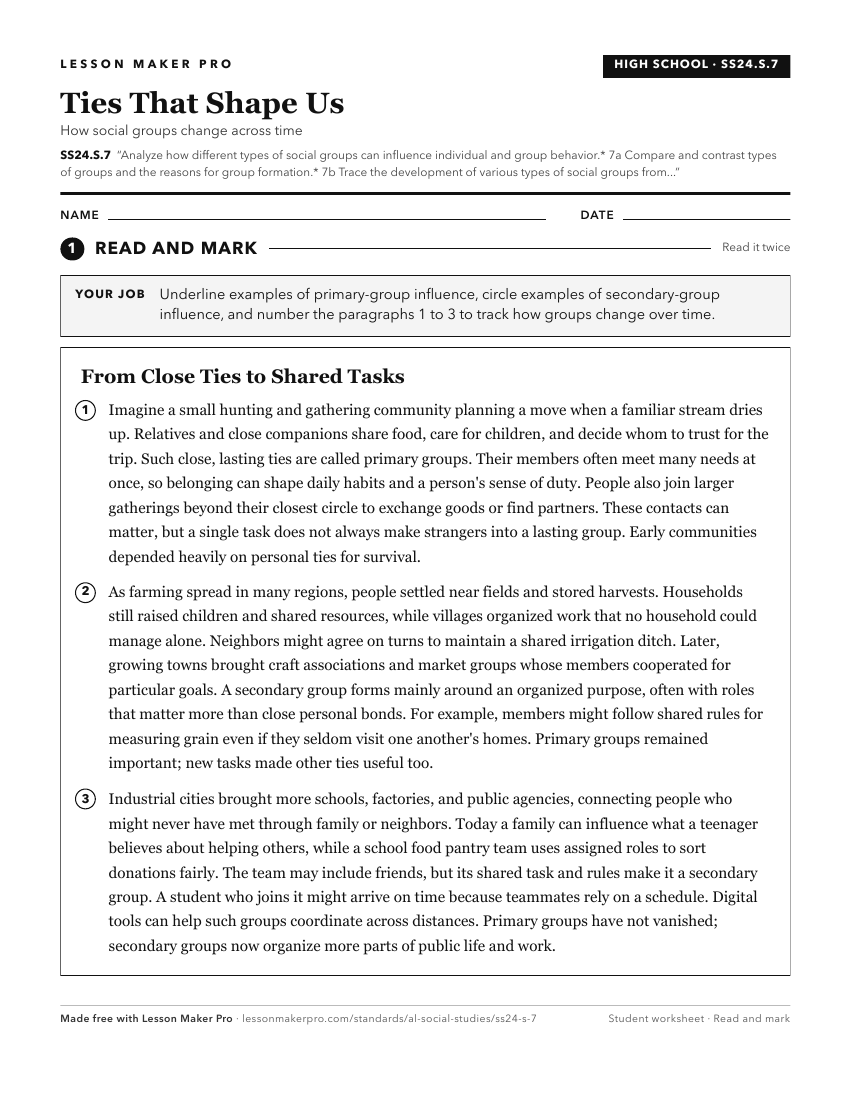
A ready-to-print activity worksheet aligned to SS24.S.7, with an answer key for the teacher on its own page. No account needed.
PDF, US Letter, prints cleanly in black and white.
Download the worksheetKeep exploring
Related Standards
Turn this cluster into a lesson
Grade, subject, topic, and the complete cluster are prefilled. Create one free, no account needed.
Also for this cluster:Make a WorksheetMake a QuizMake a Sub Lesson