Alabama Social Studies SS24.6.18c
The Standard
- SS24.6.18
- Analyze how an individual’s civic participation can influence government, politics, and society.
Explain how an individual becomes a citizen of the United States, including birthright citizenship and naturalization, and identify moments in history in which citizenship has been extended to individuals not previously considered citizens.
2024 Alabama Course of Study: Social Studies
Teacher's field guide
What This Standard Means
What Students Need to Do
- Students explain how people can become U.S. citizens through birth or naturalization. They also describe how laws in 1868 and 1924 extended citizenship to groups previously excluded.
What Mastery Looks Like
- A student can explain that a child born in the U.S. to immigrant parents is generally a citizen at birth, while an eligible immigrant can become a citizen through naturalization. They can name formerly enslaved people and Native Americans born in the U.S. as groups affected by later citizenship laws.
Common Misconceptions
- Some students think children born in the U.S. to immigrant parents must apply for citizenship. Others think moving to the U.S. automatically makes someone a citizen. Some confuse citizenship with voting rights, which states continued to restrict for some Native Americans after 1924.
How to Assess It
- On an exit ticket, ask: How does a child born in Alabama to immigrant parents become a citizen? How might an adult immigrant become one, and what changed for Native Americans born in the U.S. in 1924?
Lesson moves
Ways to Teach It
Place 1868 and 1924 on a paper timeline, then add sticky notes naming who gained citizenship through each change.
Write two sentences: Who gained citizenship under the 14th Amendment, and who gained it under the Indian Citizenship Act?
Read three citizenship scenarios aloud; have teams hold up cards labeled “birth,” “naturalization,” or “law change,” then explain each choice.
Show a printed USCIS naturalization steps page; students mark the application, interview, and oath, then compare that route with birth in the U.S.
Free download
Printable SS24.6.18c Worksheet
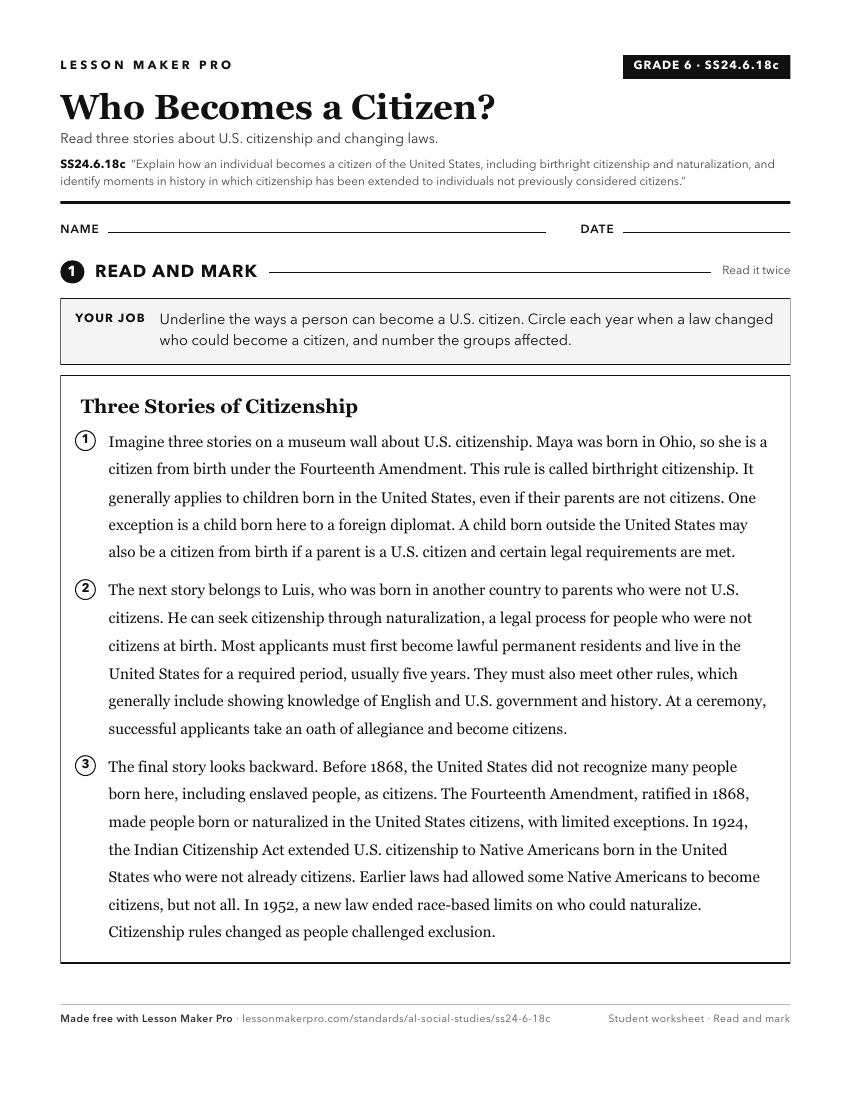
A ready-to-print activity worksheet aligned to SS24.6.18c, with an answer key for the teacher on its own page. No account needed.
PDF, US Letter, prints cleanly in black and white.
Download the worksheetKeep exploring
Related Standards
- SS24.6.18b
Differentiate between the requirements, responsibilities, and rights for citizenship in the United States.
- SS24.6.13c
Analyze key elements of the Constitution that deal with citizenship and civic participation, including the path to citizenship and the process for amending the ...
- SS24.6.17c
Identify constitutional amendments that expanded political rights for citizens and describe the efforts of citizens to secure these rights.
- SS24.2.14
Explain how and why people have moved into and within the United States.
Turn this exact standard into a lesson
Grade, subject, topic, and the complete standard are prefilled. Create one free, no account needed.
Also for this standard:Make a WorksheetMake a QuizMake a Sub Lesson