Texas TEKS 8.31.A
The Standard
- 8.31
- Social studies skills. The student uses problem-solving and decision-making skills, working independently and with others. The student is expected to:
describe governmental and democratic processes such as voting, due process, and caucuses using simulations and models
Texas Essential Knowledge and Skills for Social Studies
Teacher's field guide
What This Standard Means
What Students Need to Do
- Students take roles in mock elections, court procedures, and caucus meetings. They explain each process, identify who participates, and describe how rules protect fair participation.
What Mastery Looks Like
- Students can place the steps of each process in order and carry out assigned roles accurately. They can explain what the model shows and where it differs from the real process.
Common Misconceptions
- Students may confuse a caucus with a general election or think due process guarantees a favorable outcome. They may also assume every vote directly decides a law or office.
How to Assess It
- Give students three process cards labeled voting, due process, and caucus. Ask them to choose one, list four steps, and explain how one step supports fairness.
Lesson moves
Ways to Teach It
Set up a mock election with candidate cards, voter registration slips, private booths, ballots, and student election workers.
Ask students to write which due process protection matters most in a fictional school discipline case and defend their choice.
Give teams mixed step cards for voting, a trial, and a caucus, then award points for correct sequences and explanations.
Compare a county sample ballot and party caucus rules, then have students identify who participates and how decisions are recorded.
Free download
Printable 8.31.A Worksheet
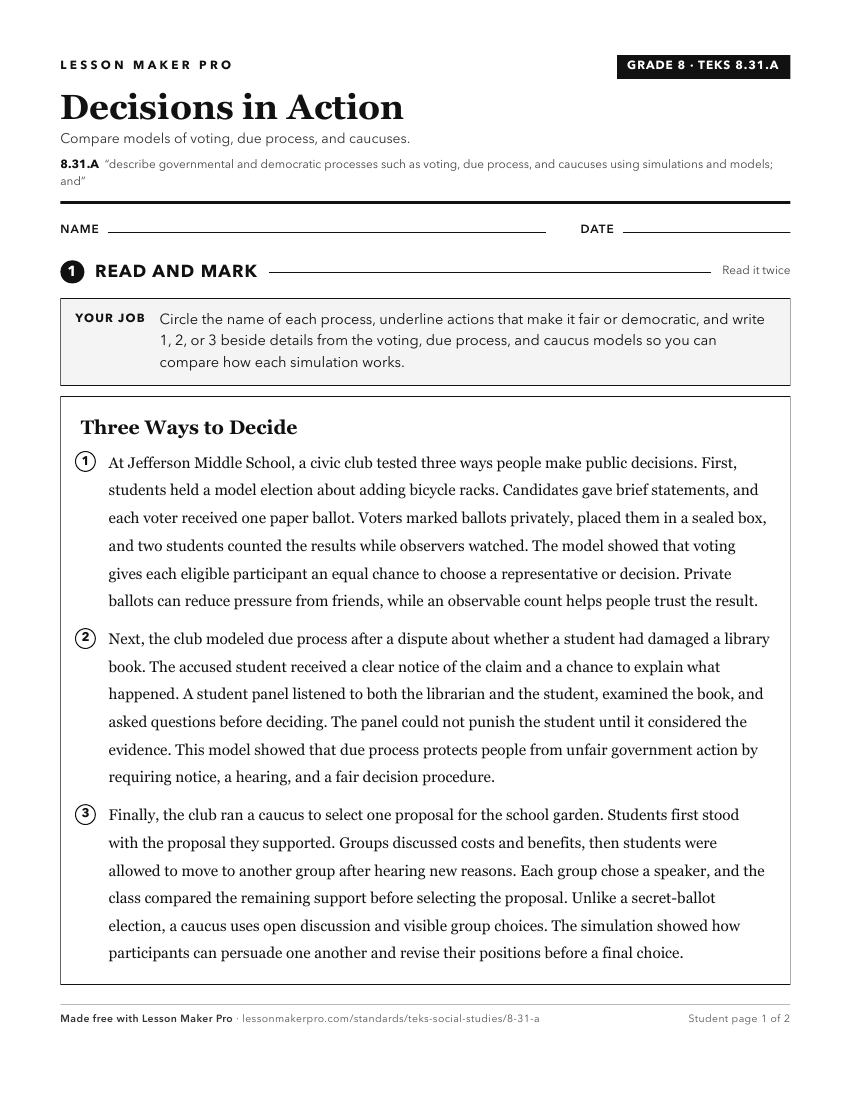
A ready-to-print activity worksheet aligned to 8.31.A, with an answer key for the teacher on its own page. No account needed.
PDF, US Letter, prints cleanly in black and white.
Download the worksheetKeep exploring
Related Standards
- 7.23.A
describe governmental and democratic processes such as voting, due process, and caucuses using simulations and models
- 4.22.A
use democratic procedures to simulate making decisions on school, local, or state issues
- 6.22.A
describe governmental and democratic processes such as voting, due process, and caucuses using simulations and models
- 5.26.A
use democratic procedures to simulate making decisions on school, local, or state issues
Turn this exact standard into a lesson
Grade, subject, topic, and the complete standard are prefilled. Create one free, no account needed.
Also for this standard:Make a WorksheetMake a QuizMake a Sub Lesson