Texas TEKS 7.23.A
The Standard
- 7.23
- Social studies skills. The student uses problem-solving and decision-making skills, working independently and with others. The student is expected to:
describe governmental and democratic processes such as voting, due process, and caucuses using simulations and models
Texas Essential Knowledge and Skills for Social Studies
Teacher's field guide
What This Standard Means
What Students Need to Do
- Students explain how voting, due process, and caucuses work. They use role-play, flowcharts, or mock events to show the steps, roles, and outcomes.
What Mastery Looks Like
- Students can put each process in the correct order and explain the purpose of each step. They can participate in a simulation and connect each role to the real process.
Common Misconceptions
- Students may think a caucus is the same as a secret-ballot election or that every vote requires a simple majority. They may think due process guarantees acquittal rather than fair procedures.
How to Assess It
- Exit ticket: Draw a three-step model for voting, due process, and a caucus, then label who acts at each step.
Lesson moves
Ways to Teach It
Run a mock class election using voter lists, paper ballots, poll workers, ballot boxes, and a public tally sheet.
Ask students to compare a secret ballot with a caucus and write how each method might affect participation or honesty.
Give teams process cards for a due process case and have them race to arrange the steps in a fair order.
Examine a school discipline policy and identify where notice, evidence, a hearing, and an appeal appear in the process.
Free download
Printable 7.23.A Worksheet
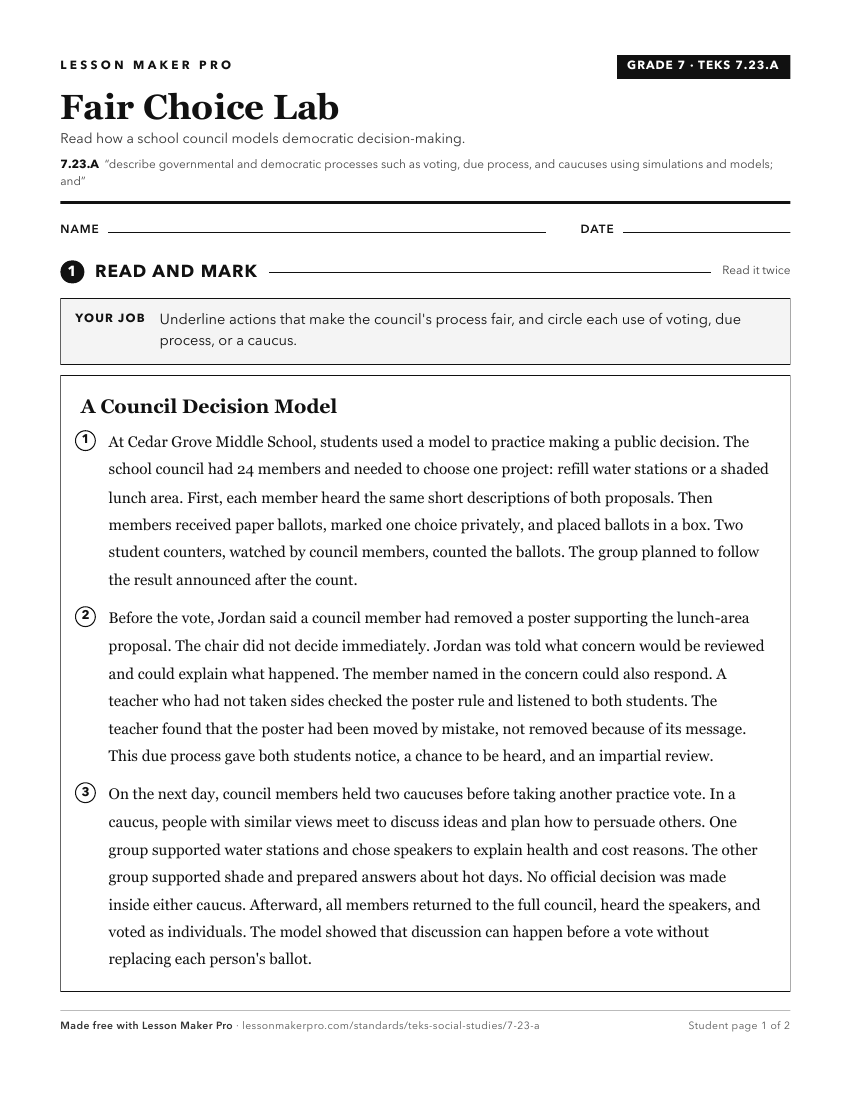
A ready-to-print activity worksheet aligned to 7.23.A, with an answer key for the teacher on its own page. No account needed.
PDF, US Letter, prints cleanly in black and white.
Download the worksheetKeep exploring
Related Standards
- 4.22.A
use democratic procedures to simulate making decisions on school, local, or state issues
- 8.31.A
describe governmental and democratic processes such as voting, due process, and caucuses using simulations and models
- 6.22.A
describe governmental and democratic processes such as voting, due process, and caucuses using simulations and models
- 5.26.A
use democratic procedures to simulate making decisions on school, local, or state issues
Turn this exact standard into a lesson
Grade, subject, topic, and the complete standard are prefilled. Create one free, no account needed.
Also for this standard:Make a WorksheetMake a QuizMake a Sub Lesson