Texas TEKS 8.24.A
The Standard
- 8.24
- Culture. The student understands the major reform movements of the 19th century. The student is expected to:
describe and evaluate the historical development of the abolition movement, including activities that focused attention on the moral ills of slavery
Texas Essential Knowledge and Skills for Social Studies
Teacher's field guide
What This Standard Means
What Students Need to Do
- Students trace how abolitionism grew from early antislavery efforts into an organized national movement. They explain how activists used speeches, newspapers, petitions, slave narratives, and direct action, then judge each method’s reach and impact.
What Mastery Looks Like
- Students can place major people, publications, and events in sequence. They use evidence to compare the contributions of Frederick Douglass, William Lloyd Garrison, Sojourner Truth, Harriet Tubman, and the Grimké sisters.
Common Misconceptions
- Students may think all Northerners supported abolition or that all abolitionists supported racial equality. They may confuse abolitionism with Free Soil ideas or believe the Underground Railroad was a literal railroad.
How to Assess It
- Use this exit prompt: “Choose two abolitionist methods. Explain how each exposed slavery’s cruelty, then decide which was more effective and support your choice.”
Lesson moves
Ways to Teach It
Give groups source cards from speeches, newspapers, petitions, and slave narratives to arrange chronologically and label by method, audience, and message.
Ask students to write: “Which abolitionist voice most challenged public acceptance of slavery, and what evidence supports your choice?”
Run a card match in which students pair abolitionists with actions, publications, audiences, and outcomes, then correct mismatches using notes.
Compare one abolitionist awareness campaign with a current public issue campaign, identifying each campaign’s audience, evidence, message, and requested action.
Free download
Printable 8.24.A Worksheet
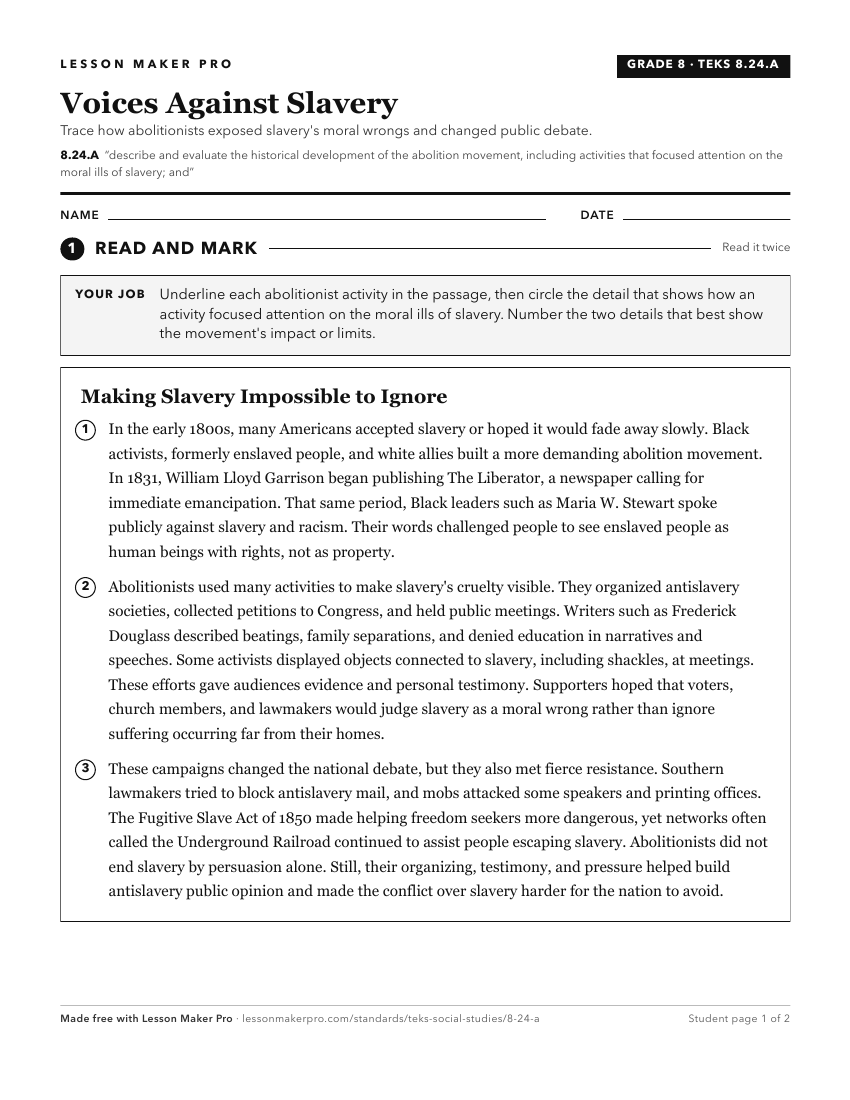
A ready-to-print activity worksheet aligned to 8.24.A, with an answer key for the teacher on its own page. No account needed.
PDF, US Letter, prints cleanly in black and white.
Download the worksheetKeep exploring
Related Standards
- 8.24.B
evaluate the impact of reform movements, including educational reform, temperance, the women's rights movement, prison reform, the labor reform movement, and ca...
- 8.12.B
explain reasons for the development of the plantation system, the transatlantic slave trade, and the spread of slavery
- 8.7.D
analyze the impact of slavery on different sections of the United States
- 8.7.C
analyze the impact of the Fugitive Slave Act of 1850 on slavery, free Blacks, and abolitionists
Turn this exact standard into a lesson
Grade, subject, topic, and the complete standard are prefilled. Create one free, no account needed.
Also for this standard:Make a WorksheetMake a QuizMake a Sub Lesson