Texas TEKS 8.7.C
The Standard
- 8.7
- History. The student understands how political, economic, and social factors led to the growth of sectionalism and the Civil War. The student is expected to:
analyze the impact of the Fugitive Slave Act of 1850 on slavery, free Blacks, and abolitionists
Texas Essential Knowledge and Skills for Social Studies
Teacher's field guide
What This Standard Means
What Students Need to Do
- Students explain how the 1850 law strengthened slaveholders’ power and threatened both escaped enslaved people and free Black residents. They trace how enforcement increased abolitionist resistance and sectional conflict.
What Mastery Looks Like
- Students can identify intended and unintended effects on each affected group. They support each claim with a specific provision, event, or response, such as forced citizen assistance or organized rescue efforts.
Common Misconceptions
- Students may think the law operated only in the South or affected only people who had escaped slavery. They may also assume all Northerners opposed it, or that free Black residents had reliable ways to prove their status.
How to Assess It
- Use this exit ticket: “Name one effect on slavery, free Black residents, and abolitionists. Explain how one part of the law caused each effect.”
Lesson moves
Ways to Teach It
Give groups law provision cards and role cards, then have them match each provision to its likely effect on slaveholders, free Blacks, or abolitionists.
Ask students to write: “How did the Fugitive Slave Act’s required enforcement in free states intensify the existing national conflict over slavery?”
Run a cause-and-effect relay where teams connect law provisions, group responses, and broader results using labeled cards.
Examine a period runaway notice and a free Black person’s freedom papers, then discuss why documents did not always prevent kidnapping or arrest.
Free download
Printable 8.7.C Worksheet
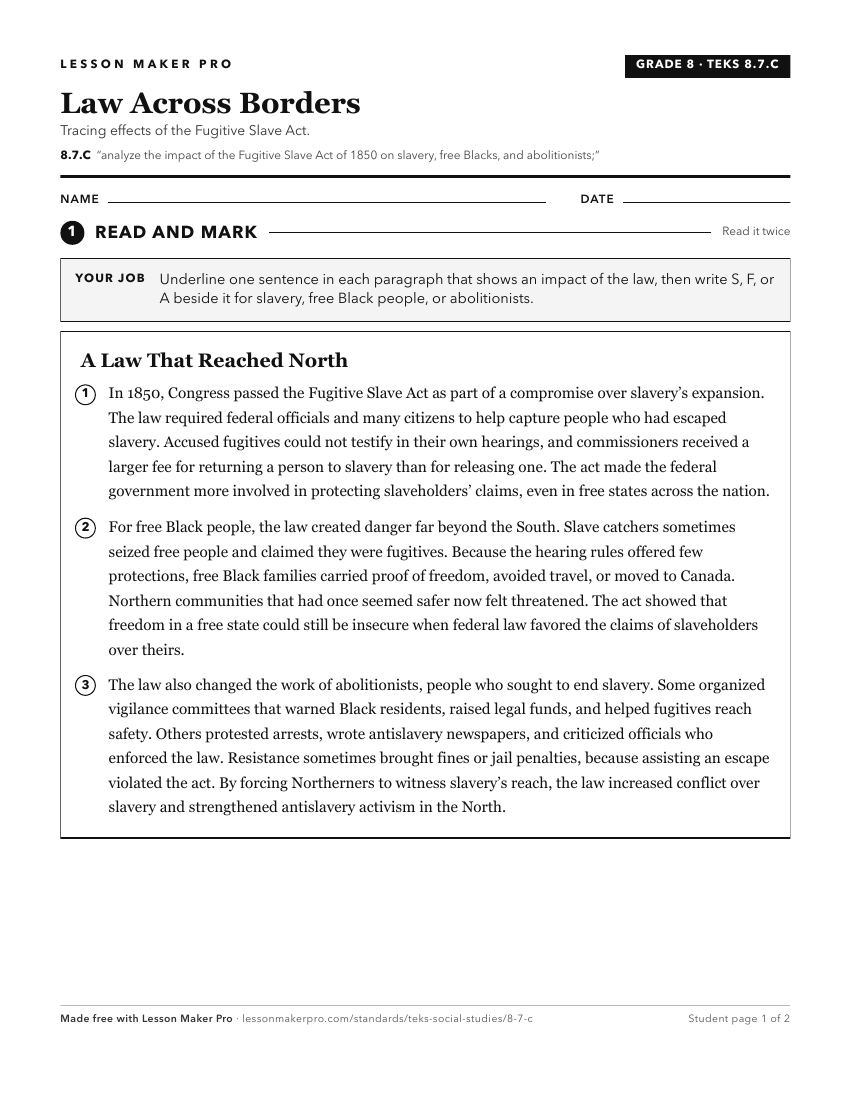
A ready-to-print activity worksheet aligned to 8.7.C, with an answer key for the teacher on its own page. No account needed.
PDF, US Letter, prints cleanly in black and white.
Download the worksheetKeep exploring
Related Standards
- 8.5.B
explain the effects of the Fugitive Slave Act of 1793
- 8.7.D
analyze the impact of slavery on different sections of the United States
- 8.24.A
describe and evaluate the historical development of the abolition movement, including activities that focused attention on the moral ills of slavery
- 8.7.B
compare the effects of political, economic, and social factors on slaves and free Blacks
Turn this exact standard into a lesson
Grade, subject, topic, and the complete standard are prefilled. Create one free, no account needed.
Also for this standard:Make a WorksheetMake a QuizMake a Sub Lesson