Texas TEKS 8.12.B
The Standard
- 8.12
- Economics. The student understands why various sections of the United States developed different patterns of economic activity through 1877. The student is expected to:
explain reasons for the development of the plantation system, the transatlantic slave trade, and the spread of slavery
Texas Essential Knowledge and Skills for Social Studies
Teacher's field guide
What This Standard Means
What Students Need to Do
- Students identify economic, geographic, and political factors that increased demand for enslaved labor. They connect cash crops, plantation profits, Atlantic trade routes, slave laws, and racism in a clear cause-and-effect explanation.
What Mastery Looks Like
- A student can build a cause chain showing why plantations expanded and how that growth increased forced migration from Africa. The student supports each link with accurate historical evidence.
Common Misconceptions
- Students may think cotton caused slavery’s first growth in the English colonies, overlooking earlier tobacco, rice, and indigo production. They may also treat enslaved Africans as voluntary immigrants or ignore how laws and racist beliefs protected the system.
How to Assess It
- Exit ticket: Draw a three-link cause chain connecting a cash crop, plantation growth, and the expansion of slavery, then explain each link in one sentence.
Lesson moves
Ways to Teach It
Give pairs cards labeled tobacco demand, land, labor shortages, profits, slave codes, and shipping routes; students arrange and defend a cause map.
Write one paragraph answering: How did crop profits, Atlantic trade, and colonial laws work together to expand slavery?
Run a card sort where teams match each factor to plantation growth, slave trading, or slavery’s geographic spread.
Compare a colonial tobacco supply chain with a modern product supply chain, focusing on who profits and how labor is controlled.
Free download
Printable 8.12.B Worksheet
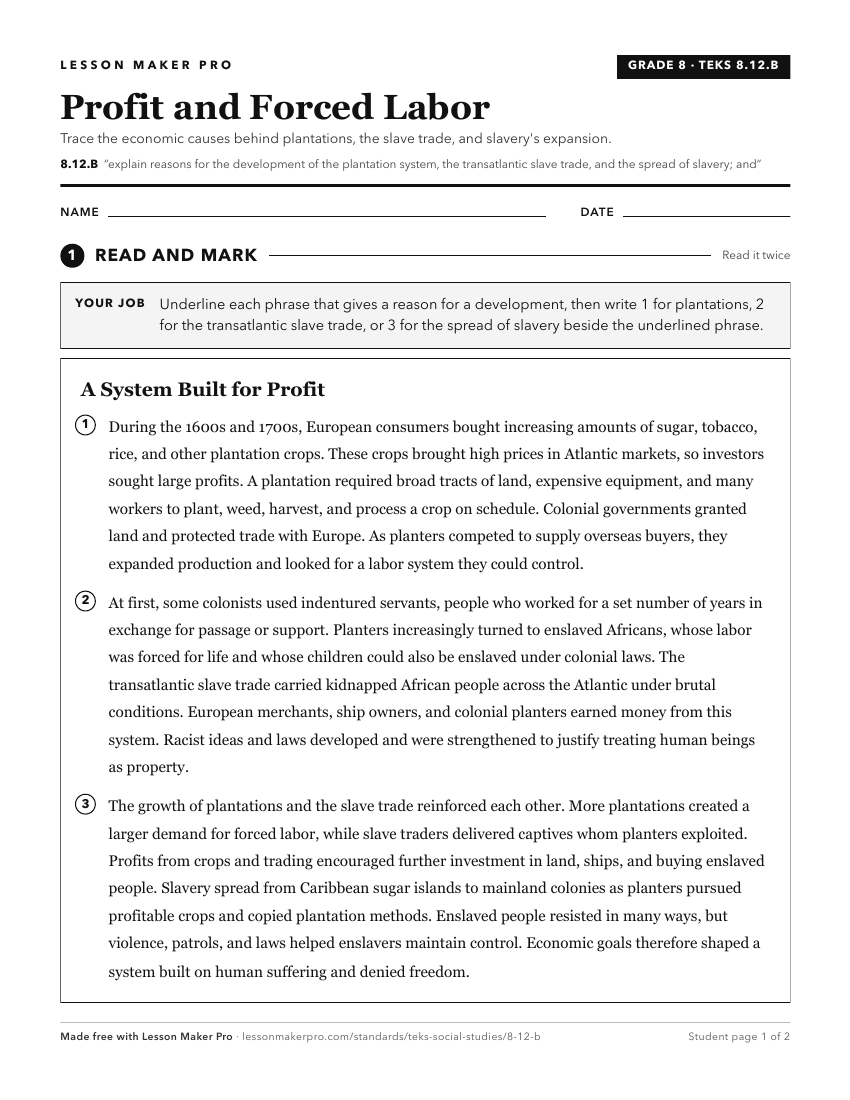
A ready-to-print activity worksheet aligned to 8.12.B, with an answer key for the teacher on its own page. No account needed.
PDF, US Letter, prints cleanly in black and white.
Download the worksheetKeep exploring
Related Standards
- 8.8.B
explain the central role of the expansion of slavery in causing sectionalism, disagreement over states' rights, and the Civil War
- 5.4.D
explain the central role of the expansion of slavery in causing sectionalism, disagreement over states' rights, and the Civil War
- 8.7.D
analyze the impact of slavery on different sections of the United States
- 8.24.A
describe and evaluate the historical development of the abolition movement, including activities that focused attention on the moral ills of slavery
Turn this exact standard into a lesson
Grade, subject, topic, and the complete standard are prefilled. Create one free, no account needed.
Also for this standard:Make a WorksheetMake a QuizMake a Sub Lesson