Texas TEKS 8.24.B
The Standard
- 8.24
- Culture. The student understands the major reform movements of the 19th century. The student is expected to:
evaluate the impact of reform movements, including educational reform, temperance, the women's rights movement, prison reform, the labor reform movement, and care of the disabled.
Texas Essential Knowledge and Skills for Social Studies
Teacher's field guide
What This Standard Means
What Students Need to Do
- Students identify each movement’s goals, methods, leaders, and results. They judge how much change each movement produced and support that judgment with historical evidence.
What Mastery Looks Like
- Students can connect specific actions to changes in laws, institutions, or public attitudes. They can explain both the achievements and limits of a movement.
Common Misconceptions
- Students may assume reform movements solved problems completely or produced immediate change. They may confuse temperance with Prohibition or claim women gained voting rights during the early women’s rights movement.
How to Assess It
- Exit ticket: Choose one reform movement and explain its greatest impact using two facts, then name one problem it did not solve.
Lesson moves
Ways to Teach It
In groups, sort reformer, goal, action, and outcome cards for six movements, then rank the movements from greatest to least impact.
Write a CER paragraph answering, "Which reform movement produced the broadest change by 1860?" using two facts and one limitation.
Play Reform Match: teams pair movement cards with accurate outcomes and explain each match to keep the point.
Compare a current school, workplace, prison, or disability access policy with its reform-era roots using a two-column chart.
Free download
Printable 8.24.B Worksheet
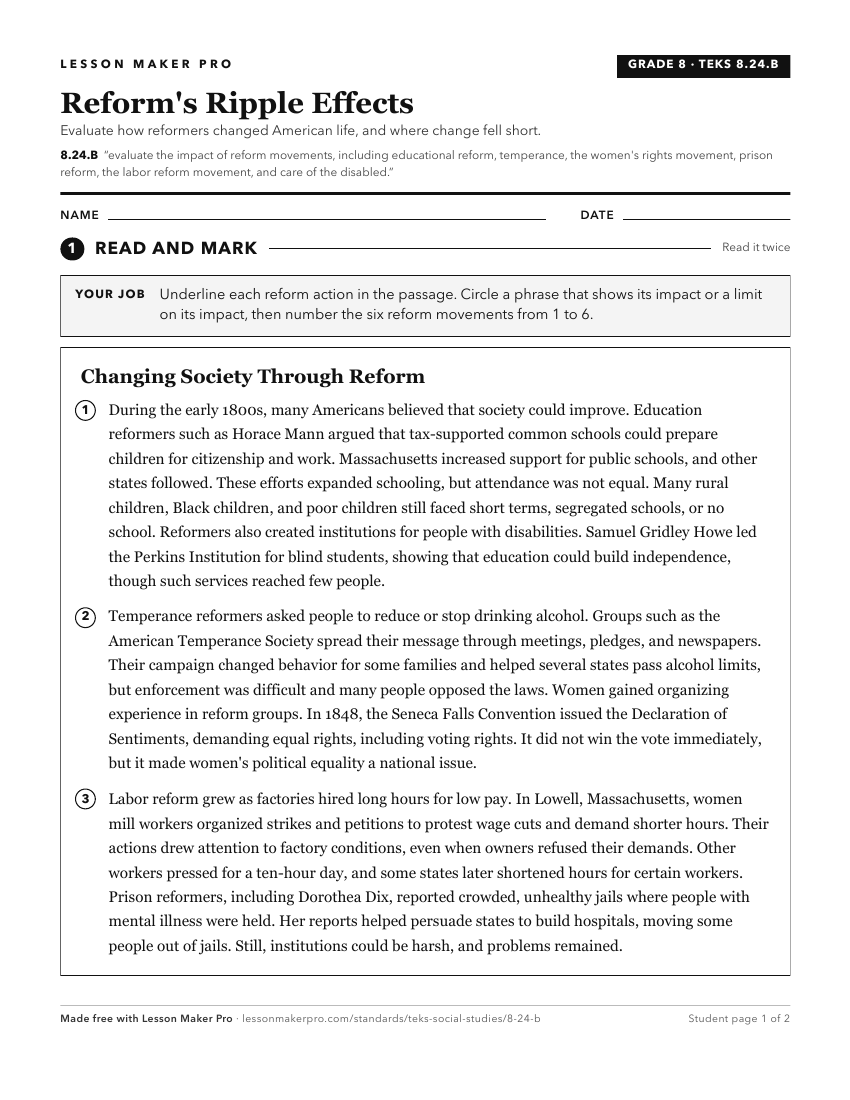
A ready-to-print activity worksheet aligned to 8.24.B, with an answer key for the teacher on its own page. No account needed.
PDF, US Letter, prints cleanly in black and white.
Download the worksheetKeep exploring
Related Standards
- 7.7.C
describe and compare the impact of reform movements in Texas in the 19th and 20th centuries such as progressivism, populism, women's suffrage, agrarianism, labo...
- 8.25.B
describe religious influences on social movements, including the impact of the first and second Great Awakenings
- 8.24
Culture. The student understands the major reform movements of the 19th century. The student is expected to:
- 8.24.A
describe and evaluate the historical development of the abolition movement, including activities that focused attention on the moral ills of slavery
Turn this exact standard into a lesson
Grade, subject, topic, and the complete standard are prefilled. Create one free, no account needed.
Also for this standard:Make a WorksheetMake a QuizMake a Sub Lesson