Texas TEKS 8.24
TEKS Knowledge Statement (Expectation Cluster)
Culture. The student understands the major reform movements of the 19th century. The student is expected to: describe and evaluate the historical development of the abolition movement, including activities that focused attention on the moral ills of slavery; and evaluate the impact of reform movements, including educational reform, temperance, the women's rights movement, prison reform, the labor reform movement, and care of the disabled.
Texas Essential Knowledge and Skills for Social Studies
Cluster contents
Student Expectations in This Statement
8.24 is a TEKS knowledge and skills statement. These are the student expectations under it.
- 8.24.A
describe and evaluate the historical development of the abolition movement, including activities that focused attention on the moral ills of slavery
- 8.24.B
evaluate the impact of reform movements, including educational reform, temperance, the women's rights movement, prison reform, the labor reform movement, and ca...
Teacher's field guide
What This Cluster Means
What Students Need to Do
- Students trace how abolition grew through speeches, newspapers, narratives, petitions, and organized action. They judge the effects and limits of education, temperance, women’s rights, prison, labor, and disability care reforms.
What Mastery Looks Like
- Students connect key reformers, methods, events, and results using accurate evidence. They explain whether each movement changed laws, institutions, public opinion, or daily life, while noting unfinished goals.
Common Misconceptions
- Students may think abolition began with the Civil War or that all abolitionists supported equal rights. They may assume reform laws caused immediate, complete change. They also confuse temperance with prohibition and prison reform with ending prisons.
How to Assess It
- Use this exit ticket: Explain how one abolitionist activity challenged slavery, then evaluate one result and one limit of another reform movement.
Lesson moves
Ways to Teach It
Give groups reformer, event, method, and result cards to match, then arrange the matched sets on a classroom timeline.
Compare excerpts from Frederick Douglass and Elizabeth Cady Stanton, then write how each used moral claims to press for change.
Run a reform impact sort where students place evidence under law, institutions, public opinion, daily life, or limited change.
Ask students to compare a nineteenth-century reform petition with a current school or community petition and identify shared tactics.
Free download
Printable 8.24 Worksheet
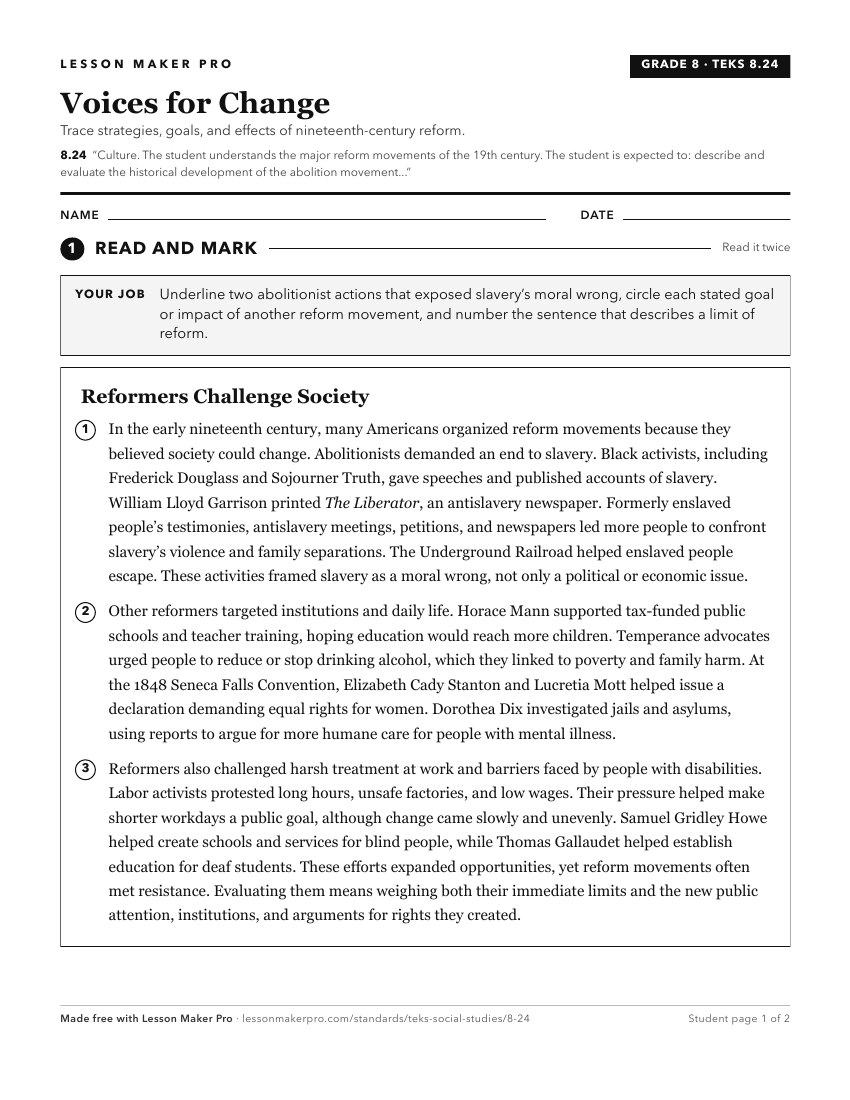
A ready-to-print activity worksheet aligned to 8.24, with an answer key for the teacher on its own page. No account needed.
PDF, US Letter, prints cleanly in black and white.
Download the worksheetKeep exploring
Related Standards
- 8.26
Culture. The student understands the relationship between the arts and the times during which they were created. The student is expected to:
- 8.23
Culture. The student understands the relationships between and among people from various groups, including racial, ethnic, and religious groups, during the 17th...
- 5.4
History. The student understands political, economic, and social changes that occurred in the United States during the 19th century. The student is expected to:
- 5.20
Culture. The student understands the relationship between the arts and the times during which they were created. The student is expected to:
Turn this cluster into a lesson
Grade, subject, topic, and the complete cluster are prefilled. Create one free, no account needed.
Also for this cluster:Make a WorksheetMake a QuizMake a Sub Lesson