Texas TEKS 8.25.B
The Standard
- 8.25
- Culture. The student understands the impact of religion on the American way of life. The student is expected to:
describe religious influences on social movements, including the impact of the first and second Great Awakenings
Texas Essential Knowledge and Skills for Social Studies
Teacher's field guide
What This Standard Means
What Students Need to Do
- Students explain how revival preaching shaped beliefs about equality, personal responsibility, and authority. They connect the First Great Awakening to colonial unity and challenges to authority, and the Second to abolition, temperance, and other reforms.
What Mastery Looks Like
- Students can compare the two awakenings using specific beliefs, leaders, and results. They can trace a clear link from a religious idea to organized action and social change.
Common Misconceptions
- Students often treat the two awakenings as one event or place both in the same period. They may name a reform movement without explaining how religious beliefs motivated its supporters.
How to Assess It
- Give students this exit prompt: Explain one way each Great Awakening influenced society, and connect each influence to a specific belief or action.
Lesson moves
Ways to Teach It
Give groups revival quotes, dates, and reform cards to sort into First Awakening, Second Awakening, belief, and social result.
Ask students to write: When can a religious message lead people to challenge social rules or political authority?
Play a matching relay where teams pair preachers, religious ideas, reform movements, and historical effects, then defend one match.
Compare a historical faith-based reform group with a local religious charity, focusing on beliefs, goals, methods, and community impact.
Free download
Printable 8.25.B Worksheet
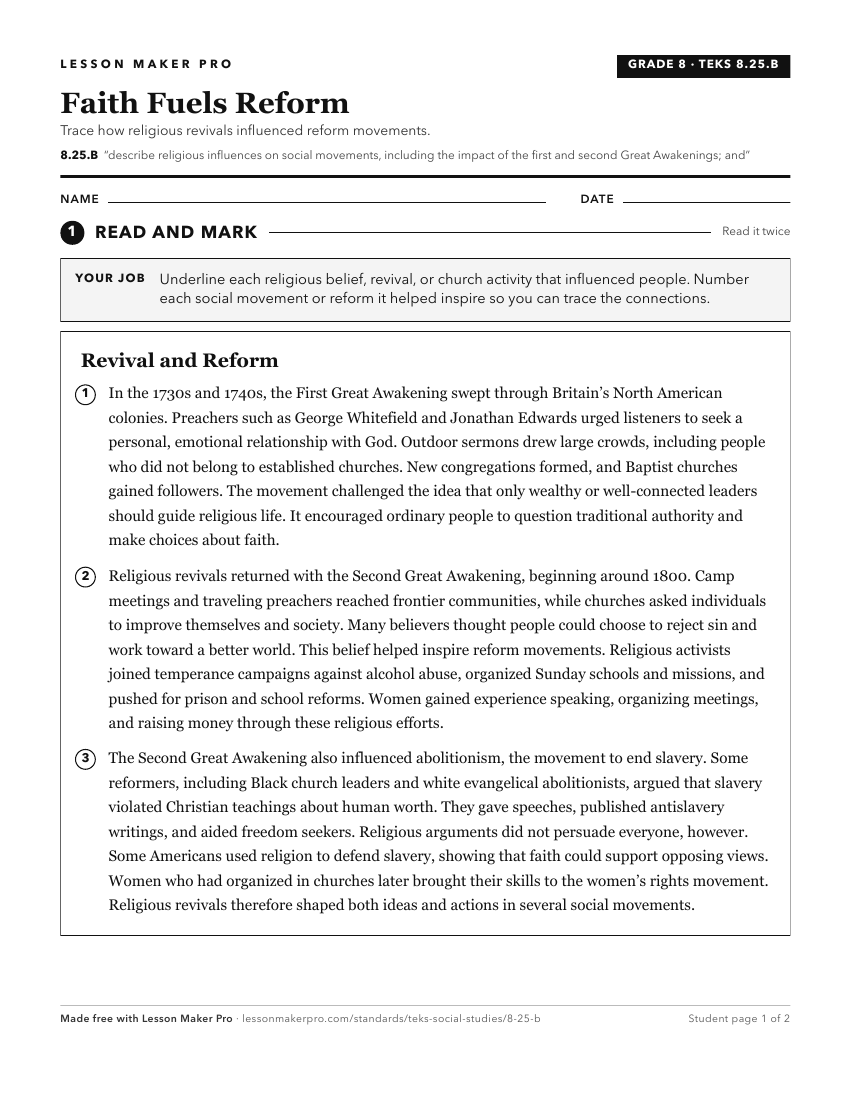
A ready-to-print activity worksheet aligned to 8.25.B, with an answer key for the teacher on its own page. No account needed.
PDF, US Letter, prints cleanly in black and white.
Download the worksheetKeep exploring
Related Standards
- 8.25.A
trace the development of religious freedom in the United States
- 7.7.C
describe and compare the impact of reform movements in Texas in the 19th and 20th centuries such as progressivism, populism, women's suffrage, agrarianism, labo...
- 8.24.B
evaluate the impact of reform movements, including educational reform, temperance, the women's rights movement, prison reform, the labor reform movement, and ca...
- 8.25.C
analyze the impact of the First Amendment guarantees of religious freedom on the American way of life.
Turn this exact standard into a lesson
Grade, subject, topic, and the complete standard are prefilled. Create one free, no account needed.
Also for this standard:Make a WorksheetMake a QuizMake a Sub Lesson