Texas TEKS 8.13.B
The Standard
- 8.13
- Economics. The student understands how various economic forces resulted in the Industrial Revolution in the 19th century. The student is expected to:
identify the economic factors that brought about rapid industrialization and urbanization.
Texas Essential Knowledge and Skills for Social Studies
Teacher's field guide
What This Standard Means
What Students Need to Do
- Students identify conditions that helped factories, businesses, and cities grow quickly after the Civil War. They explain how resources, labor, investment, railroads, technology, and markets worked together.
What Mastery Looks Like
- Students can name several economic factors and connect each one to business or city growth. They support their explanations with examples such as steel, oil, immigration, rail networks, or private investment.
Common Misconceptions
- Students often list inventions or population growth without explaining the economic link. They may confuse causes with effects, treating crowded cities, pollution, and poor working conditions as reasons industrialization began.
How to Assess It
- Give students six terms: railroads, immigration, investment capital, coal, tenements, and pollution. Ask them to circle four causes of industrial growth and explain one choice in two sentences.
Lesson moves
Ways to Teach It
Give groups resource, labor, capital, technology, and market cards, then have them build and explain a successful factory plan.
Ask students to write which factor most accelerated industrial growth after the Civil War and defend their choice with two examples.
Run a cause-or-effect relay where teams sort cards such as steel production, immigration, crowded housing, railroads, and factory jobs.
Have students trace how a nearby railroad, highway, port, or major employer has influenced local jobs and population growth.
Free download
Printable 8.13.B Worksheet
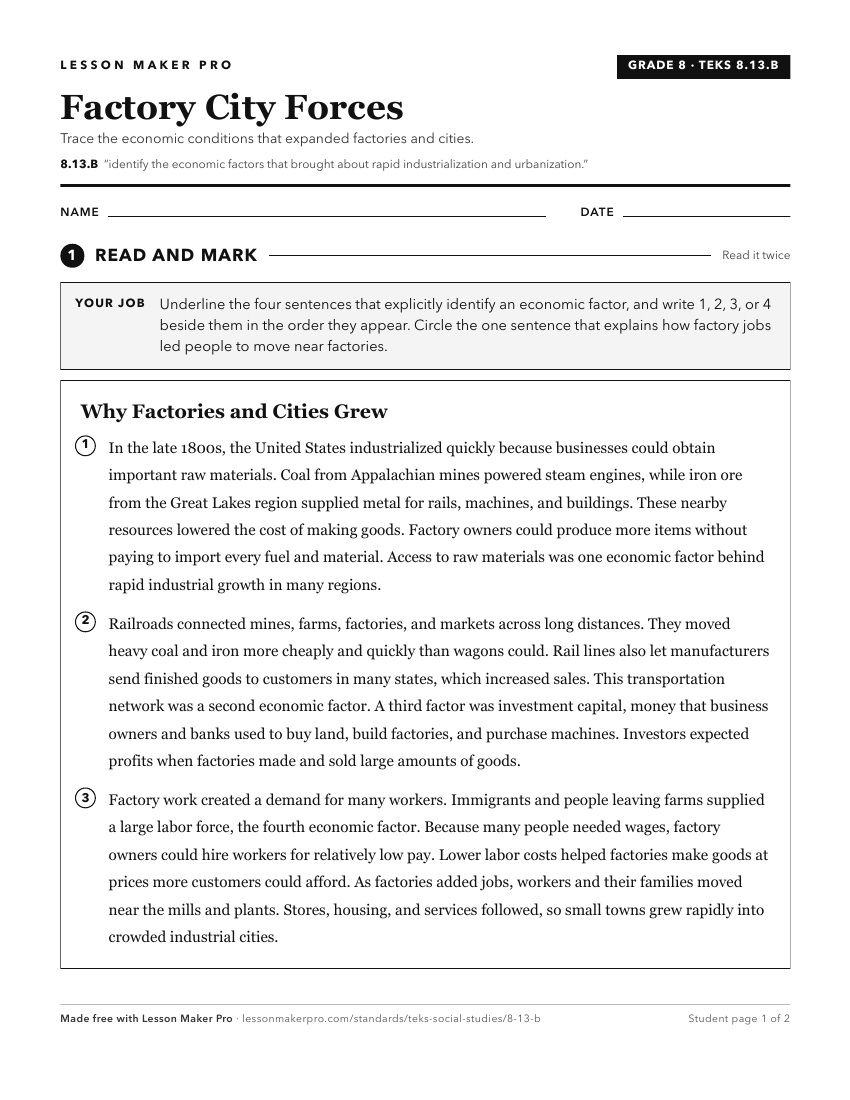
A ready-to-print activity worksheet aligned to 8.13.B, with an answer key for the teacher on its own page. No account needed.
PDF, US Letter, prints cleanly in black and white.
Download the worksheetKeep exploring
Related Standards
- 8.27.C
analyze how technological innovations brought about economic growth such as the development of the factory system and the construction of the Transcontinental R...
- 7.11
Economics. The student understands the factors that caused Texas to change from an agrarian to an urban society. The student is expected to:
- 7.11.A
explain economic factors and the development of major industries that led to the urbanization of Texas such as transportation, oil and gas, and manufacturing
- 8.28.B
identify examples of how industrialization changed life in the United States.
Turn this exact standard into a lesson
Grade, subject, topic, and the complete standard are prefilled. Create one free, no account needed.
Also for this standard:Make a WorksheetMake a QuizMake a Sub Lesson