Texas TEKS 8.28.B
The Standard
- 8.28
- Science, technology, and society. The student understands the impact of scientific discoveries and technological innovations on daily life in the United States. The student is expected to:
identify examples of how industrialization changed life in the United States.
Texas Essential Knowledge and Skills for Social Studies
Teacher's field guide
What This Standard Means
What Students Need to Do
- Students connect new machines, factories, railroads, and mass production to changes in work, travel, cities, family life, and consumer habits. They use specific examples to explain cause and effect.
What Mastery Looks Like
- A student can name several developments, such as textile mills, railroads, and assembly lines, and explain how each affected daily life. The student can describe benefits and costs for different groups.
Common Misconceptions
- Students may treat industrialization as only factory growth or assume it affected everyone in the same way. They may list inventions without explaining effects or overlook child labor, unsafe work, pollution, cheaper goods, and faster travel.
How to Assess It
- Exit ticket: Choose one industrial development and explain two ways it affected daily life. Include one benefit and one cost.
Lesson moves
Ways to Teach It
Give pairs image cards of mills, railroads, tenements, and stores, then have them build and label four cause-and-effect chains.
Prompt students to write: Did industrialization improve life for factory workers, business owners, and consumers equally? Use two examples.
Play a matching relay where teams pair developments with effects, then challenge one weak match and defend a stronger one.
Have students trace a classroom object's path from raw material to factory to store, then compare it with production before industrialization.
Free download
Printable 8.28.B Worksheet
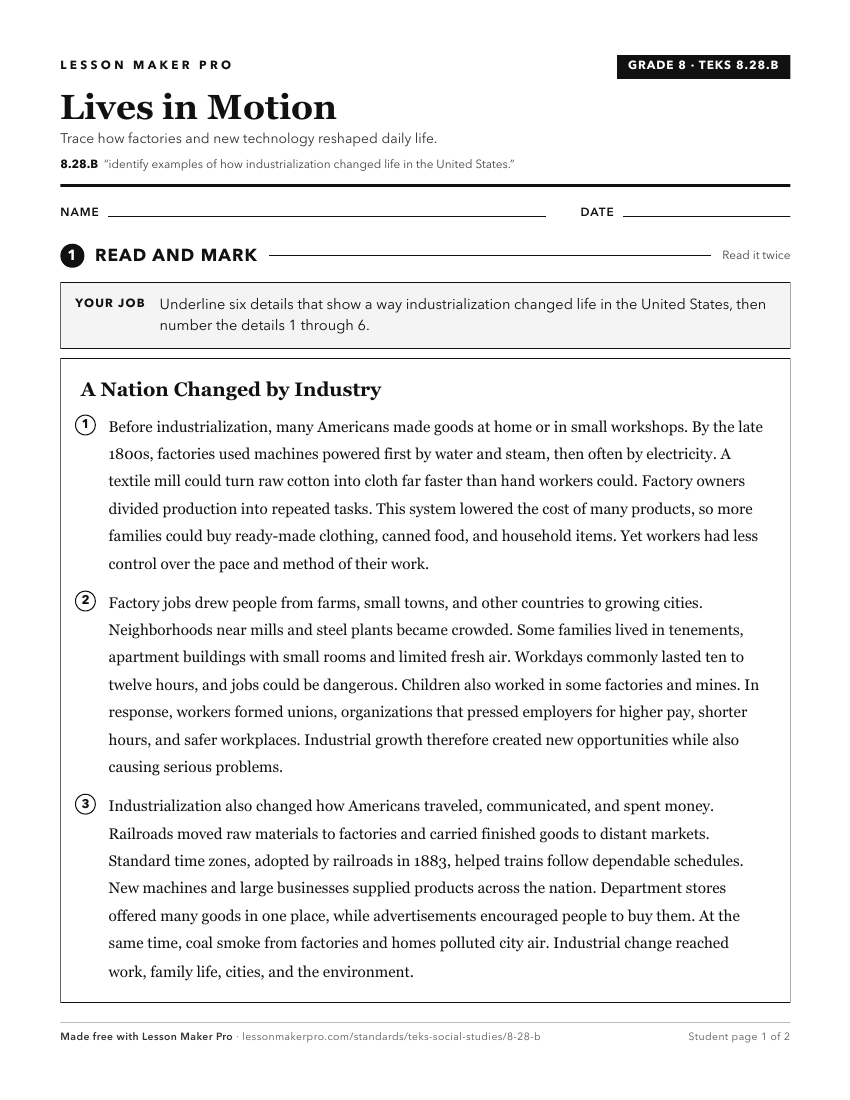
A ready-to-print activity worksheet aligned to 8.28.B, with an answer key for the teacher on its own page. No account needed.
PDF, US Letter, prints cleanly in black and white.
Download the worksheetKeep exploring
Related Standards
- 8.13.B
identify the economic factors that brought about rapid industrialization and urbanization.
- 5.12.D
describe the impact of mass production, specialization, and division of labor on the economic growth of the United States.
- 4.4.C
explain the effects of the railroad industry on life in Texas, including changes to cities and major industries
- 5.4.B
identify and explain how changes resulting from the Industrial Revolution led to conflict among sections of the United States
Turn this exact standard into a lesson
Grade, subject, topic, and the complete standard are prefilled. Create one free, no account needed.
Also for this standard:Make a WorksheetMake a QuizMake a Sub Lesson