Texas TEKS 4.4.C
The Standard
- 4.4
- History. The student understands the political, economic, and social changes in Texas during the last half of the 19th century. The student is expected to:
explain the effects of the railroad industry on life in Texas, including changes to cities and major industries
Texas Essential Knowledge and Skills for Social Studies
Teacher's field guide
What This Standard Means
What Students Need to Do
- Students explain how railroads changed where Texans lived, worked, and traded. They connect faster shipping and travel to city growth and industries such as cattle, cotton, and lumber.
What Mastery Looks Like
- Students can build a clear cause-and-effect chain using specific Texas examples. They can also explain why some towns grew near rail lines while others declined.
Common Misconceptions
- Students may think railroads mainly carried passengers or that every Texas town benefited. They may also confuse cattle trails with rail lines and overlook how trains connected products to distant markets.
How to Assess It
- Give students a Texas rail map and ask: “Name one city or industry affected by this route, then explain the effect in two sentences.”
Lesson moves
Ways to Teach It
Place yarn rail lines on a Texas map, then move cattle, cotton, and lumber cards from production areas to market cities.
Write a response to: “Would a Texas town grow faster beside a railroad or far from one, and why?”
Play a cause-and-effect matching game with cards showing rail access, faster shipping, city growth, new jobs, and declining cattle trails.
Compare a historic Texas rail route with a current freight route, then list products each route could carry and communities it connects.
Free download
Printable 4.4.C Worksheet
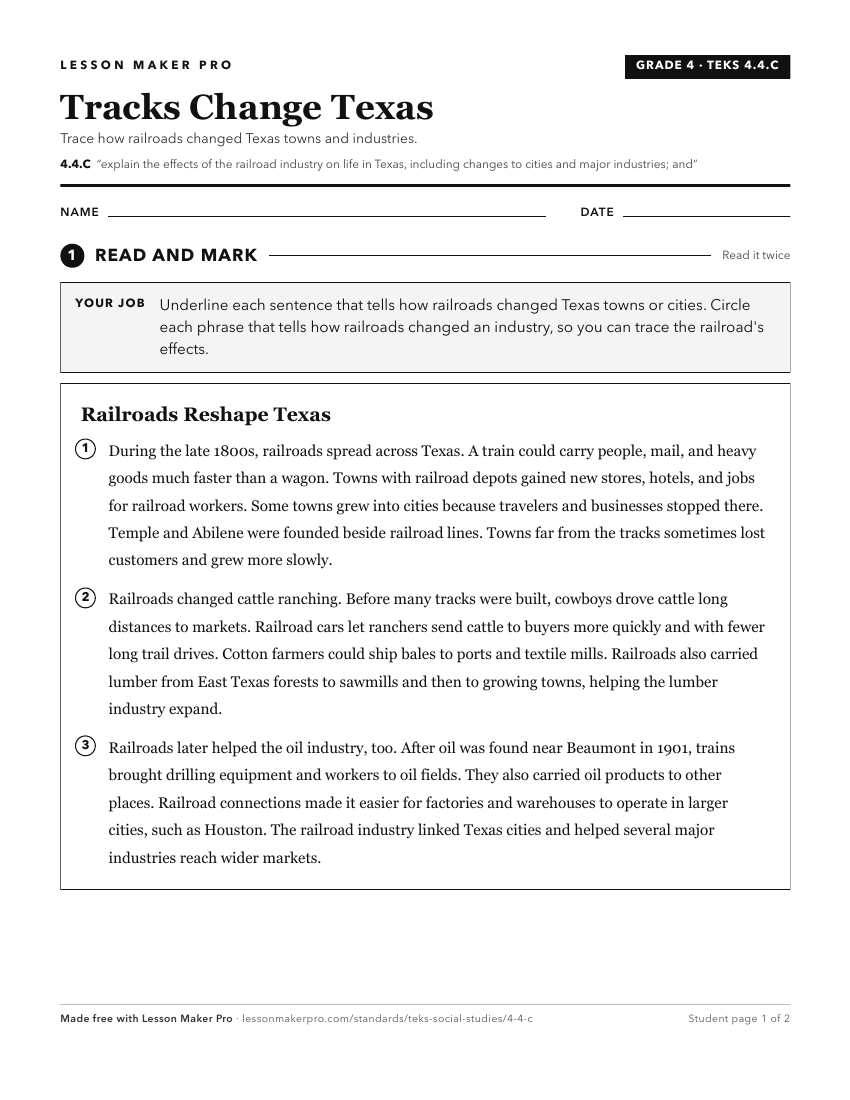
A ready-to-print activity worksheet aligned to 4.4.C, with an answer key for the teacher on its own page. No account needed.
PDF, US Letter, prints cleanly in black and white.
Download the worksheetKeep exploring
Related Standards
- 4.11.C
identify the effects of exploration, immigration, migration, and limited resources on the economic development and growth of Texas
- 7.11.A
explain economic factors and the development of major industries that led to the urbanization of Texas such as transportation, oil and gas, and manufacturing
- 4.11.D
explain how developments in transportation and communication have influenced economic activities in Texas.
- 4.4.A
describe the impact of the Civil War and Reconstruction on Texas
Turn this exact standard into a lesson
Grade, subject, topic, and the complete standard are prefilled. Create one free, no account needed.
Also for this standard:Make a WorksheetMake a QuizMake a Sub Lesson