Texas TEKS 7.20.D
The Standard
- 7.20
- Social studies skills. The student applies critical-thinking skills to organize and use information acquired through established research methodologies from a variety of valid sources, including technology. The student is expected to:
identify bias and points of view from the historical context surrounding an event that influenced the participants
Texas Essential Knowledge and Skills for Social Studies
Teacher's field guide
What This Standard Means
What Students Need to Do
- Students compare historical accounts and identify each speaker’s viewpoint and biased language. They use the time period’s events, beliefs, and pressures to explain why participants acted as they did.
What Mastery Looks Like
- Given two sources, students name each viewpoint and cite words or details that reveal bias. They connect each viewpoint to a specific historical circumstance and explain its influence.
Common Misconceptions
- Students may think bias means a source is completely false or useless. They may judge people by modern beliefs or assign a viewpoint based only on identity without citing evidence.
How to Assess It
- Display two short excerpts about Texas annexation. Ask: “Whose viewpoint does each excerpt represent, which phrase shows bias, and what 1840s circumstance shaped it?”
Lesson moves
Ways to Teach It
Give pairs quote cards from Anglo settlers, Tejanos, and Mexican officials to sort by viewpoint, then match each quote to a context card.
Ask students to write how land, citizenship, war, or economic concerns could lead two participants to view one event differently.
Play Bias Detective by awarding points for identifying loaded words, naming the speaker’s viewpoint, and linking it to historical context.
Compare two headlines about a school policy, then have students explain how each writer’s role and situation shaped the wording.
Free download
Printable 7.20.D Worksheet
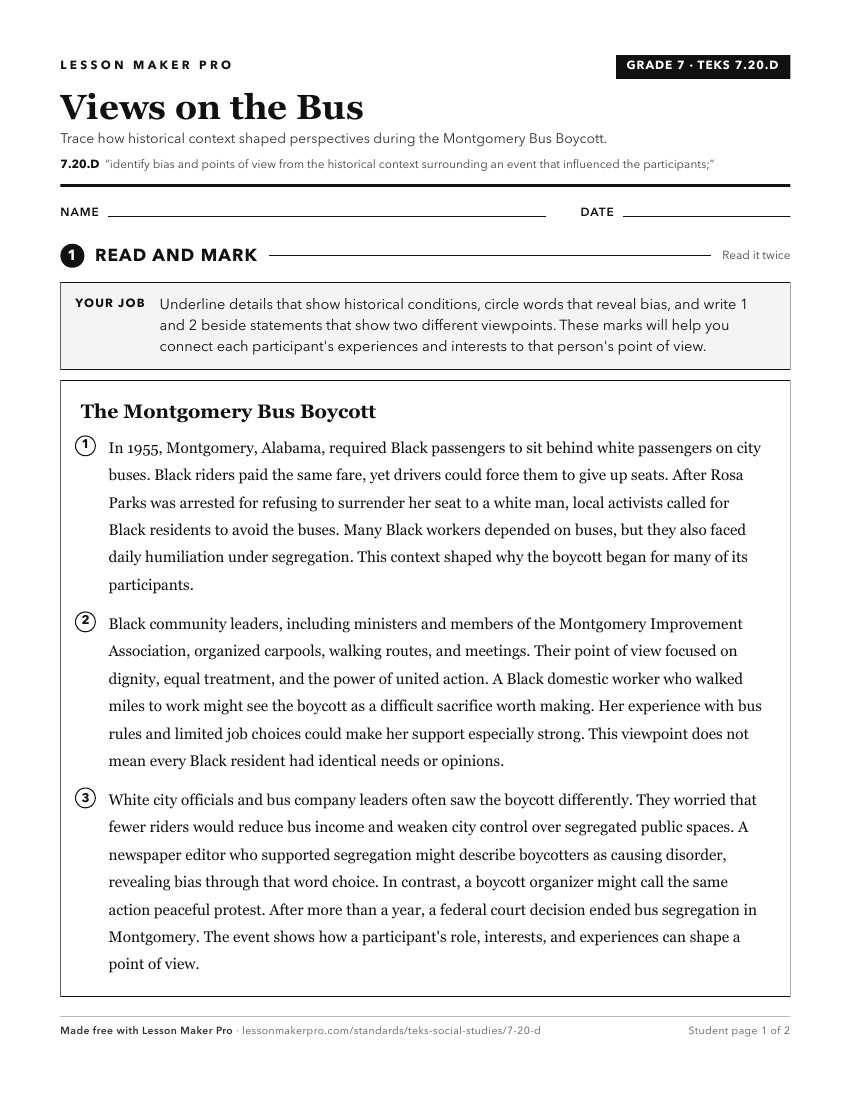
A ready-to-print activity worksheet aligned to 7.20.D, with an answer key for the teacher on its own page. No account needed.
PDF, US Letter, prints cleanly in black and white.
Download the worksheetKeep exploring
Related Standards
- 5.23.E
identify different points of view about an issue, topic, historical event, or current event
- 5.23.F
identify the historical context of an event
- 8.29.D
identify bias and points of view created by the historical context surrounding an event
- 4.19.E
identify different points of view about an issue, topic, historical event, or current event
Turn this exact standard into a lesson
Grade, subject, topic, and the complete standard are prefilled. Create one free, no account needed.
Also for this standard:Make a WorksheetMake a QuizMake a Sub Lesson