Texas TEKS 6.13
TEKS Knowledge Statement (Expectation Cluster)
Culture. The student understands the similarities and differences within and among cultures in various world societies. The student is expected to: identify and describe common traits that define cultures and culture regions; define a multicultural society; analyze the experiences and contributions of diverse groups to multicultural societies; and identify and explain examples of conflict and cooperation between and among cultures.
Texas Essential Knowledge and Skills for Social Studies
Cluster contents
Student Expectations in This Statement
6.13 is a TEKS knowledge and skills statement. These are the student expectations under it.
- 6.13.A
identify and describe common traits that define cultures and culture regions
- 6.13.B
define a multicultural society
- 6.13.C
analyze the experiences and contributions of diverse groups to multicultural societies
- 6.13.D
identify and explain examples of conflict and cooperation between and among cultures
Teacher's field guide
What This Cluster Means
What Students Need to Do
- Students identify cultural traits such as language, religion, food, arts, customs, and social organization. They compare culture regions, explain multicultural societies, and analyze how diverse groups contribute, cooperate, or experience conflict.
What Mastery Looks Like
- Given two societies, students compare cultural traits using accurate examples and evidence. They can explain how diverse groups shaped a society and describe a specific cause and result of cooperation or conflict.
Common Misconceptions
- Students may assume national borders always match culture regions. They may treat every person in a culture as identical or confuse multiculturalism with tourism. They may also assume cultural differences always cause conflict.
How to Assess It
- Use this exit ticket: “A city includes several language, religious, and ethnic groups. Explain why it is multicultural, name one possible contribution, and describe one example of cooperation or conflict.”
Lesson moves
Ways to Teach It
Give groups image, language, religion, food, and custom cards from three societies, then have them build and label culture-region posters.
Write: “Do cultural differences cause conflict, or can they support cooperation?” Use two examples from class sources.
Play a scenario sort where teams label cards as contribution, cooperation, or conflict, then defend each choice with one clue.
Examine a local festival calendar or community website and identify how two cultural groups contribute to the wider community.
Free download
Printable 6.13 Worksheet
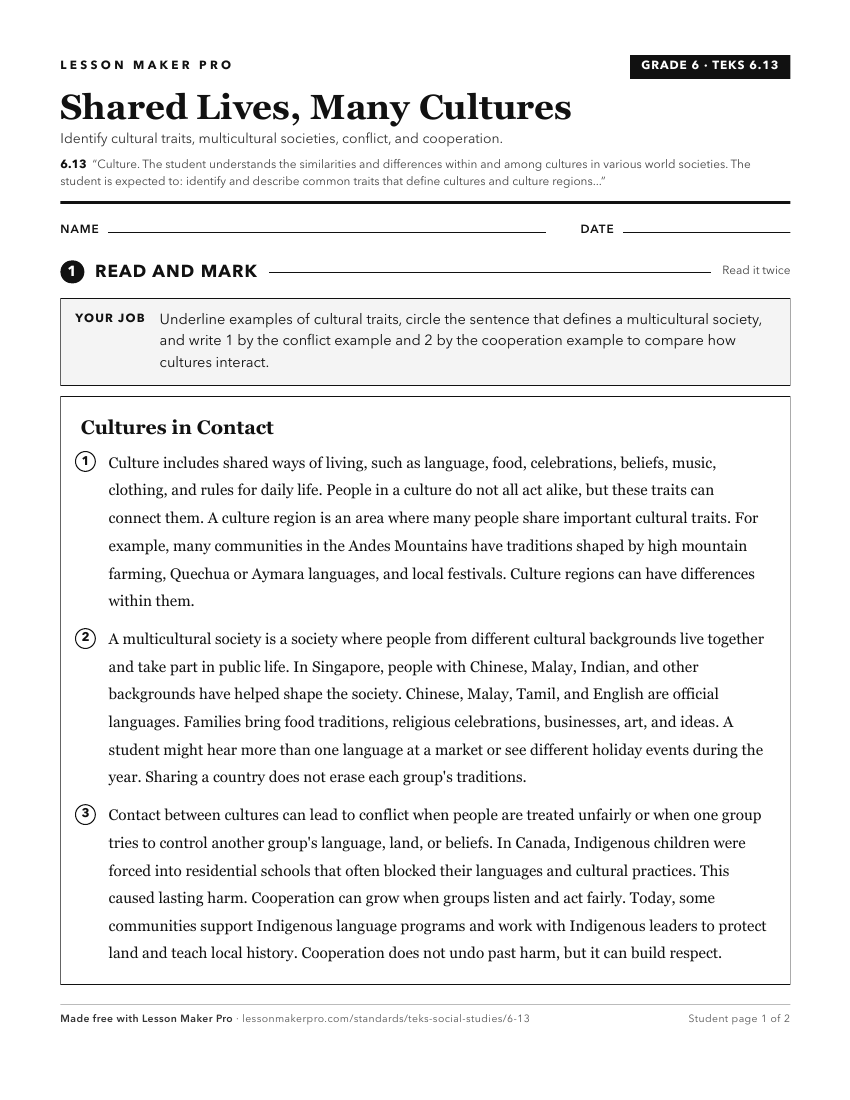
A ready-to-print activity worksheet aligned to 6.13, with an answer key for the teacher on its own page. No account needed.
PDF, US Letter, prints cleanly in black and white.
Download the worksheetKeep exploring
Related Standards
- 6.15
The student understands relationships that exist among world cultures
- 6.17
The student understands the relationships among religion, philosophy, and culture
- K.10
The student understands similarities and differences among individuals. The student is expected to identify similarities and differences among individuals such ...
- 6.2
The student understands the influences of individuals and groups from various cultures on various historical and contemporary societies
Turn this cluster into a lesson
Grade, subject, topic, and the complete cluster are prefilled. Create one free, no account needed.
Also for this cluster:Make a WorksheetMake a QuizMake a Sub Lesson