Texas TEKS 3.2
TEKS Knowledge Statement (Expectation Cluster)
History. The student understands common characteristics of communities, past and present. The student is expected to: identify reasons people have formed communities, including a need for security and laws, religious freedom, and material well-being; and compare ways in which people in the local community and other communities meet their needs for government, education, communication, transportation, and recreation.
Texas Essential Knowledge and Skills for Social Studies
Cluster contents
Student Expectations in This Statement
3.2 is a TEKS knowledge and skills statement. These are the student expectations under it.
- 3.2.A
identify reasons people have formed communities, including a need for security and laws, religious freedom, and material well-being
- 3.2.B
compare ways in which people in the local community and other communities meet their needs for government, education, communication, transportation, and recreat...
Teacher's field guide
What This Cluster Means
What Students Need to Do
- Students explain why groups settle together, such as protection, shared rules, freedom to worship, jobs, and access to goods. They compare how two communities provide services, learning, information, travel, and leisure.
What Mastery Looks Like
- Students can explain why a community formed using a clear historical or geographic detail. They can identify one similarity and one difference between communities and support both with evidence.
Common Misconceptions
- Students may think communities form only because people live near one another. They may confuse wants with shared needs or list community features without explaining how those features serve residents.
How to Assess It
- Show students short profiles of two communities. Ask, “Why did each community form, and what is one difference in how they serve residents?”
Lesson moves
Ways to Teach It
Give groups picture cards of schools, roads, courts, parks, markets, and churches to sort by the community needs they address.
Write: “Which shared need would most influence where you started a community, and why?” Then discuss responses with a partner.
Play Community Match by pairing service cards with need cards, such as bus and transportation or library and education.
Mark local schools, parks, roads, government buildings, and news sources on a neighborhood map, then explain how each serves residents.
Free download
Printable 3.2 Worksheet
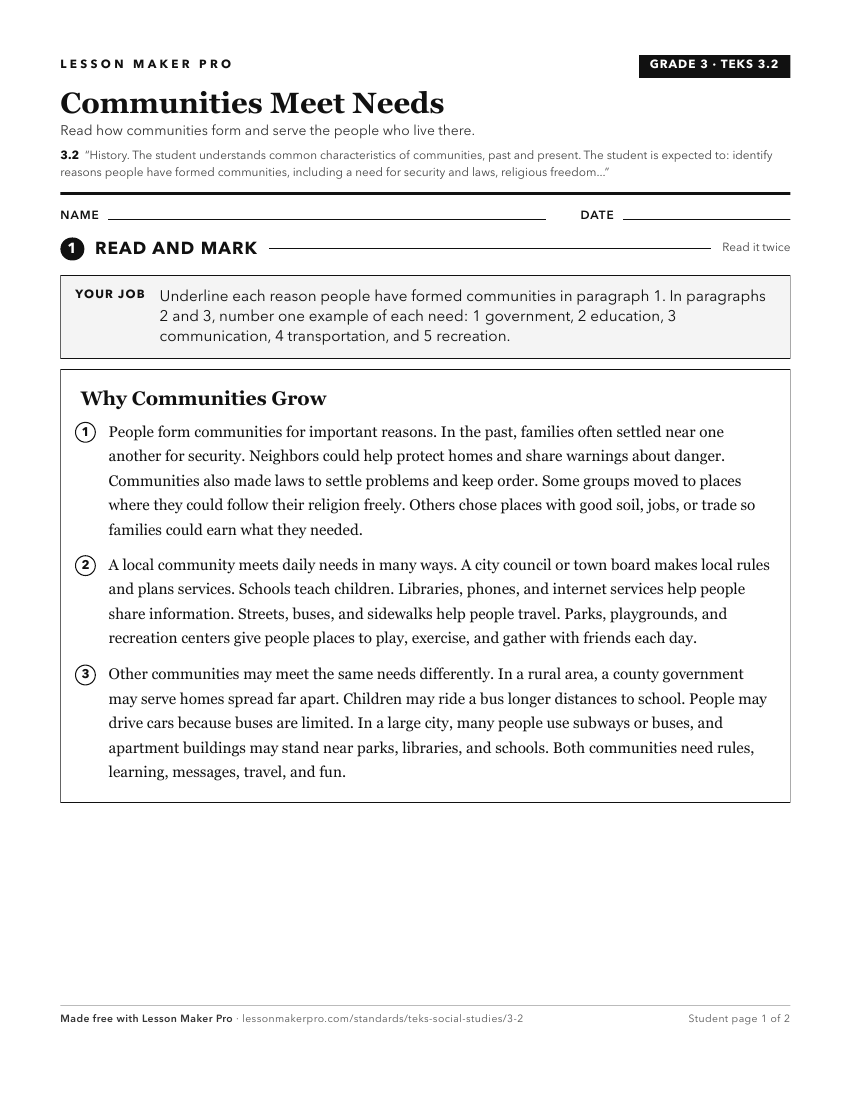
A ready-to-print activity worksheet aligned to 3.2, with an answer key for the teacher on its own page. No account needed.
PDF, US Letter, prints cleanly in black and white.
Download the worksheetKeep exploring
Related Standards
- 2.1
History. The student understands the historical significance of landmarks and celebrations in the community, state, and nation. The student is expected to:
- 3.1
History. The student understands how individuals, events, and ideas have influenced the history of various communities. The student is expected to:
- 2.2
History. The student understands how historical figures helped shape the community, state, and nation. The student is expected to:
- 1.2
History. The student understands how historical figures helped shape the state and nation. The student is expected to:
Turn this cluster into a lesson
Grade, subject, topic, and the complete cluster are prefilled. Create one free, no account needed.
Also for this cluster:Make a WorksheetMake a QuizMake a Sub Lesson