Texas TEKS 1.13
TEKS Knowledge Statement (Expectation Cluster)
Organisms and environments. The student knows that organisms resemble their parents and have structures and undergo processes that help them interact and survive within their environments. The student is expected to: identify the external structures of different animals and compare how those structures help different animals live, move, and meet basic needs for survival; record observations of and describe basic life cycles of animals, including a bird, a mammal, and a fish; and compare ways that young animals resemble their parents.
Texas Essential Knowledge and Skills for Science
Cluster contents
Student Expectations in This Statement
1.13 is a TEKS knowledge and skills statement. These are the student expectations under it.
- 1.13.A
identify the external structures of different animals and compare how those structures help different animals live, move, and meet basic needs for survival
- 1.13.B
record observations of and describe basic life cycles of animals, including a bird, a mammal, and a fish
- 1.13.C
compare ways that young animals resemble their parents.
Teacher's field guide
What This Cluster Means
What Students Need to Do
- Students name visible animal body parts and explain how each part helps the animal get food, travel, stay safe, or breathe. They draw and order life stages for a bird, mammal, and fish. They also compare young animals with their parents.
What Mastery Looks Like
- A student can connect a body part to a specific job, such as webbed feet helping a duck swim. The student can sequence and describe animal life stages from birth or hatching to adulthood. The student can name similarities and differences between a young animal and its parent.
Common Misconceptions
- Students may think every animal has the same body parts or that a body part has only one use. They may place life stages in the wrong order or think all animals hatch from eggs. They may also expect young animals to look exactly like their parents.
How to Assess It
- Give students a duck photo, shuffled fish life-cycle pictures, and a foal with an adult horse. Ask them to explain one duck structure, sequence the fish pictures, and name one parent-young similarity.
Lesson moves
Ways to Teach It
Let pairs examine animal models, point to visible structures, and sort them by jobs such as swimming, eating, breathing, or protection.
Show a chick and hen photo, then ask students to write or tell two similarities and one difference.
Play a life-cycle relay where teams place bird, mammal, and fish stage cards in order, then explain their choices.
Observe birds near the school and record how their beaks, feet, wings, and feathers help them move and find food.
Free download
Printable 1.13 Worksheet
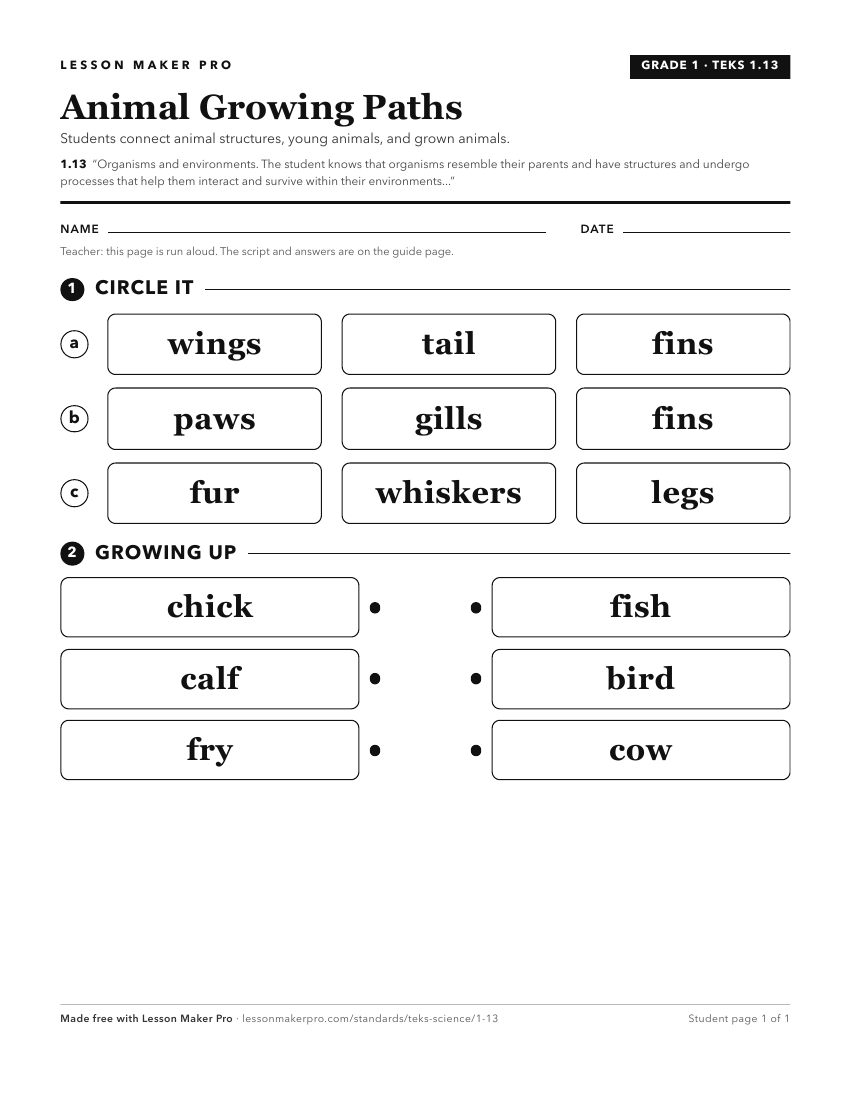
A ready-to-print activity worksheet aligned to 1.13, with an answer key for the teacher on its own page. No account needed.
PDF, US Letter, prints cleanly in black and white.
Download the worksheetKeep exploring
Related Standards
- K.13
The Kindergarten version of this standard.
- 2.13
Organisms and environments. The student knows that organisms have structures and undergo processes that help them interact and survive within their environments...
- 5.13
Organisms and environments. The student knows that organisms undergo similar life processes and have structures and behaviors that help them survive within thei...
- 3.13
Organisms and environments. The student knows that organisms undergo similar life processes and have structures that function to help them survive within their ...
Turn this cluster into a lesson
Grade, subject, topic, and the complete cluster are prefilled. Create one free, no account needed.
Also for this cluster:Make a WorksheetMake a QuizMake a Sub Lesson