Texas TEKS 1.13.A
The Standard
- 1.13
- Organisms and environments. The student knows that organisms resemble their parents and have structures and undergo processes that help them interact and survive within their environments. The student is expected to:
identify the external structures of different animals and compare how those structures help different animals live, move, and meet basic needs for survival
Texas Essential Knowledge and Skills for Science
Teacher's field guide
What This Standard Means
What Students Need to Do
- Students name visible animal body parts such as wings, fins, beaks, claws, and fur. They compare animals and explain how each part helps with movement, food, safety, or shelter.
What Mastery Looks Like
- Students correctly label external structures in pictures or models. They can compare two animals and explain a function, such as webbed feet helping a duck swim.
Common Misconceptions
- Students may call every limb a leg or confuse outside body parts with bones and organs. They may name a structure without explaining how it helps the animal survive.
How to Assess It
- Show pictures of a fish and a bird. Ask students to label one external structure on each and complete, “This part helps the animal ____.”
Lesson moves
Ways to Teach It
Give pairs two toy animals and sticky notes to label visible structures, then have them explain what each structure helps the animal do.
Show a turtle and rabbit, then ask, “How do their body parts help them move and stay safe in different ways?”
Play a card match game where students pair animal structure cards with function cards, such as claws with gripping or digging.
Take a schoolyard animal walk, then have students sketch one animal and label a structure that helps it meet a basic need.
Free download
Printable 1.13.A Worksheet
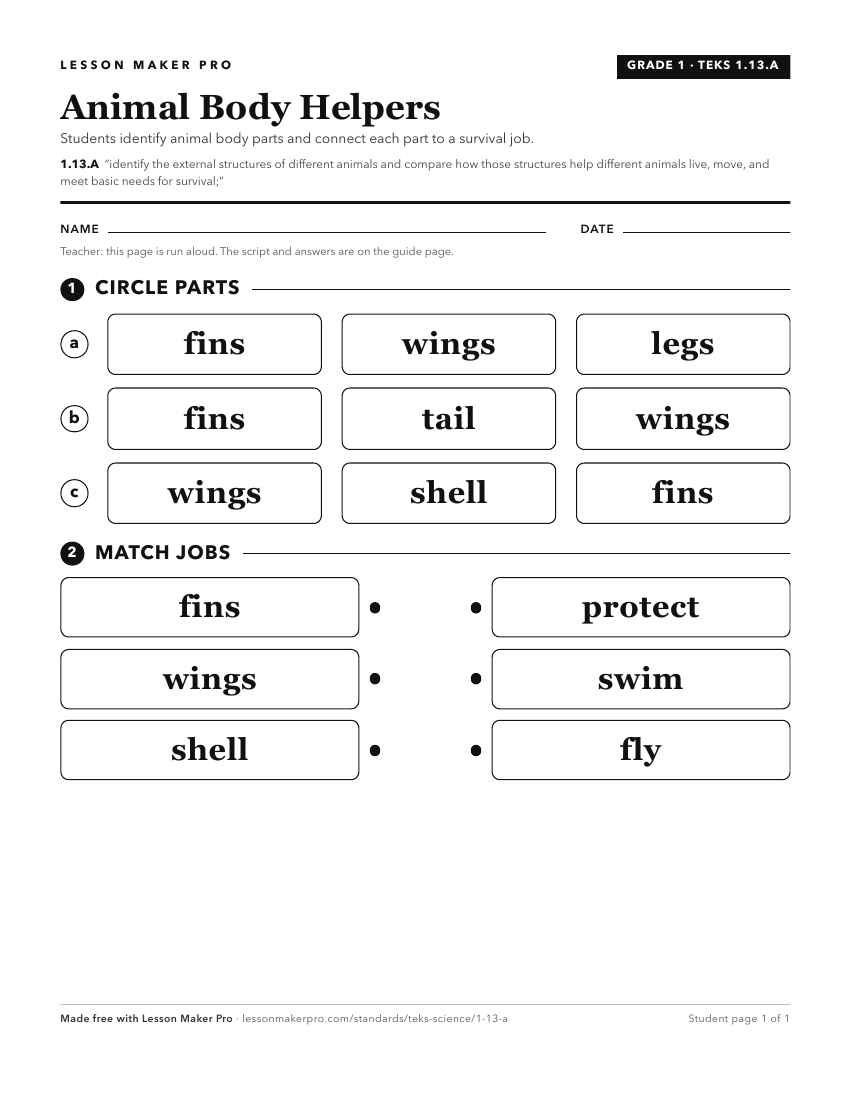
A ready-to-print activity worksheet aligned to 1.13.A, with an answer key for the teacher on its own page. No account needed.
PDF, US Letter, prints cleanly in black and white.
Download the worksheetKeep exploring
Related Standards
- 2.13.A
identify the roots, stems, leaves, flowers, fruits, and seeds of plants and compare how those structures help different plants meet their basic needs for surviv...
- 3.13.A
explore and explain how external structures and functions of animals such as the neck of a giraffe or webbed feet on a duck enable them to survive in their envi...
- K.13.B
identify the different structures that animals have that allow them to interact with their environment such as seeing, hearing, moving, and grasping objects
- 5.13.A
analyze the structures and functions of different species to identify how organisms survive in the same environment
Turn this exact standard into a lesson
Grade, subject, topic, and the complete standard are prefilled. Create one free, no account needed.
Also for this standard:Make a WorksheetMake a QuizMake a Sub Lesson