Oklahoma Social Studies 8.P.1
Standard Cluster
Apply critical thinking skills to address authentic civic issues. Demonstrate an understanding of the virtue of civil discourse to analyze and address real-world problems. Analyze why the acknowledgement of different perspectives can contribute to civil discourse and solutions to civic issues. Apply a range of deliberative and democratic procedures to discuss, make decisions, and propose action about real-world problems in and out of school. Use information to analyze how a specific problem can manifest itself in regional and global issues, describing options for solutions. Develop practices which demonstrate an understanding that social studies involves the evaluation of evidence. Investigate and propose answers to essential questions representing complex enduring issues across the social studies disciplines. Answer supporting questions related to social studies content knowledge and make connections to different interpretations. Develop deeper critical thinking skills by questioning assumptions and identifying inconsistencies or errors in reasoning. Demonstrate understanding of social studies content through the development of self-driven inquiries and the completion of authentic tasks and assessments.
Oklahoma Academic Standards for Social Studies (2026)
Cluster contents
Standards in This Cluster
8.P.1 is a cluster heading. These are the individual standards under it.
- 8.P.1.1
Demonstrate an understanding of the virtue of civil discourse to analyze and address real- world problems.
- 8.P.1.1.A
Analyze why the acknowledgement of different perspectives can contribute to civil discourse and solutions to civic issues.
- 8.P.1.1.B
Apply a range of deliberative and democratic procedures to discuss, make decisions, and propose action about real-world problems in and out of school.
- 8.P.1.1.C
Use information to analyze how a specific problem can manifest itself in regional and global issues, describing options for solutions.
- 8.P.1.2
Develop practices which demonstrate an understanding that social studies involves the evaluation of evidence.
- 8.P.1.2.A
Investigate and propose answers to essential questions representing complex enduring issues across the social studies disciplines.
- 8.P.1.2.B
Answer supporting questions related to social studies content knowledge and make connections to different interpretations.
- 8.P.1.2.C
Develop deeper critical thinking skills by questioning assumptions and identifying inconsistencies or errors in reasoning.
- 8.P.1.2.D
Demonstrate understanding of social studies content through the development of self-driven inquiries and the completion of authentic tasks and assessments.
Teacher's field guide
What This Cluster Means
What Students Need to Do
- Students investigate a civic problem using questions they write and sources they can check. They compare views, test claims against evidence, and discuss options respectfully. They use a fair decision process to propose an action and consider effects beyond their community.
What Mastery Looks Like
- A student can explain different views on plastic waste and cite evidence for each. They can spot an unsupported claim and summarize a view they disagree with fairly. They can propose a workable action and explain how local trash can affect downstream communities.
Common Misconceptions
- Students may mistake a strong opinion for evidence. They may think respectful discussion means agreeing or that every view has equal evidence behind it. They may assume a class vote settles the issue without considering people affected by the decision.
How to Assess It
- Give students two short statements about a proposed fee on plastic bags, one from a shop owner and one from a river cleanup group. Ask them to name each concern, identify one claim that needs evidence, and recommend an action with a reason.
Lesson moves
Ways to Teach It
Give groups a schoolyard map and three litter photos; have them mark likely trash sources and choose a place for a bin.
Ask, "Should our school limit single-use bottles?" Have students cite a fact, restate another view fairly, and suggest a compromise.
Run a mock council vote on refill stations: assign roles, read two claims, question the evidence, then vote and explain the choice.
Show a local cleanup notice and a watershed map; have students write a proposal linking school trash to downstream pollution.
Free download
Printable 8.P.1 Worksheet
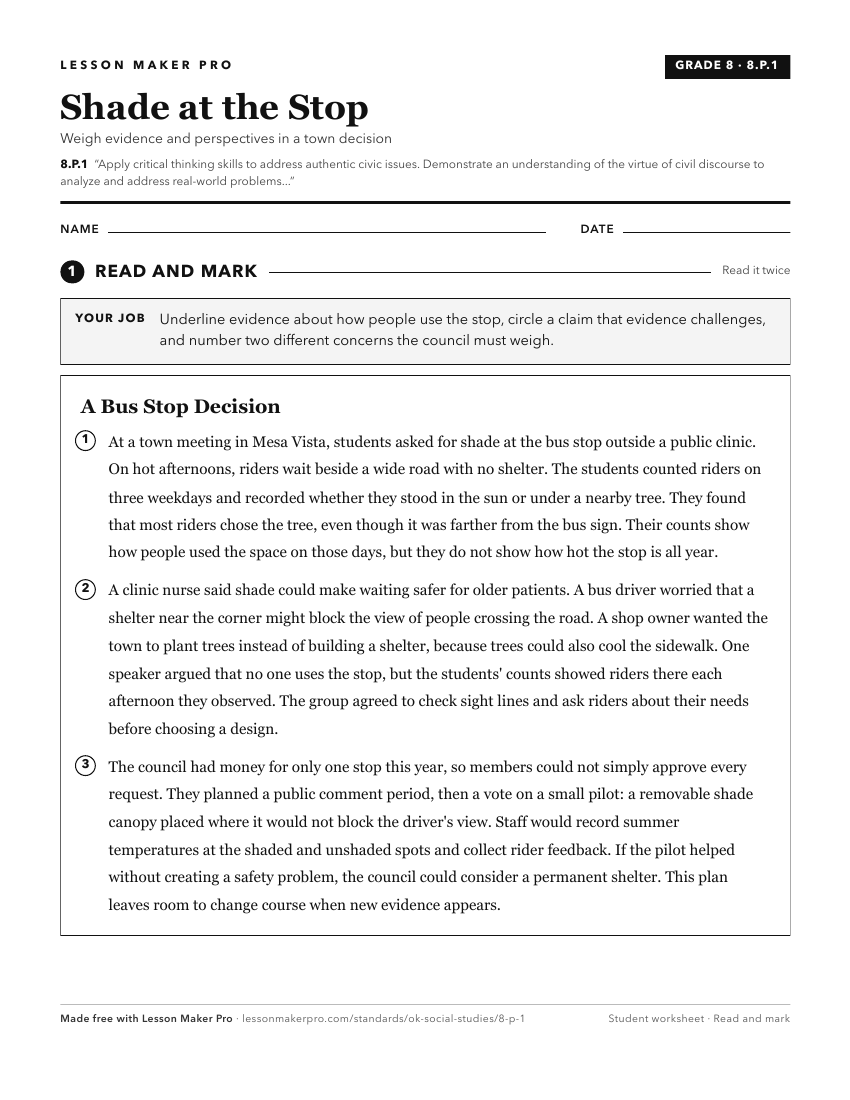
A ready-to-print activity worksheet aligned to 8.P.1, with an answer key for the teacher on its own page. No account needed.
PDF, US Letter, prints cleanly in black and white.
Download the worksheetKeep exploring
Related Standards
Turn this cluster into a lesson
Grade, subject, topic, and the complete cluster are prefilled. Create one free, no account needed.
Also for this cluster:Make a WorksheetMake a QuizMake a Sub Lesson