Oklahoma Social Studies 1.P.1
Standard Cluster
Apply critical thinking skills to address authentic civic issues. Demonstrate an understanding of the virtue of civil discourse to analyze and address real-world problems. Describe how people can work together to make decisions in the classroom and school. Engage in democratic processes to address authentic, real-world problems in the classroom. Identify and discuss local problems and ways in which people are trying to address these problems. Develop practices which demonstrate an understanding that social studies involves the evaluation of evidence. Collaboratively ask and respond to essential questions of common concerns to the student and community. Use supporting questions to help guide learning of specific social studies content. Practice critical thinking skills by responding to various levels of open-ended questions. With guidance, demonstrate understanding of social studies content through completion of authentic tasks.
Oklahoma Academic Standards for Social Studies (2026)
Cluster contents
Standards in This Cluster
1.P.1 is a cluster heading. These are the individual standards under it.
- 1.P.1.1
Demonstrate an understanding of the virtue of civil discourse to analyze and address real-world problems.
- 1.P.1.1.A
Describe how people can work together to make decisions in the classroom and school.
- 1.P.1.1.B
Engage in democratic processes to address authentic, real-world problems in the classroom.
- 1.P.1.1.C
Identify and discuss local problems and ways in which people are trying to address these problems.
- 1.P.1.2
Develop practices which demonstrate an understanding that social studies involves the evaluation of evidence.
- 1.P.1.2.A
Collaboratively ask and respond to essential questions of common concerns to the student and community.
- 1.P.1.2.B
Use supporting questions to help guide learning of specific social studies content.
- 1.P.1.2.C
Practice critical thinking skills by responding to various levels of open-ended questions.
- 1.P.1.2.D
With guidance, demonstrate understanding of social studies content through completion of authentic tasks.
Teacher's field guide
What This Cluster Means
What Students Need to Do
- Students name a problem at school or nearby and use a photo or tally to check what is happening. They ask questions, listen to different ideas, and explain which plan they think will help. They vote on a plan and help carry it out.
What Mastery Looks Like
- Students can point to a photo or count to explain their choice and ask a question that helps the class learn more. They listen without interrupting, accept a vote’s result, and take part in the chosen plan.
Common Misconceptions
- Some students think the loudest voice makes the decision, or that voting means everyone gets their first choice. They may treat a guess as proof or suggest a fix before checking what the problem is.
How to Assess It
- Show a photo of litter near a school bin. Ask students to draw one clue they see, write one question, and tell a partner one class action they would vote for.
Lesson moves
Ways to Teach It
Walk to the playground with clipboards; pairs mark litter spots on a simple map and count their marks.
Show two cleanup ideas and ask, “Which fits our litter count? Why might a classmate choose the other idea?”
Give each child a paper ballot for two cleanup plans; count votes together and practice saying, “I can help with our choice.”
Show a photo of a neighborhood trash can; students draw a reminder sign that neighbors could use to keep the spot clean.
Free download
Printable 1.P.1 Worksheet
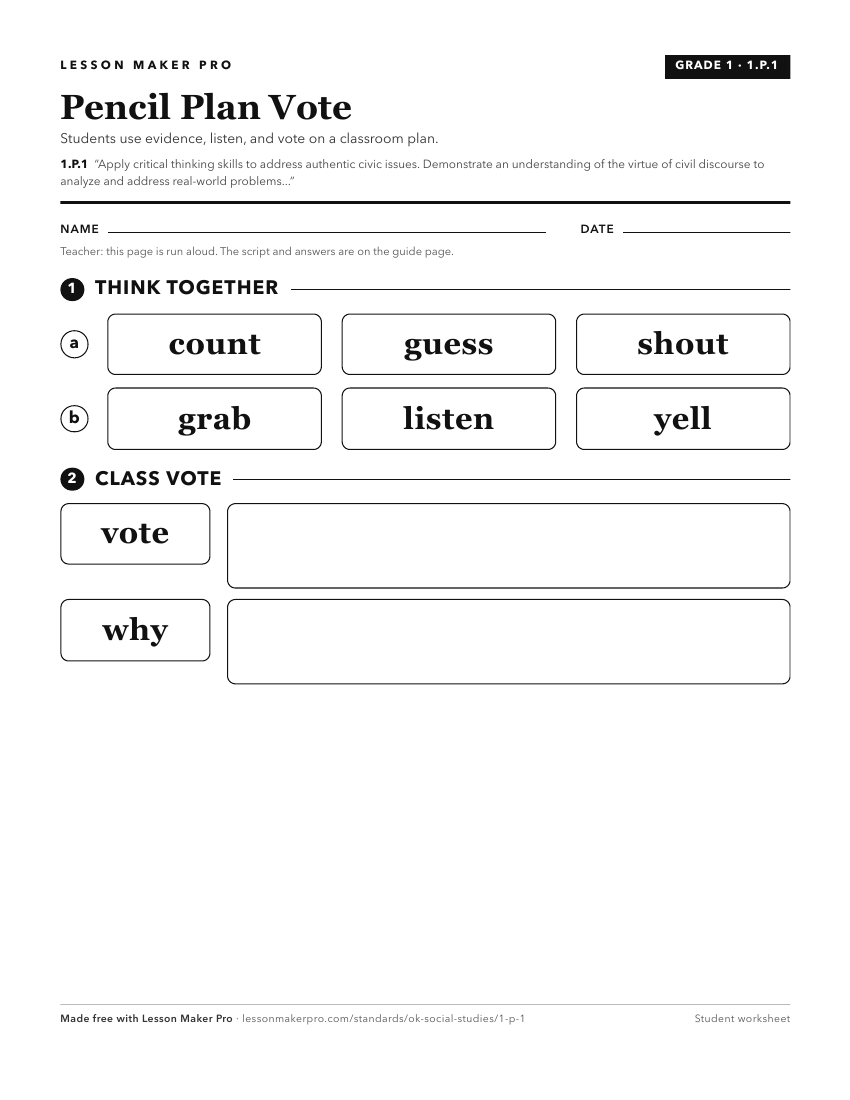
A ready-to-print activity worksheet aligned to 1.P.1, with an answer key for the teacher on its own page. No account needed.
PDF, US Letter, prints cleanly in black and white.
Download the worksheetKeep exploring
Related Standards
Turn this cluster into a lesson
Grade, subject, topic, and the complete cluster are prefilled. Create one free, no account needed.
Also for this cluster:Make a WorksheetMake a QuizMake a Sub Lesson