Oklahoma Social Studies 5.P.1
Standard Cluster
Apply critical thinking skills to address authentic civic issues. Demonstrate an understanding of the virtue of civil discourse to analyze and address real-world problems. Explain how human experiences can shape a person’s point of view about civic issues. Use a range of democratic procedures to discuss and make decisions about real-world problems in the community, region, and nation. Explain challenges of the past and present and describe strategies used to address local, regional, or national problems. Develop practices which demonstrate an understanding that social studies involves the evaluation of evidence. Ask and examine essential questions that are important to others, as well as enduring across social studies topics. Compare points of agreement from reliable information used to answer supporting questions related to social studies content. Demonstrate critical thinking skills by frequently developing and answering various depth of knowledge questions. Reinforce understanding of social studies content through collaborative inquiries and the completion of authentic tasks and assessments.
Oklahoma Academic Standards for Social Studies (2026)
Cluster contents
Standards in This Cluster
5.P.1 is a cluster heading. These are the individual standards under it.
- 5.P.1.1
Demonstrate an understanding of the virtue of civil discourse to analyze and address real- world problems.
- 5.P.1.1.A
Explain how human experiences can shape a person’s point of view about civic issues.
- 5.P.1.1.B
Use a range of democratic procedures to discuss and make decisions about real-world problems in the community, region, and nation.
- 5.P.1.1.C
Explain challenges of the past and present and describe strategies used to address local, regional, or national problems.
- 5.P.1.2
Develop practices which demonstrate an understanding that social studies involves the evaluation of evidence.
- 5.P.1.2.A
Ask and examine essential questions that are important to others, as well as enduring across social studies topics.
- 5.P.1.2.B
Compare points of agreement from reliable information used to answer supporting questions related to social studies content.
- 5.P.1.2.C
Demonstrate critical thinking skills by frequently developing and answering various depth of knowledge questions.
- 5.P.1.2.D
Reinforce understanding of social studies content through collaborative inquiries and the completion of authentic tasks and assessments.
Teacher's field guide
What This Cluster Means
What Students Need to Do
- Students ask questions about a real community problem and check where reliable sources agree. They explain how people's experiences shape their views and discuss disagreements respectfully. They compare past and present responses, then use a vote or consensus to choose a response.
What Mastery Looks Like
- A student can use a city traffic count and a resident interview to support a recommendation, noting a fact both confirm. They can explain why a parent and a commuter might disagree about a crossing guard and respond without insults. They can compare an earlier request for a stop sign with today's crossing guard proposal and help their group make a decision.
Common Misconceptions
- Students may treat a popular post or one person's story as enough proof without checking another source. They may think respectful discussion means everyone must agree, or that a vote makes minority concerns irrelevant. They may assume a past solution will work now without checking what has changed.
How to Assess It
- Give students this prompt: “A city report lists three near misses at the school crosswalk. Should your class request a crossing guard? Use the report, explain why someone might disagree, and name how your class could decide.”
Lesson moves
Ways to Teach It
Give groups a printed street map and three sample pedestrian observations; have them mark risks and place a proposed crossing guard.
Ask, “Why might a parent and a commuter disagree about adding a school crossing guard, and what would you say to each?”
Play source sort with a city traffic count, a neighbor's story, and an unsigned post; teams explain which claims each can support.
Examine a current city council agenda, choose one item, and draft a two-sentence comment supported by a fact from the agenda.
Free download
Printable 5.P.1 Worksheet
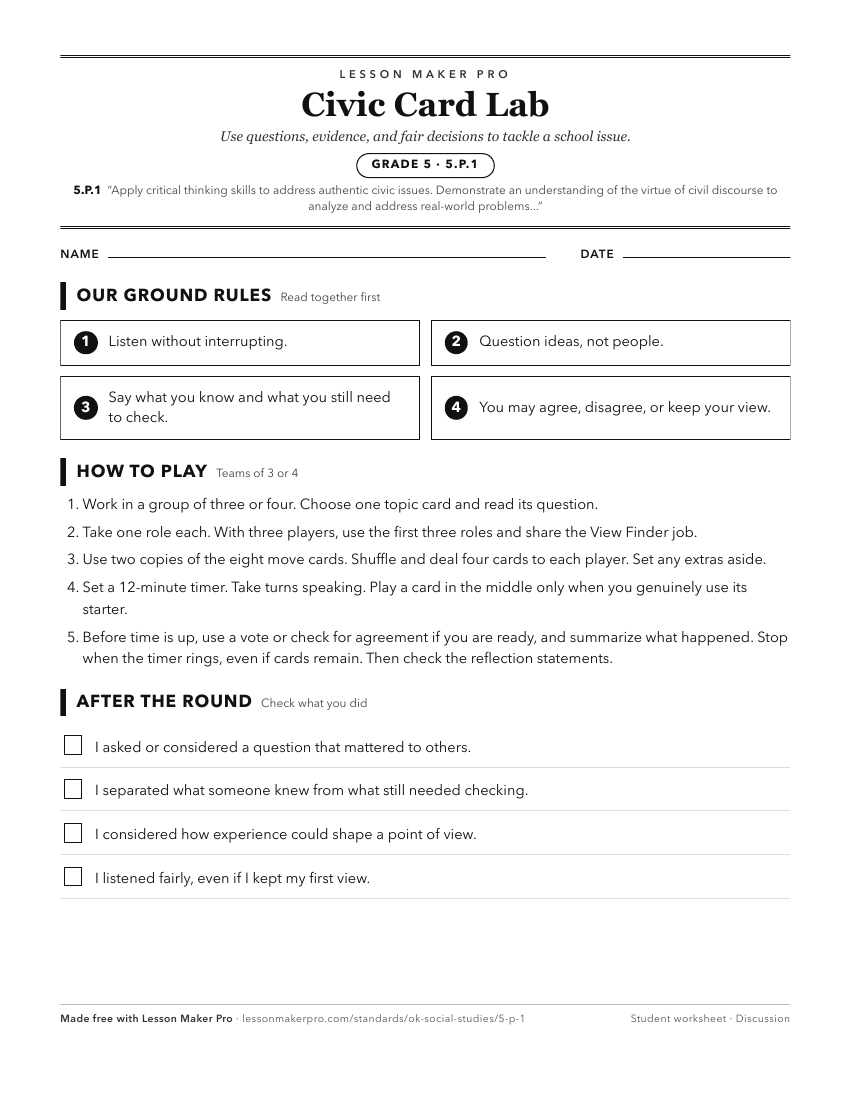
A ready-to-print activity worksheet aligned to 5.P.1, with an answer key for the teacher on its own page. No account needed.
PDF, US Letter, prints cleanly in black and white.
Download the worksheetKeep exploring
Related Standards
Turn this cluster into a lesson
Grade, subject, topic, and the complete cluster are prefilled. Create one free, no account needed.
Also for this cluster:Make a WorksheetMake a QuizMake a Sub Lesson