Oklahoma Social Studies 4.C.2.4
Standard Cluster
- 4.C.2
- Apply the tools and concepts of geography to examine the physical and human geography of the United States of America.
Examine the concept of culture, including the distribution and complexity of major cultural groups of the United States of America. Identify the characteristics of culture (e.g., language, customs, religious beliefs, food, clothing, shelter) and compare cultural characteristics of different regions, including the influence of Native peoples and immigrants to each region and how they contribute to a shared American culture. Explain how culture can affect the ways in which people live and how culture can change over time through cultural diffusion.
Oklahoma Academic Standards for Social Studies (2026) · 4.C.2
Cluster contents
Standards in This Cluster
4.C.2.4 is a cluster heading. These are the individual standards under it.
- 4.C.2.4.A
Identify the characteristics of culture (e.g., language, customs, religious beliefs, food, clothing, shelter) and compare cultural characteristics of different ...
- 4.C.2.4.B
Explain how culture can affect the ways in which people live and how culture can change over time through cultural diffusion.
Teacher's field guide
What This Cluster Means
What Students Need to Do
- Students locate Native peoples and immigrant communities across U.S. regions on a map. They compare languages, foods, homes, and customs in two regions. They explain how these traditions shape daily life, spread, and change over time.
What Mastery Looks Like
- A student places cultural examples from two regions on a map and names the people who shaped them. They explain how corn became part of foods eaten across the country or how pizza changed as it spread beyond immigrant neighborhoods.
Common Misconceptions
- Students may think everyone in a region shares one language, religion, or food. They may think Native peoples belong only to the past. They may assume cultural practices stay the same when people move.
How to Assess It
- For an exit ticket, give students a U.S. map and two example cards: Pueblo adobe homes in the Southwest and pizza shops started by Italian immigrants in New York. Ask them to locate each region, name the cultural trait, and explain how pizza spread or changed.
Lesson moves
Ways to Teach It
Use a U.S. map and photo cards of Pueblo adobe homes and New York pizza shops; mark their regions and trace pizza's spread.
Ask, “How did Native corn farming and Italian immigrant cooking shape foods Americans eat today, and what changed as those foods spread?”
Play a card match: students pair photos of foods, clothing, and homes with source notes, then sort the examples by region.
Print two local takeout menus; students find corn dishes and pizza, then label Native roots, immigrant links, and one local variation.
Free download
Printable 4.C.2.4 Worksheet
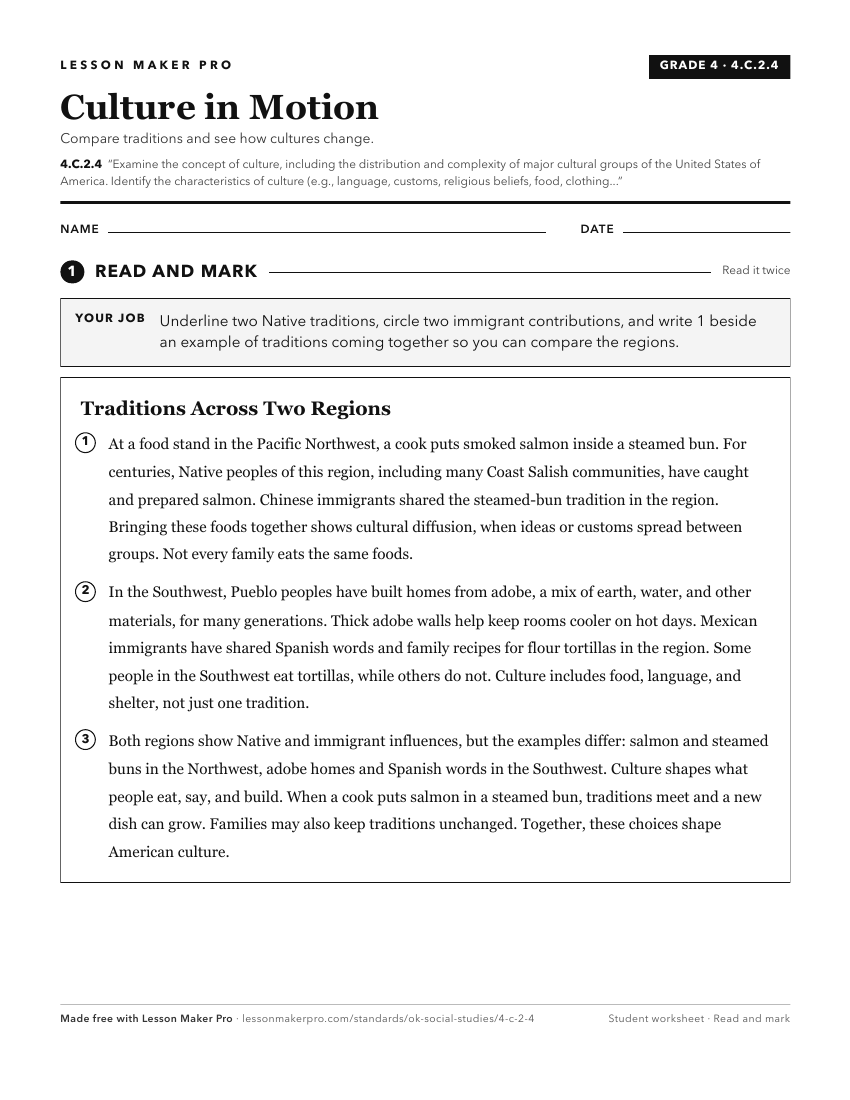
A ready-to-print activity worksheet aligned to 4.C.2.4, with an answer key for the teacher on its own page. No account needed.
PDF, US Letter, prints cleanly in black and white.
Download the worksheetKeep exploring
Related Standards
- 4.C.3.1
Examine the various American Indian cultures inhabiting the nation prior to European explorations.
- 4.C.2
Apply the tools and concepts of geography to examine the physical and human geography of the United States of America.
- 4.C.2.3
Analyze the human characteristics of the United States of America.
Turn this cluster into a lesson
Grade, subject, topic, and the complete cluster are prefilled. Create one free, no account needed.
Also for this cluster:Make a WorksheetMake a QuizMake a Sub Lesson