NY Next Generation ELA KRF3.b
The Standard
Decode short vowel sounds with common spellings.
New York State Next Generation English Language Arts Learning Standards · Phonics and Word Recognition
Teacher's field guide
What This Standard Means
What Students Need to Do
- Students decode short vowel sounds with common spellings. They identify and blend the vowel sound within simple printed words.
What Mastery Looks Like
- The student produces common short a, e, i, o, and u sounds and uses them in regular words. The blended word matches the print.
Common Misconceptions
- Students may say vowel letter names instead of short sounds. They may use one short vowel sound for several spellings.
How to Assess It
- Show short-vowel letters and simple CVC words. Ask the student to give each vowel sound and decode five words.
Lesson moves
Ways to Teach It
Build CVC words with tiles and swap only the vowel while comparing sounds.
Ask students which middle sound changes the word.
Play Short Vowel Picture Sort.
Decode short-vowel words on simple labels and captions.
Free download
Printable KRF3.b Worksheet
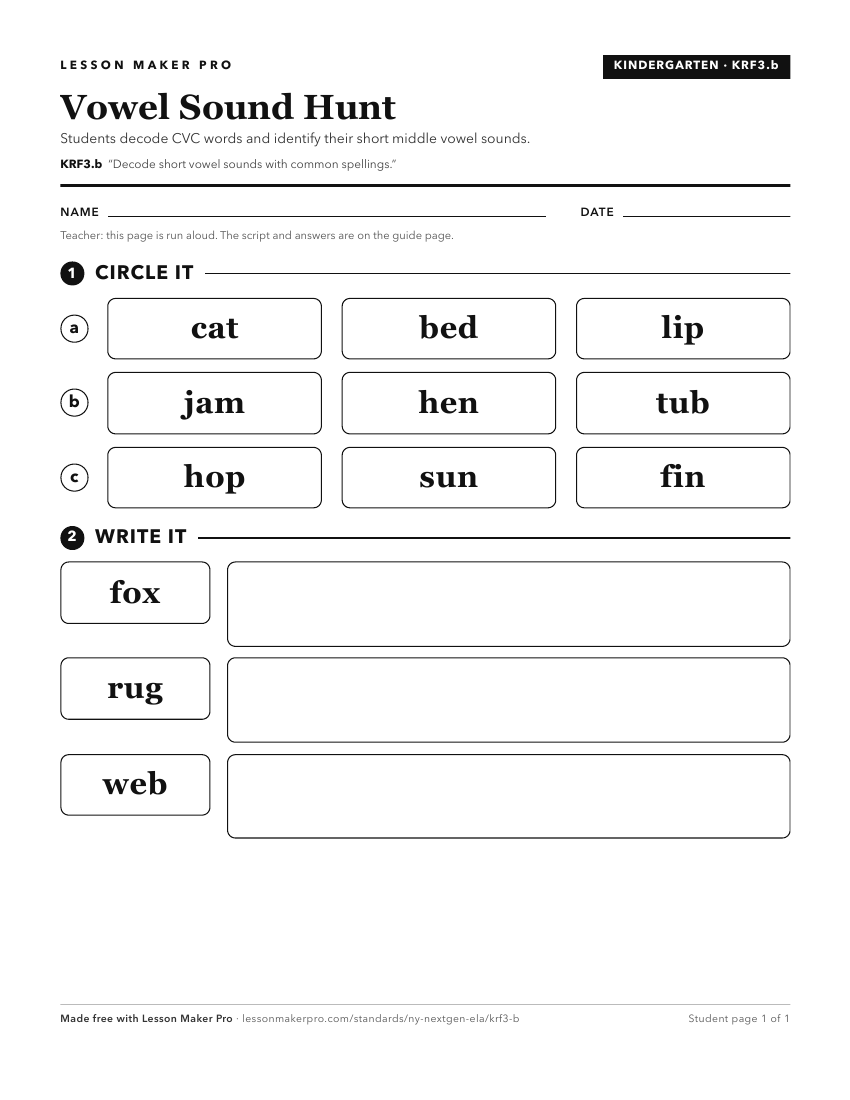
A ready-to-print activity worksheet aligned to KRF3.b, with an answer key for the teacher on its own page. No account needed.
PDF, US Letter, prints cleanly in black and white.
Download the worksheetKeep exploring
Related Standards
- 2RF3.b
Decode short and long vowel sounds in two-syllable words.
- 1RF3.b
Decode long vowel sounds in regularly spelled one-syllable words (e.g., final –e conventions and common vowel teams).
- 2RF3.a
Distinguish long and short vowels when reading regularly spelled one-syllable words (including common vowel teams).
- 1RF3.c
Decode regularly spelled one-syllable words.
Turn this exact standard into a lesson
Grade, subject, topic, and the complete standard are prefilled. Create one free, no account needed.
Also for this standard:Make a WorksheetMake a QuizMake a Sub Lesson