NY Next Generation ELA 6SL1.d
The Standard
Consider the ideas expressed and demonstrate understanding of multiple perspectives through reflection and paraphrasing.
New York State Next Generation English Language Arts Learning Standards
Teacher's field guide
What This Standard Means
What Students Need to Do
- Students consider ideas from multiple perspectives and show understanding through reflection and paraphrasing. They separate accurate restatement from agreement.
What Mastery Looks Like
- The student paraphrases another perspective fairly before responding. The reflection identifies a similarity, difference, question, or change in thinking.
Common Misconceptions
- Students may repeat exact words without showing understanding. They may distort a view they disagree with or assume paraphrasing means accepting it.
How to Assess It
- After two peers present different views, ask students to paraphrase each accurately and reflect on one way the perspectives affect their thinking.
Lesson moves
Ways to Teach It
Place perspective statements on cards and practice neutral paraphrases before adding reflections.
Ask students how paraphrasing differs from agreeing.
Play Perspective Check with original statements and accurate or distorted restatements.
Paraphrase multiple viewpoints from a community meeting or school decision.
Free download
Printable 6SL1.d Worksheet
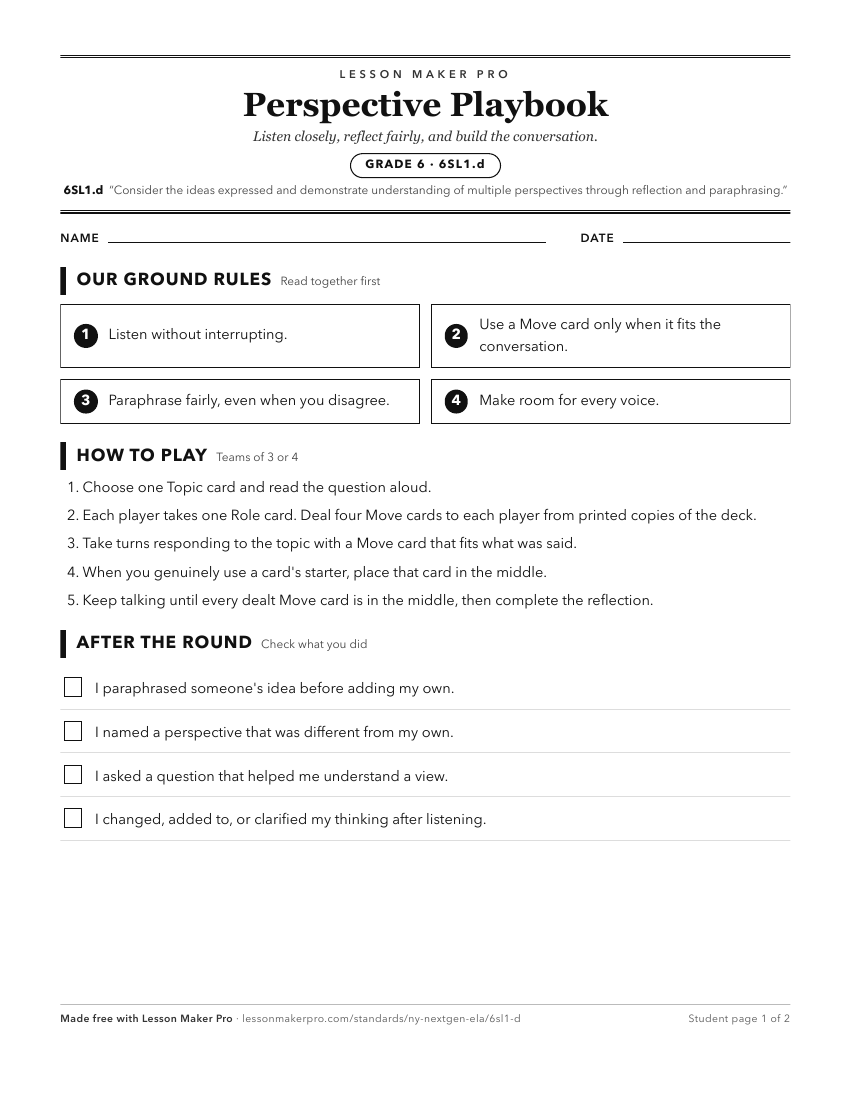
A ready-to-print activity worksheet aligned to 6SL1.d, with an answer key for the teacher on its own page. No account needed.
PDF, US Letter, prints cleanly in black and white.
Download the worksheetKeep exploring
Related Standards
- 5SL1.d
Consider the ideas expressed and draw conclusion about information and knowledge gained from the discussions.
- 9-10SL1d
Respond thoughtfully to diverse perspectives, summarize points of agreement and disagreement, and, when warranted, qualify or justify personal views and underst...
- 4SL1.d
Review the relevant ideas expressed and explain their own ideas and understanding of the discussion.
- 9-10SL1c
Pose and respond to questions that relate the discussion to broader themes or ideas; actively incorporate others into the discussion; and clarify, verify, or ch...
Turn this exact standard into a lesson
Grade, subject, topic, and the complete standard are prefilled. Create one free, no account needed.
Also for this standard:Make a WorksheetMake a QuizMake a Sub Lesson